
SAMSAM
Jun 27 – Aug 4, 2024
Gallery Hyundai
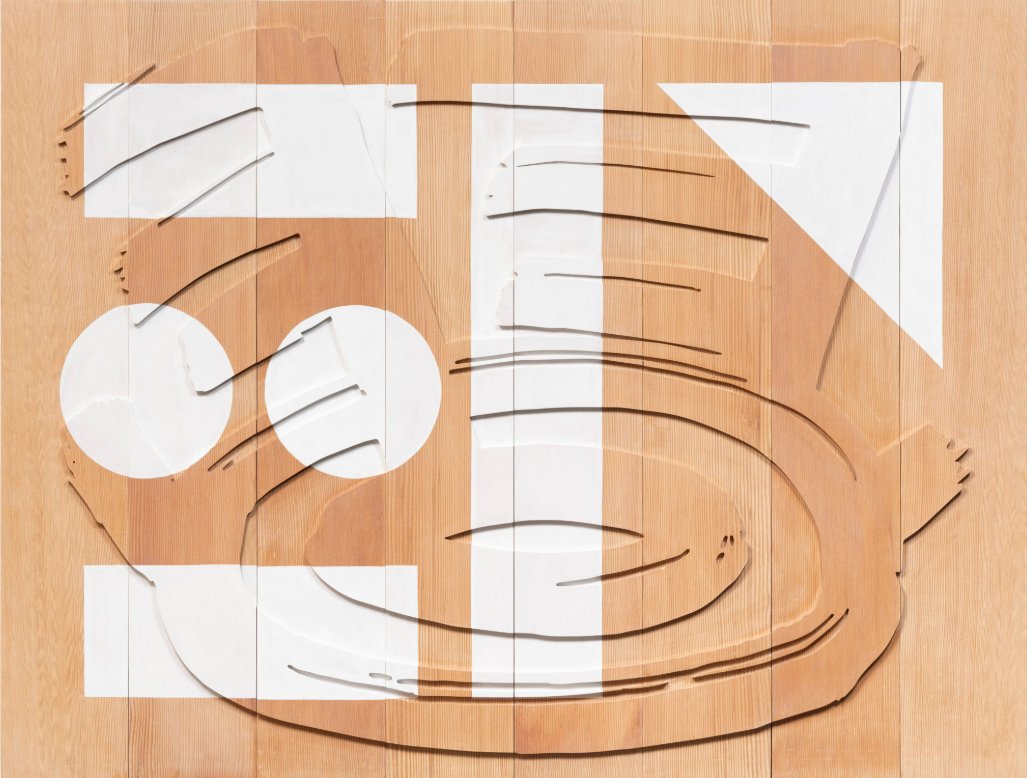
Gallery Hyundai is delighted to present Seulgi Lee’s solo exhibition, SAMSAM, from June 27 to August 4, 2024. Since DAMASESE in 2018, it is her second solo exhibition hosted by Gallery Hyundai in six years. SAMSAM revolves around Lee’s new series, BIANE Hanging Board Project, created during her few months-long stay in Korea, and showcases approximately thirty of her major works including new works from the Blanket Project U series that Lee has continuously presented, a redesigned large-scale installation SLOW WATER, and KUNDARI, K, and BAGATELLE that together constitute in Ramie Dancheong Mural, traversing all floors of Gallery Hyundai. The title of the exhibition, SAMSAM, is inspired by the Korean term samsamhada (삼삼하다), which serves as an apt summary of Seulgi Lee’s creative practice overall. Much like the variating meanings of this term ranging from “the appearance looks decent” to “crystal clear as if seeing it right in front of your eyes,” Lee’s works venture beyond universal and immutable significations of subjects and objects. Instead, like living beings, they embrace a wide spectrum of meanings and sensations that look into the past and present of human civilization.
Since moving to France in 1992, Seulgi Lee has been forging a world marked by original perspectives and imaginative power through sculpture and installation works. They often translate folk elements, everyday objects, and languages from various parts of the world into her unique imagination, geometric patterns, and vivid color. Grounded in nature, the origin of humanity, and various cultures, Lee’s works intermingle tradition and contemporaneity while foregrounding formal qualities and color. The artist collaborates with artisans from all around the world such as dancheong (traditional coloring on wooden buildings and artifacts in Korea) and munsal (wooden lattice frames that cover doors in Korea) artisans, master nubi (Korean traditional quilt) artisans from Tongyeong, Korea, and traditional basket weavers from a region of Mexico, which allows her to summon languages and cultures that are at the verge of fossilizing or disappearing. Combined with the formal language of craftwork and Seulgi Lee’s own perspective and imagination, these influences create a simultaneously familiar and foreign-looking body of work that introduces extra dimensions to seemingly fixed meanings and contexts. Following this trajectory, SAMSAM also enchants visitors through the primordial movement between languages and symbols that escapes particularities in the meaning of everyday objects, subjects, and language.
Seulgi Lee highlights “holes” as the keyword for this exhibition—she designed the exhibition while imagining dusk light leaking through fictional holes in the gallery space. In this, Lee is referring to holes of various shapes and significances: large holes of doors that connect inside and outside, small holes naturally formed by the lattices of wooden muntin, and the gaps between Ramie Dancheong Mural weaved onto exhibition walls. The apricot color applied to multiple walls in the exhibition also functions as holes which convey the color of dusk into a white cube space. Furthermore, all “holes” constitute the artist’s creative experiment to reverse the unidirectionality of universal perception and conventions of perception, and to annul the dichotomy between inside and outside—an experiment to look differently.
BIANE Hanging Board Project is Seulgi Lee’s new work that debuted at this exhibition, a humorous visualization of the link between the meaning and appearance of words through designs of onomatopoeic and mimetic words engraved on wooden plaques. Intrigued by the scale of wooden plaques, such as the one on Deoksugung Palace’s Daehanmun gate, which reaches the size of a full person, Lee selected wood as the medium for investigating the question of the primordial word. Through this project, the artist expands the theme of doors she has examined since 2019. A door simultaneously implies an “entry,” “exit,” and “the place where we currently stand,” thereby opening up to multiple perspectives and interpretations on a single phenomenon. It therefore demonstrates that the same work of art can be understood and interpreted differently depending on the audience’s location and line of sight, consistent with the Rashomon Effect where the same phenomenon is perceived essentially differently based on one’s position. As such, Seulgi Lee aims to visualize through the project how these differing interpretative perspectives transform the very essence of objects. She adds that “Korean onomatopoeic words are very graphic. Words like kung kung, kwang kwang, and kkung kkung all create a samsam scenery.” Indeed, Lee engraved her wooden plaques with onomatopoeic words with no specific referent, in contrast to traditional wooden plaques that were engraved with the names of important individuals, monuments, and architecture itself.
Seulgi Lee’s SAMSAM hints at the impossibility of prescribing a single meaning or category to anything that exists in this world. Whereas contemporary society is easy to quantify, categorize, and define everything for convenience, this exhibition will function as one big artwork and “hole” to enliven our rigid perceptions and sensations.
갤러리현대는 이슬기 작가의 개인전 《삼삼》을 6월 27일부터 8월 4일까지 개최한다. 2018년 《다마스스(DAMASESE)》 이후 6년 만에 갤러리현대가 기획한 두 번째 개인전이다. 《삼삼》은 이슬기 작가가 한국에 몇 개월 동안 체류하며 고안해낸 〈현판프로젝트〉를 중심으로 꾸준히 해온 〈이불프로젝트 : U〉의 새로운 이불 작품들, 대규모 설치 작업을 재편성한 〈느린 물〉, 갤러리현대 전 층을 가로지르는 〈모시 단청〉 벽화 작업 안에 설치된 〈쿤다리〉, 〈K〉, 〈바가텔〉 등 30여 점을 선보인다. '삼삼하다'는 표현에서 착안한 전시 타이틀 ‘삼삼’은 이슬기 작품 세계를 집약하는 키워드이다. “외형이 그럴듯하다”, “눈앞에 보이는 듯 또렷하다” 등 다양한 의미로 변주되어 사용되는 형용사 '삼삼하다'처럼, 이슬기의 작품은 대상이나 오브제가 지시하는 보편적이고 고정된 의미에 국한되지 않는다. 그의 작품은 생명이 있는 물체처럼 다채로운 의미와 감각을 지니며, 나아가 인류 문화의 과거부터 현재를 모두 응시한다.
이슬기는 1992년 프랑스 생활을 시작으로, 세계 여러나라의 민속적 요소와 일상적 사물, 언어를 기하학적 패턴, 선명한 색채로 표현한 조각과 설치 작품을 통해 독창적인 시선과 상상력이 돋보이는 작품 세계를 구축해 왔다. 전통과 현대가 어우러지면서도 특유의 조형성과 색채가 돋보이는 그의 작업들은 자연과 인류의 기원, 다양한 문화를 기반으로 제작된다. 작가는 한국의 단청과 문살, 통영의 누비이불, 멕시코의 지방 전통 바구니 조합 등 세계 각지의 장인들과 협업을 통해 전통이라는 틀 속에서 시대와 장인의 손길에 변화하는 전통과 언어, 문화를 소환한다. 여기에 공예의 조형 언어와 더불어 이슬기만의 시선과 해석이 더해져 고정된 의미와 맥락을 입체화 하는 익숙하면서도 낯선 작품이 탄생한다. 이번 《삼삼》 전에서도 일상적인 오브제나 대상, 언어가 지시하는 의미의 구체성에서 벗어나 언어와 기호 사이의 원초적인 움직임에 초점을 둔 작품을 통해 관람자를 사로잡는다.
이슬기는 이번 전시의 주요한 키워드로 ‘구멍’을 강조한다. 작가는 가상의 구멍을 통해 전시장에 노을 빛이 스며드는 장면을 상상하며 전시를 구성했다. 작가가 말하는 ‘구멍’은 다양한 형태와 의미를 담고 있다. 예를 들어, 문이 만드는 밖과 안을 연결하는 큰 구멍부터 나무 문살의 격자 모양에서 자연스레 형성되는 작은 구멍, 전시장 벽면에 직조된 모시 단청 사이사이 등을 의미한다. 전시장 곳곳의 벽면에 도색 된 살구색 또한 노을 빛을 화이트 큐브로 전달하는 구멍 역할을 한다. 나아가 이 ‘구멍’은 안과 밖의 이분법을 지우고 한쪽 방향으로 흐르는 보편적 인식과 감각의 관습을 뒤집어 새롭게 바라보게 하는 작가의 예술적 시도이기도 하다.
이번 전시에서 처음으로 소개되는 신작인 〈현판프로젝트〉는 도안화된 의성어나 의태어를 나무 널빤지 위에 새겨 단어의 의미와 외형의 연결고리를 해학적으로 형상화한 작업이다. 작가는 사람만큼 거대한 덕수궁 대한문 현판에 대한 의문을 바탕으로 나무를 재료로 선택하고 태초의 단어가 무엇일지를 탐구하게 되었다. 이슬기 작가는 〈현판프로젝트〉를 통해 2019년부터 탐구해 온 ‘문’이라는 주제를 확장해 나간다. 문은 ‘들어가는 곳’, ‘나가는 곳’, 그리고 지금 ‘우리가 있는 곳’이라는 세 가지 공간을 암시함으로써 각기 다른 관점에서 하나의 사건을 이해하고 해석할 수 있는 가능성을 열어준다. 이는 같은 작품이라도 관람객의 위치나 시선에 따라 다르게 이해되고 해석될 수 있음을 보여주며, 이는 '라쇼몽(羅生門, Rashomon) 현상'과 같이 동일한 사건이라도 입장에 따라 본질을 다르게 인식하는 현상과 유사하다. 이처럼 작가는 이 작업을 통해 각기 다른 시각에서의 해석이 어떻게 사물의 본질을 다르게 만들 수 있는지를 보여준다. 또한 작가는 "한국어의 의성어는 매우 그래픽적이다. ‘쿵쿵’, ‘쾅쾅’, ‘꿍꿍’ 등의 단어는 모두 ‘삼삼한’ 장면을 생성한다."라고 설명한다. 작가가 현판에 새긴 단어는 특정한 의미가 없는 의성어로, 과거 중요한 이름이 새겨졌던 현판과는 대조적이다.
이슬기의 《삼삼》 전은 세상에서 모든 것이 하나의 의미나 분류로 규정될 수 없음을 암시한다. 모든 것을 수치화 하고 편의에 의해 쉽게 구분하여 단정짓는 현대 사회에서, 이번 전시는 하나의 작품이자 커다란 ‘구멍’으로서 우리의 굳어 있는 인식과 감각을 활기차게 깨워줄 것이다.
Installation Views
{{ lbCurrent.title }}
{{ lbCurrent.text }}