
인물, 초상 그리고 사람-한국 근현대인물화
Dec 18, 2019 – Mar 1, 2020
Gallery Hyundai
Participating Artists
Chun Kyungja, Park Saengkwang, Kim Sou, Kim Whanki, Ryoo Byungyup, Kim Hong Joo, Kwun Sun-Cheol, Choi Youngrim, Yim Jiksoon, Kang Yeongyun, Kim Kichang, Lee Sook Ja, Hwang Youngsung, Son Sang-Ki, Kim Wonsook, Kim Myonghi, Jung Jongmee, Lee Man-ik, Choi Minhwa, Lee Jong-gu, Shin Hak-Chul, Nho Wonhee, Hwang Jai-Hyoung, Lim Ok-Sang, Kim Ho-suk, Hong Sung-dam, Oh Yoon, Kim Jungheun, Kang Yo-bae
Gallery hyundai proudly presents Portrait, Figure and People - Modern and Contemporary Figure Paintings of Korea. This exhibition features a selection of figure paintings a century of korean modern and contemporary art, all of which manifest both a spirit of the time and individual ingenuity. Figure paintings, in embodying different human typologies through transformations in era and social circumstances, can be seen as the self-portrait of korean history itself. They therefore carry not only art historical value but serve as historical documentation where the dress and lifestyle of the subjects depicted yield a view into korea’s modernization.
The paintings leave a subtle yet resounding impression even to us in the present — they impart warm sensibilities of the korean people that survived the pains of japanese occupation, the korean war, democratization movement, the joy and sorrow of individuals in their respective lives, and the love and caring among families.
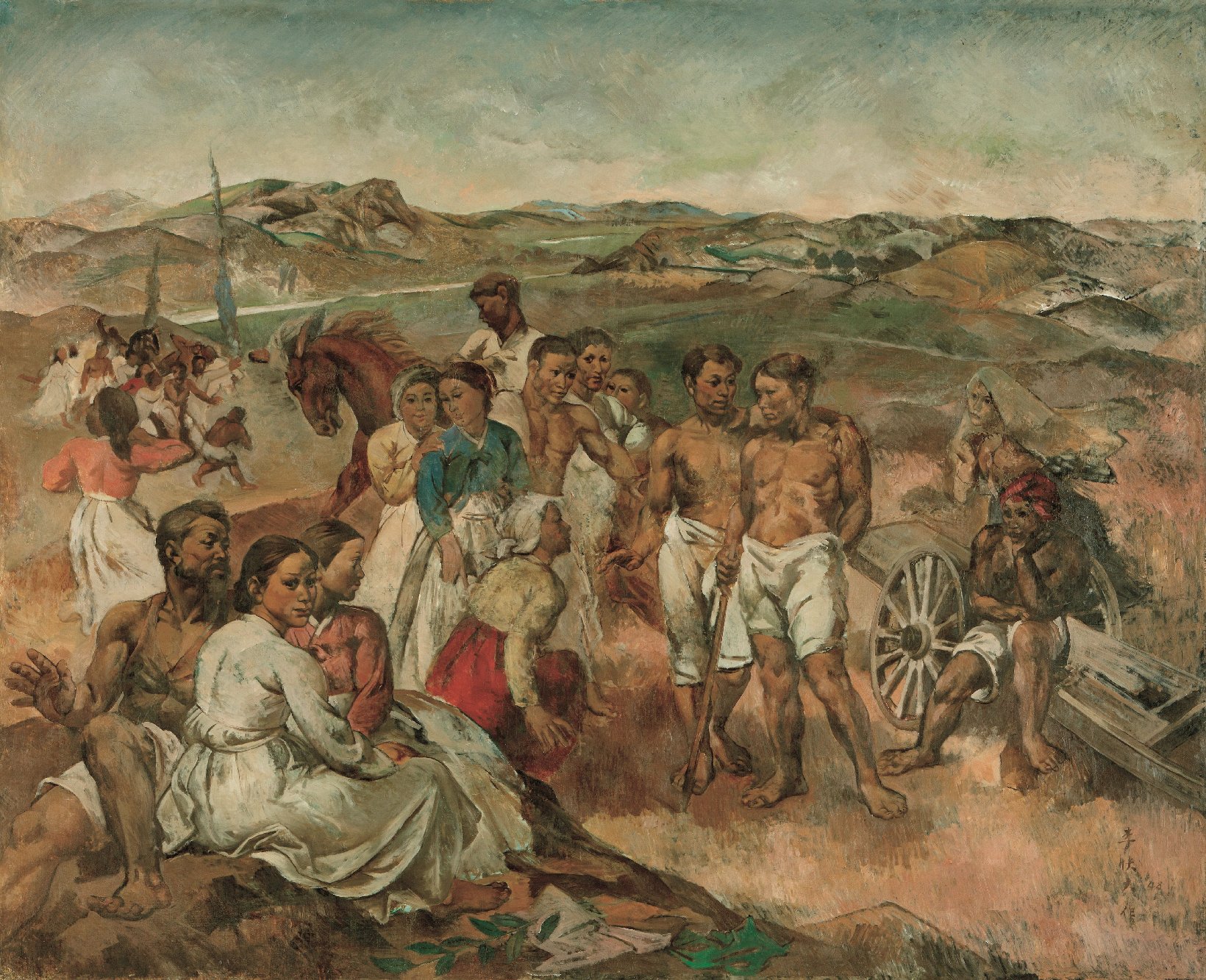
Part 1 introduces masterpieces produced from the 1910s to the 1950s. The works encompass not only the introduction and the development of contemporary art in korea but korean history. Our selection such as Kim Kwanho’s Sunset, the first nude painting in korea, Self-Portraits by Ko Huidong, Kim Kwanho, Lee Chongwoo, Oh Jiho and Kim Yongjun, all submitted to Tokyo University of the Arts as graduation works, clearly reveal the self-awareness of the modern artist and a new perspective of the human body. Oh Jiho’s Portrait of Wife and Lee Insung’s one autumn day express vernacular of Joseon, one of the issues of the korean art scene in the 1930s. Through Pai Unsoung’s a Big Family, one could observe the housing and clothing of the time, and in Lee Quede’s Crowd Ⅲ, the conflict between ideologies is witnessed. Lee Jung Seob’s Family on the Road portrays the family travels to the warm southern country on an ox cart and Park Soo-Keun’s by the Roadside captures a girl piggybacking a baby with his unique technique both show hope and the will to continue their lives on the ruined ground after the war.
Part 2 features figure paintings produced by the representative artists of korean modern and contemporary art from the 1950s to 2000s. The works are engraved with the tumultuous modern history that has been unfolding since the liberation and the joys and sorrows of koreans. Figures depicted in Kim Whanki’s Women, Plum Blossoms and Jar and Kim Sou’s Two Friends symbolize the tradition and nationality of korea. Chun Kyungja’s Tango Flowing at Dusk, portraying a woman puffing out cigarette smoke, is both a self-portrait and a symbol for the elevated status of women. Hwang Youngsung’s Winter Family, depicting a family and a cow, and Kim Myonghi’s Preparing Kimchi, illustrating a woman making kimchi shown on a chalkboard from an abandoned school, embody the life of the artists and their intimate memories. Moreover, the works by Oh Yoon, Nho Wonhee, Lee Jonggu, Lim Ok-Sang, Shin Hak-Chul and Choi Minhwa, representing Minjung Art (people’s art) from the 1980s are on display. Throughout their brushstrokes, the people as grandiose objects in the past are reborn as living, breathing, and working humans of the future.
We hope this exhibition will provide an opportunity to rediscover korean figurative painting and to increase awareness of the importance and uniqueness of korean modern and contemporary art.
참여 작가
천경자, 박생광, 김흥수, 김환기, 류병엽, 김홍주, 권순철, 최영림, 임직순, 강연균, 김기창, 이숙자, 황영성, 손상기, 김원숙, 김명희, 정종미, 이만익, 최민화, 이종구, 신학철, 노원희, 황재형, 임옥상, 김호석, 홍성담, 오윤, 김정헌, 강요배
《인물, 초상 그리고 사람 – 한국 근현대인물화》전은 100여 년에 걸친 한국 미술사에서 시대정신을 구현하며 독창성을 보여준 인물화를 대거 선보인다.
인물화는 다양한 인간상을 담아낸 역사의 ‘자화상’이다. 우리는 작품에 재현된 인물의 얼굴, 의복과 생활양식 등을 통해 시대의 흐름과 사회상의 변화를 확인할 수 있다. 이러한 맥락에서 인물화는 미술사뿐만 아니라 역사적 기록물로서 중요한 가치를 지닌다. 출품작에는 일제강점기와 6·25 전쟁, 산업화와 민주화 운동 등 격동의 시대가 거울처럼 반영되어 있으며, 한민족의 애환, 개개인의 소소한 일상, 가족을 향한 사랑도 담겨 있다. 그들의 모습은 오늘을 살아가는 우리에게 잔잔하면서도 깊은 감동을 전한다.
전시 1부에서는 1910년부터 1950년대까지 제작된 한국 근대미술의 명작을 만난다. 한국 근대미술의 전개 과정을 살필 수 있는 작품들이다. 한국인이 그린 최초의 누드화인 김관호의 <해질녘>, 도쿄예술대학의 졸업 작품으로 제출된 고희동, 김관호, 이종우, 오지호, 김용준 등의 자화상에는 근대적 의미의 ‘미술가’라는 정체성과 인체를 보는 새로운 시각이 포착된다. 오지호의 <아내의 상>과 이인성의 <가을 어느 날>은 1930년대 한국 화단의 쟁점 중 하나였던 조선적 향토색을 표현하고 있다. 배운성의 <가족도>에서 당시 주거와 복식을 생생하게 살필 수 있으며, 이쾌대의 <군상 Ⅲ>는 좌우 이데올로기 대립이라는 시대 상황을 읽을 수 있다. 소달구지에 가족을 싣고 따뜻한 남쪽 나라로 향하는 이중섭의 <길 떠나는 가족>, 아기를 업은 단발머리 소녀의 모습을 그린 박수근의 <길가에서>에는 전쟁으로 폐허가 된 터전에서도 꿋꿋하게 생을 이어가려는 의지와 희망이 스며 있다.
2부에서는 한국 현대미술을 대표하는 작가들이 1950년대부터 2000년대까지 제작한 인물화를 선보인다. 해방 이후 펼쳐진 파란만장한 현대사와 한국인의 희로애락이 아로새겨져 있다. 김환기의 <여인과 매화와 항아리>와 김흥수의 <길동무> 속의 인물은 전통과 민족을 상징하는 이상적 대상으로 등장한다. 푸른 담배 연기를 내뿜는 여성의 옆 모습을 그린 천경자의 <탱고가 흐르는 황혼>은 작가의 자화상이자 변화한 여성상을 대변한다. 가족과 소를 한 화면에 담은 황영성의 <겨울 가족>, 폐교에서 발견한 칠판에 김치를 담그는 여성을 그린 김명희의 <김치 담그는 날> 등에는 화가의 생애와 내밀한 기억이 녹아 있다. 또한 1980년대 ‘민중미술’을 대표하는 오윤, 노원희, 이종구, 임옥상, 신학철, 최민화 등의 작품도 만난다. 그들의 붓을 거치며 어제의 근엄하고 어여쁜 인물은, 살아 숨 쉬며 땀 흘리며 일하는 내일의 ‘사람’으로 거듭나게 된다.
갤러리현대의 2020년 개관 50주년을 기념한 이번 전시를 통해 한국 구상회화의 가치가 재발견되고, 한국 근현대미술의 중요성과 독창성이 더욱 널리 알려지길 기대한다.
Installation Views
{{ lbCurrent.title }}
{{ lbCurrent.text }}