
Frieze Seoul
Sep 2 – Sep 5, 2022
Gallery Hyundai, a lead participant in the Masters section of the inaugural Frieze Seoul 2022 art fair, is pleased to present an exhibition focusing on three representative figures in the history of Korean experimental art: Quac Insik (1919¬–1988), Seung-taek Lee (b. 1932), and Park Hyunki (1942–2000). The gallery’s booth (M6) will leave both domestic and overseas visitors with an unforgettable impression in encountering these three masters’ pioneering and innovative works that utilize stone as a key material. The three artists viewed stone as a proxy for nature at its most primal, a superb medium for experimentation with new art forms, and a fascinating material symbolizing the things that distinguish Korea from the West: its traditional culture and art, its way of life, and its people’s unique form of spirituality.
The central section of Gallery Hyundai’s booth is dominated by Untitled (1988/2021), a large video installation work by Park Hyunki. Viewers are awed by the massive bulk and presence of the stones, together with a video in which stones are stacked high like an ancient tower looming over the figures below. At three meters in height, it boasts the largest scale of any of Park’s TV Stone Tower works. The TV Stone Tower series contains several of Park’s most representative works, exemplifying his core concept of the coexistence of reality and illusion. First presented at the 1988 exhibition The Present of Art Seen Through Japanese and Korean Artists: Horizontal and Vertical at Seibu Art Museum, this monumental work was posthumously presented for the first time at the artist’s 2021 Gallery Hyundai solo exhibition, I’m Not a Stone. Reflecting the era of the work’s creation, when large televisions with bigger screens and thinner cases had become more widespread with the arrival of remote controls, the work symbolically illustrates the shift in the TV Stone Tower series as it progressed into more shrine-like spatial installation works. Park’s Untitled (1978/2015), which resembles a low tower made with actual stones, was first shown at the artist’s 1978 solo exhibition at Seoul Gallery. Natural stones that are opaque and contain coarse grayish-white particles when viewed up close coexist with artificial stones that gleam translucently in amber and ruby tones. This is an example of contemporary art taking shape from the union between “stacking” as a cultural anthropological act—distinct from the Western sculptural approach of cutting, polishing, and welding—and ideas associated with wishing and longing.
A separate space at the booth’s center is devoted exclusively to the work of Quac Insik. To produce these works, the artist kneaded white clay—a pottery material that can be grasped in one’s hands—as if he were making rice balls, and then fired the results in a kiln. With his essay “Listening to the Sound of Objects,” Quac paved the way for a movement of “non-made art” as an exploration of materiality in the Korean and Japanese art scenes. By applying minimal marks to his material (white clay), the artist created intimate artworks evoking the rice balls that served as emergency rations for refugees. In other cases, he rolled and sliced the white clay to produce something resembling the sliced rice cakes used in soups. Breaking away from the artistic approach where the sculptor behaves as an agent cutting and shaping the material, he instead observed the material’s qualities closely, elevating the marks left by the affectionate, painstaking encounter between object and artist into the realm of art. Untitled (1982) is a tactile visualization of the intimate sensation that Quac experienced in touching white clay, a post-minimalist work that retains scant evidence of the artist’s presence in the material. His Untitled 1976 (1976) was inspired by his experience of sitting on a stone by a river in his Dalseong County hometown and spending the day repeatedly writing characters in brushstrokes and then washing them away. While on the riverbank, he picked up a stone that he particularly liked and kept it in his studio. To learn about the stone’s properties, he cut into its surface with a nail, exposing its skin. Here, we can see Quac Insik’s identity as an artist: the views on nature and life that led him to adopt various objects as materials for his works, and his focus on examining the inherent properties of matter. His act of gouging with a nail to investigate the stone’s surface would later evolve into works where he dabbed ink points on both the front and back of handmade mulberry paper.
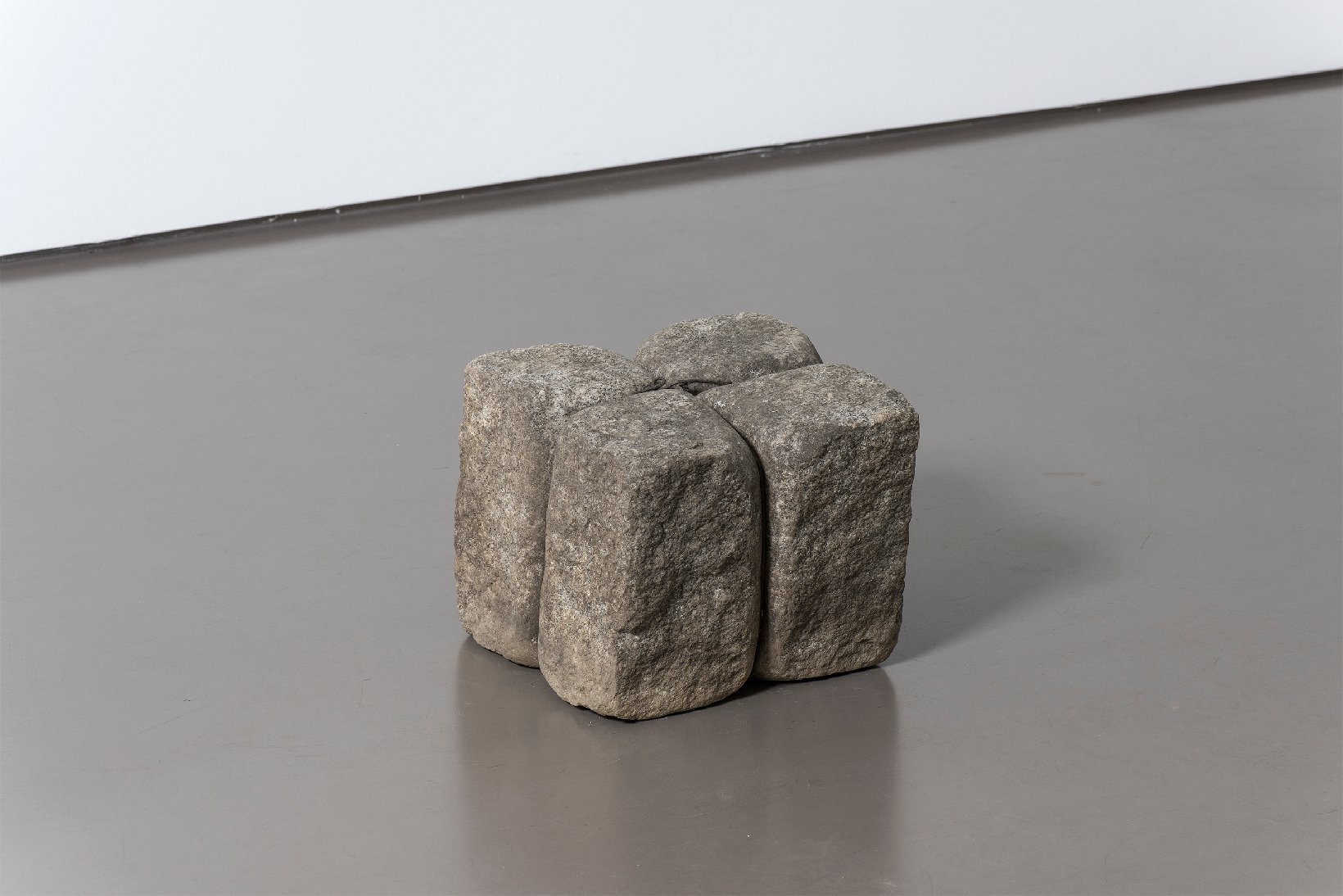
On the right side of the booth are works from Seung-taek Lee's Tied Stone series—vibrant and clever pieces that evoke alien life forms. Lee is widely acknowledged as a pioneer in Korean avant-garde art, having presented remarkably experimental works since the late 1950s and parting ways from Western concepts of modern sculpture to embody a new concept of “non-sculpture.” His groundbreaking oeuvre drew enthusiastic attention once again last July when he presented various works from his “binding” series at his Gallery Hyundai solo exhibition, (Un)Bound. The gallery’s booth at Frieze Seoul focuses on his Tied Stone series, in which the artist liberates his stone material by binding it and twisting its original properties while at the same time showing its organic vitality. On the ground, Lee’s “soft stone” and “stone buttocks” works display the artist’s trademark subversive humor and experimental spirit, whereby incompatible elements are brought together in one place and particular objects are situated in bizarre environments.
Through unfamiliar artworks where objects bear marks of binding and tying, Lee affords a sense of liberation, opening up a new world for us beyond conventional ideas about objects and art.
Gallery Hyundai CEO HyungTeh Do suggests adopting an art historical perspective when viewing the stone-based works at the gallery’s booth in the Masters section of Frieze Seoul 2022.
“This booth serves as an encapsulation of Gallery Hyundai’s capabilities and adventurous approach since the 2010s in examining Korea’s experimental artists in fresh ways within larger trends and contexts in global art history, and in organizing museum-quality exhibitions to present their monumental works,” he explained. “Gallery Hyundai has utilized international art fairs like the Frieze events in New York and London, Frieze Masters, and the Armory Show as strategic platforms for raising broader awareness of pioneering figures in Korean experimental art,” he added. “These large-scale art fairs, which are visited by major art world figures from different countries, have provided an optimal setting for effectively providing an international ‘debut’ for works by experimental artists whose level of recognition in both the domestic and overseas art worlds is not as great as their historical achievements warrant. Korea’s experimental artists have now become part of Gallery Hyundai’s unique identity, together with the currents and traditions of figurative painting, from modern to Minjung art; Korean monochrome (Dansaekhwa) and other forms of Korean abstract art; and video and media art from the works of Nam June Paik onwards.
“Korea’s experimental art expresses a keenly critical stance that extends through the environment and history surrounding art, including elements like nature and the artificial, everyday life and politics, substance and ideas, tradition and innovation, and reality and illusion. We can see the passion and effort of artists who devoted themselves endlessly to realizing their unique artistic visions, and we can observe the intensity of that zeitgeist in the resulting artworks. These three artists—Quac Insik, Park Hyunki, and Seung-taek Lee—presented new forms of discourse by creating artistic languages from the spirit and attitude of communing with nature, which is an inherent part of the Korean tradition. We hope that Gallery Hyundai’s booth at Frieze Seoul 2022 will be an opportunity for their groundbreaking works to reach a broader range of viewers from around the world.”
갤러리현대는 첫 회를 맞은 프리즈 서울(Frieze Seoul) 2022의 마스터즈 섹션에 참여하여, 한국 실험미술을 대표하는 곽인식(1919-1988), 이승택(1932-), 박현기(1942-2000)의 3인전을 선보인다. 갤러리현대의 부스M6에는 세 거장의 ‘돌’을 재료로 한 혁신적이고 선구적인 작품을 소개하며 국내외 관람객에게 잊히지 않는 경험을 선사할 예정이다. 이들에게 돌은 가장 원초적인 자연의 대리물이자, 새로운 미술을 실험하는 탁월한 재료였으며, 서구와 차별화된 한국의 전통적 문화와 예술, 생활 양식, 나아가 한국인 특유의 정신성을 상징하는 영험한 사물이었다.
갤러리현대의 부스 중심은 박현기의 대형 비디오 설치 작업 <무제>(1988/2021)가 장악한다. 마치 고대의 돌탑처럼 인간을 내려다보는 듯 높게 쌓인 돌 영상과 실재 돌의 육중한 스케일과 존재감이 관람객을 압도한다. 3m 높이로 박현기의 ‘TV 돌탑’ 중 가장 거대한 규모를 자랑한다. ‘TV 돌탑’ 시리즈는 박현기 작업의 핵심인 실상과 허상의 공존을 보여주는 대표작이다. 1988년 일본 세이부 미술관에서 열린 《일본과 한국 작가로 본 미술의 현재: 수평과 수직》전에서 공개한 기념비적 작품으로, 2021년 갤러리현대 개인전 《I’m Not a Stone》을 계기로 작가 사후 처음으로 공개되었다. 이 작품은 리모컨이 등장하자 텔레비전 외피가 얇아지고 브라운관 화면의 크기가 커진 대형 TV가 보급되던 시대 상황을 반영하며, 점차 신전(神殿)화된 공간 설치 작업으로 발전해 간 ‘TV 돌탑’의 변화 양상을 상징적으로 드러낸다. 실제 돌을 쌓아 올려 만든 낮은 돌탑처럼 보이는 박현기의 <무제>(1978/2015)는 1978년 서울화랑에서 열린 개인전에 처음 발표되었다. 가까이에서 관찰하면 불투명하고 거친 회백색 입자의 자연 돌과 조명을 받으면 호박색이나 루비색으로 투명하게 빛나는 인공 돌이 공존하고 있다. 깎고 다듬고 용접하는 서구 조각의 조형 방식과는 차별화된 ‘쌓기’라는 문화인류학적 행위와 바라고 염원하는 관념이 만나 동시대 미술이 된 작품이다.
부스의 중앙 별도 공간에는 곽인식의 작품만을 선보인다. 한 주먹에 잡을 수 있는 도자기의 재료인 백토를 마치 주먹밥을 만들 듯 꾹꾹 주물러 가마에 구워낸 작업들이다. 곽인식은 ‘사물의 소리를 듣다’라는 에세이를 필두로 한국과 일본 미술계에 ‘물성’을 탐구하는 '만들지 않은 미술'의 길을 열었다. 작가는 재료(백토)에 최소한의 흔적을 더해 피난 길 비상 식량으로 사용되었던 주먹밥 혹은 한 번 백토를 굴려 썰어 낸 떡국 떡가래를 연상시키는 내밀한 작품을 완성했다. 예술가가 주체가 되어 재료를 조각하거나 소조하는 방식을 벗어나 재료의 성질을 내밀하게 관찰하며 애정과 정성을 들여 물(物)과 예술가의 ‘만남’의 흔적을 작품으로 승화한다. <무제>(1982)는 백토를 만지며 경험한 친밀한 감각을 촉각적으로 시각화한 것으로, 재료에 예술가의 흔적을 최소한으로 간직한 포스트미니멀적인 작업이다. 곽인식의 <무제 1976>(1976)는 고향 달성군 강가에서 돌 위에 앉아 하루 종일 붓글씨를 적었다 씻어냈다를 반복하던 경험에서 영감을 얻은 작업이다. 작가는 강가에서 우연히 마음에 들어 주워 온 돌을 작업실에 두고는 그 돌의 성질을 알고자 강돌 표면을 못으로 찍어 속살을 드러냈다. 자신의 자연관과 생활관을 바탕으로 만물을 작업의 재료로 삼고, 물질의 성질을 연구하는 데 온 힘을 기울인 곽인식의 면모를 확인할 수 있다. 돌의 표면을 탐구하며 못으로 찍어간 점은 이후 화지의 앞 뒤에 먹으로 점을 찍는 작업으로 발전해간다.
부스의 오른쪽에는 외계 생명체를 연상시키는 위트와 생명감이 돋보이는 이승택의 <물렁물렁한 돌> 시리즈가 이어진다. 이승택은 1950년대 후반부터 서구의 근대적 조각 개념에서 벗어나 ‘비(非)조각’이라는 개념을 담은 전위적인 작품으로 한국 아방가르드 미술의 선구자로 평가 받고 있다. 지난 7월, 갤러리현대 개인전 <언바운드 (Un)Bound>에서 다양한 ‘묶음’ 시리즈를 선보여 그의 파격적인 작품세계가 다시 화제를 모았다. 프리즈 서울의 부스에는 딱딱한 돌을 묶어버리면서 본래의 성질을 비틀어 해방시키는 동시에 유기체적 생명감을 드러내는 <매어진 돌> 시리즈를 집중적으로 소개한다. 그 외에 바닥에 놓인 '물렁한 암석(巖石)'과 엉덩이처럼 생긴 '돌 궁둥이' 작업은 서로 연관될 수 없는 요소들이 한 장소에서 만나거나 특정 사물이 전혀 엉뚱한 환경에 위치하게 되는 이승택 작품세계 특유의 위트와 ‘실험정신’을 드러낸다. 사물을 묶거나 매어진 흔적을 간직한 그의 낯선 작품은 우리에게 하나의 세계를 열어주어 사물과 예술에 대한 통념에서 벗어나는 해방감을 안겨준다.
갤러리현대 도형태 대표는 ‘돌 판’으로 구성되는 프리즈 서울 2022의 마스터즈 섹션 부스를 미술사적 관점에 바라볼 것을 제안한다.
“이번 부스는 2010년대부터 한국 실험미술가를 세계 미술사의 거대한 흐름과 맥락에서 새롭게 바라보며, 그들의 기념비적 작품을 선보이는 미술관급 전시를 개최해온 갤러리현대의 도전과 역량의 집결체와 같다. 갤러리현대는 프리즈 뉴욕과 런던, 프리즈 마스터스, 아모리 등 국제적 아트페어를 한국의 실험미술을 개척한 선구자를 널리 알리기 위한 전략적 플랫폼으로 삼았다. 세계 각국의 주요 미술계 인사가 총출동하는 대형 아트페어가, 그 미술사적 업적보다 국내외 미술계에 널리 알려 지지 않은 실험미술가의 작품을 국제 미술계에 효과적으로 데뷔시키는 최적의 장소였기 때문이다. 이제 한국의 실험미술은 근대미술부터 민중미술까지를 포괄하는 구상회화의 흐름과 전통, 단색화를 중심으로 한 한국 추상미술, 백남준과 그 이후의 비디오 및 미디어 아트 등의 테마와 함께 갤러리현대만의 정체성이 되었다. 한국의 실험미술에는 자연과 인공, 일상생활과 정치, 물질과 관념, 전통과 혁신, 실재와 환영 등 예술을 둘러싼 환경과 미술사를 가로지르는 첨예한 문제의식이 담겨있다. 자신만의 작품세계를 구축하기 위해 끊임없이 정진한 작가들의 열정과 노력, 그 결과물인 작품에서 치열한 시대정신을 확인한다. 곽인식, 박현기, 이승택 작가는 우리의 전통에 내재한 자연과 소통하는 삶의 정신과 태도를 미술 언어로 전환하며 새로운 담론을 제시한 작가들이다. 갤러리현대의 부스를 통해 그들의 혁신적인 작품이 더 넓은 세계의 관객과 만나길 희망한다.”
{{ lbCurrent.title }}
{{ lbCurrent.text }}