
Quac Insik
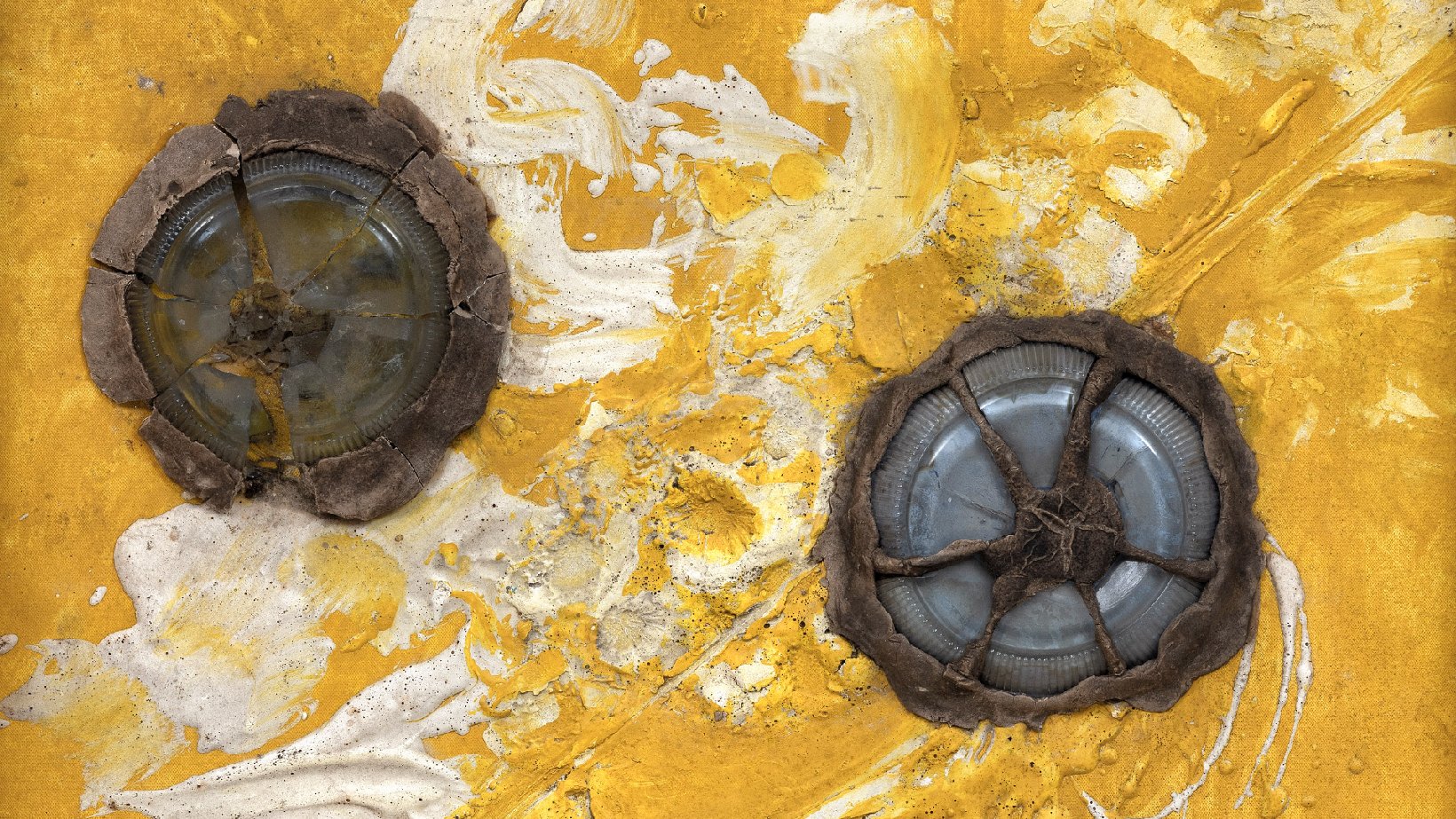
Quac Insik (1919–1988) was an artist truly ahead of his time and an innovative artist living in Postwar Japan. He delved into the concept of materiality and produced pioneering works that experimented with objects such as glass, brass and paper far in advance of related discussions in Japan prior to the development of Mono-ha and arte povera in the West. Quac’s work was a major influence on the Mono-ha movement and he is well known to be an artistic mentor to Lee Ufan.
Memories of his childhood in Korea and the materials from that time heavily influenced Quac’s work and his focus on the natural versus the man-made. The idea of the material and matter and the essence inherent within led the artist to explore objects such as glass, stone, brass, and paper. In many works, the artist broke glass and glued them together again or cut brass plates only to sew them together or drilled holes in stones and canvases. Quac also focused on simple forms and shapes, such as dots and circles, that inhabit the canvas in clusters with perceived depth.
Although Quac continuously created innovative works and was receptive to new trends and methods of paintings, he did not receive the acknowledgement he deserved within the Japanese society perhaps due to his identity as an ethnic Korean. However, Quac spent the majority of his life in Japan due to the fact he believed it the only place that he could practice at the forefront of the avant garde.
Quac was born in Daegu before moving to Japan in 1937. He graduated from the Tokyo University of the Arts in 1941. During his early career, he showed at many international venues such as Tokyo International Biennale in 1965, São Paulo Biennial in 1969, and Sydney International Biennial in 1976. His first solo show in Korea was held at Gallery Hyundai in 1982. He has two major retrospectives in Korea at National Museum of Modern and Contemporary Art in 1985 and most recently in June 2019 to celebrate the centennial of his birth.
곽인식 (1919–1988) 화백은 일본 미술에서 사물의 물성 (物性)에 대한 논의가 본격화 되기 전부터 이를 탐구해온 작가이다. 작가는 유리, 황동, 종이 등 다양한 소재의 물성을 실험하며 선구적인 작품을 창조해왔다. 그는 1960년대 말부터 성행한 서미술의 아르테 포베라나 1970년대 일본의 모노하 같은 물성을 다룬 이러한 미술계의 주요 움직임보다 먼저 이런 작품들을 제작해왔다. 1960년대 초기 작품부터 소재에 대한 관심과 점, 원과 같은 기본적이고 간결한 형상은 그의 작품에서 공통적으로 찾아볼 수 있는 요소이다.
끊임없는 혁신적 창조물과 회화의 흐름에 대한 이해와 주도에도 불구하고, 곽인식은 일본사회에서 작가로서 제대로 인정을 받지 못한 데에는, 재일 한국인이라는 그의 정체성이 영향을 미쳤을 것으로 보인다. 뿐만 아니라 활발한 작품 활동이외에도 그는 사회 문제를 고민하고 실천하는 열정적인 활동가이기도 했다.
곽인식은 1919년 대구에서 출생하여 1937년 일본으로 이주하여 1941년 도쿄의 일본미술학교를 졸업했다. 1965년 도쿄 비엔날레, 1969년 상파울로 비엔날레, 1976년 시드니 비엔날레에 초대출품하는 등 해외에서 활발하게 작품활동을 하였다. 그리고 국내에서 1982년 현대화랑에서 개인전을 가지면서 본격적으로 한국화단에 소개되었다. 1985년 국립현대미술관에서 대규모 회고전을 가졌으며, 2019년 6월 탄생 100주년 기념 개인전이 국립현대미술관 과천관에 개최되었다.
Video
곽인식
100th Anniversary of Birth Quac Insik
Selected Works
{{ lbCurrent.title }}
{{ lbCurrent.text }}