Press
Christine Sun Kim 김 크리스틴 선: VOGUE Interview
Aug 26, 2026
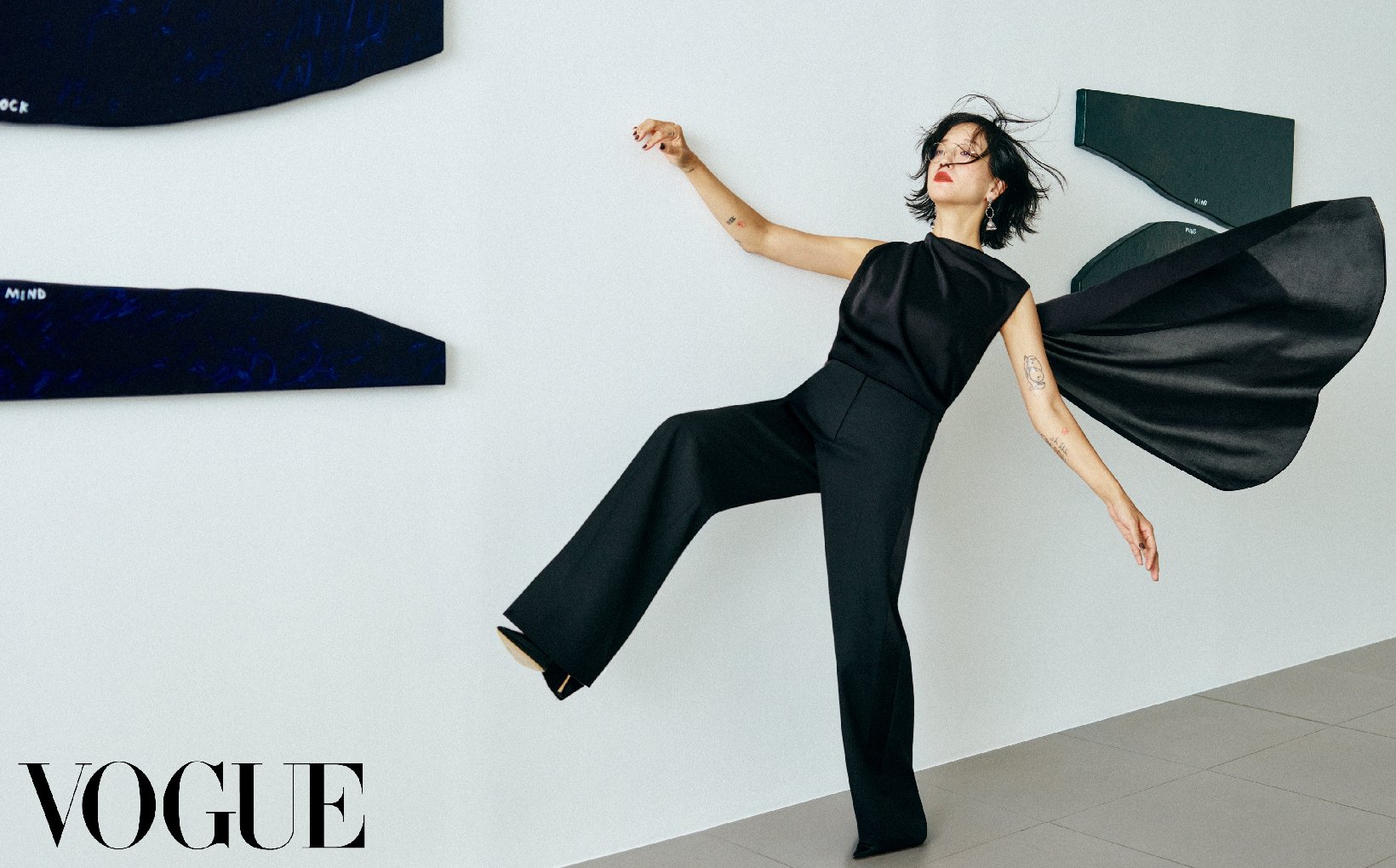
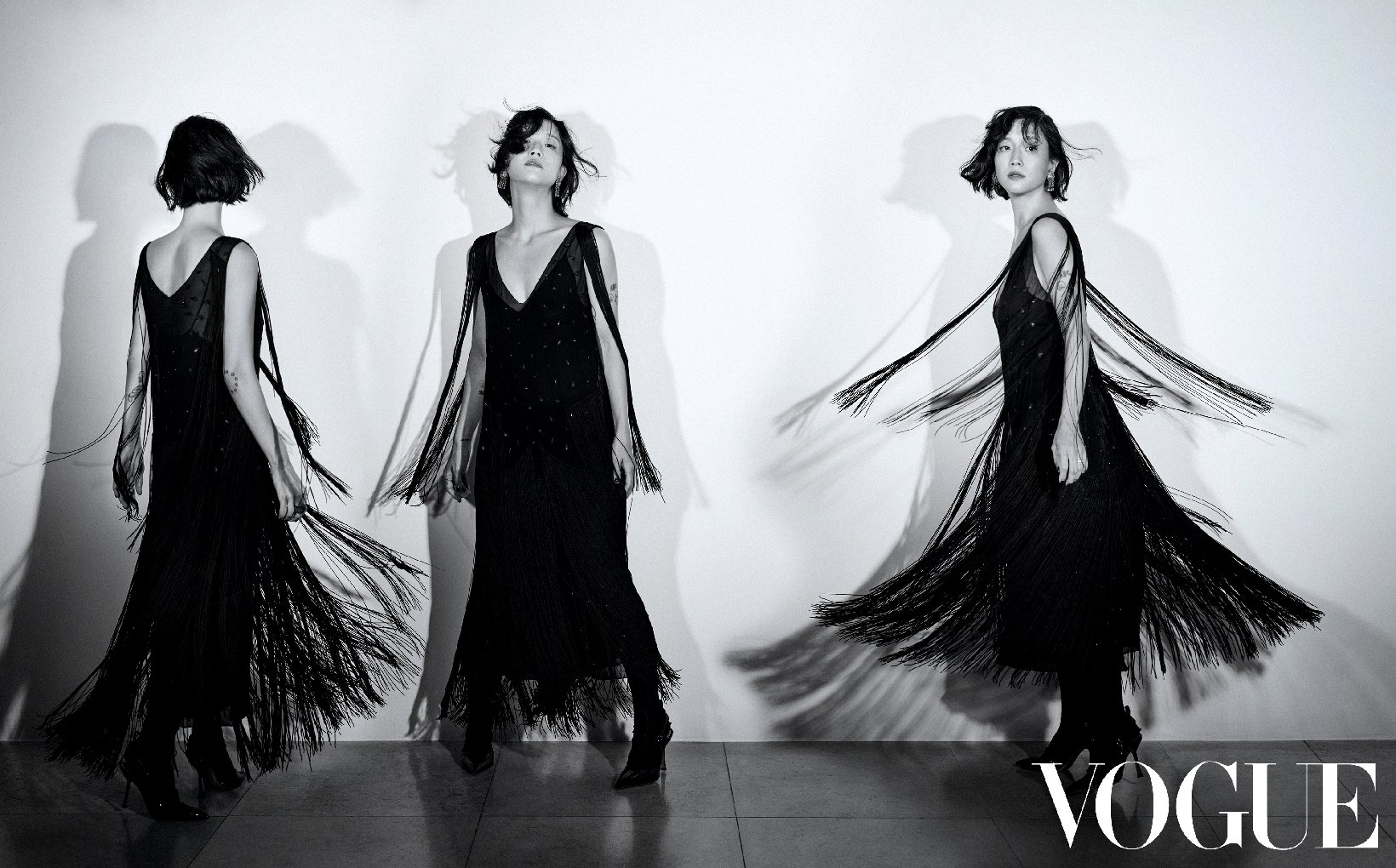
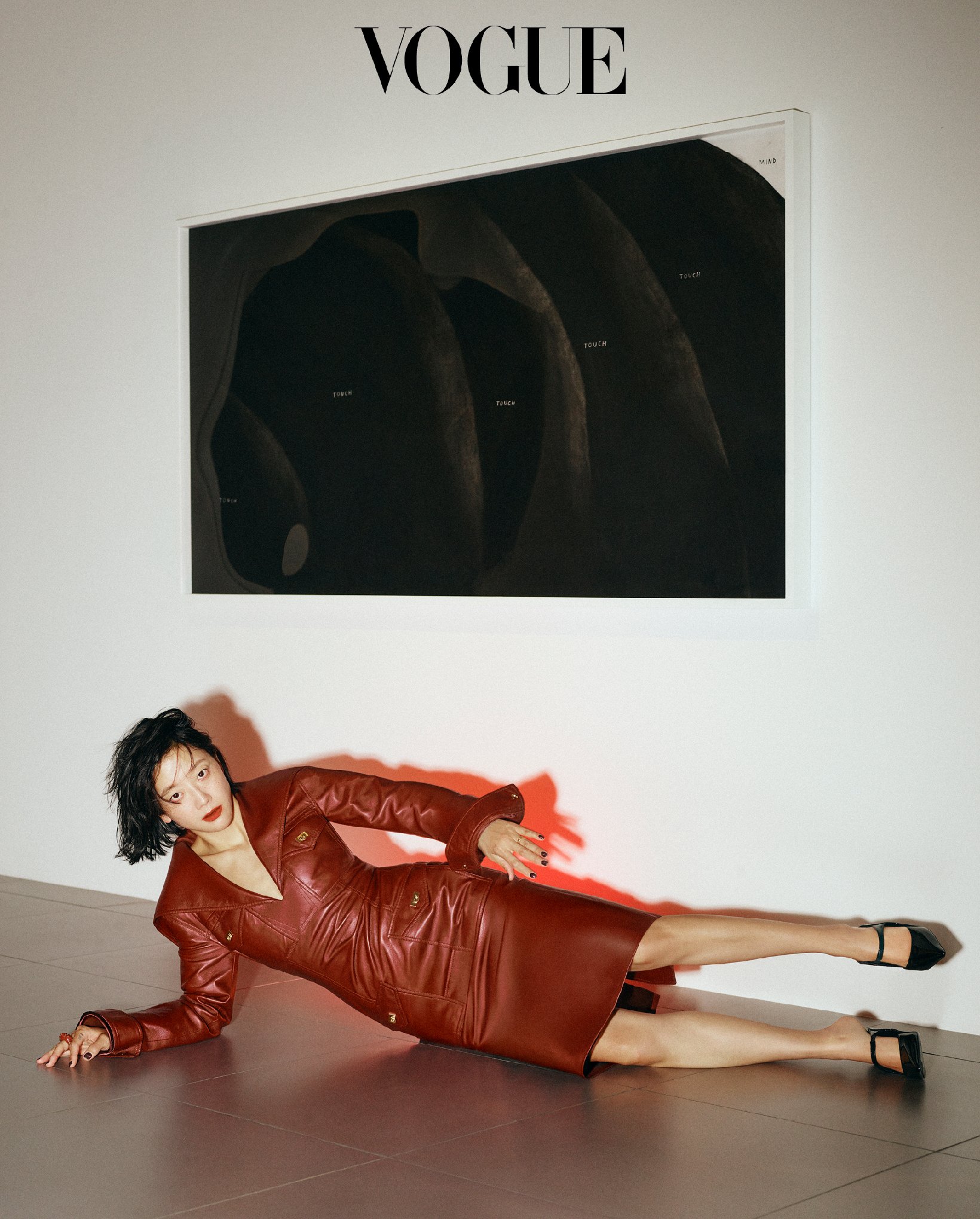
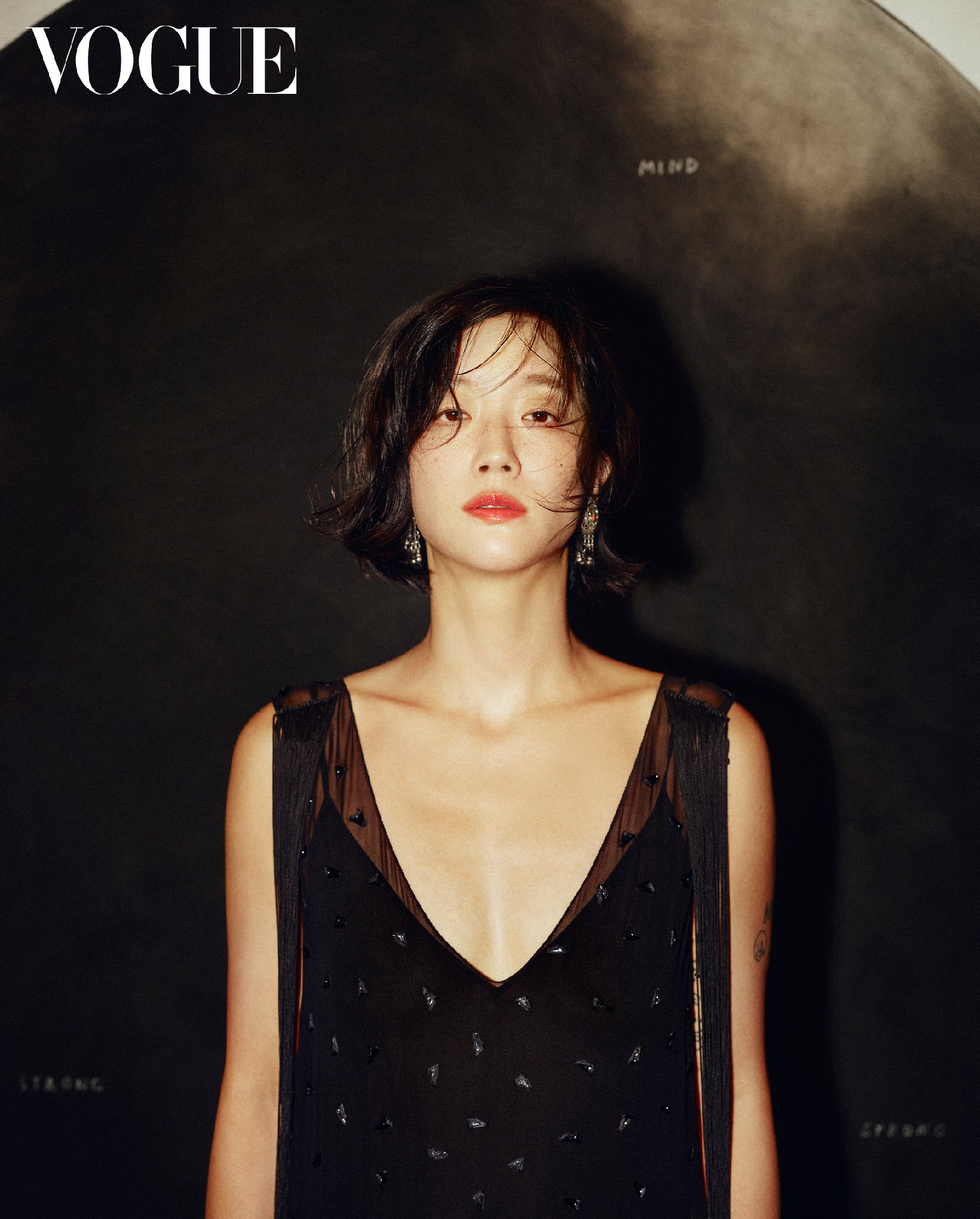
At the opening of your exhibition at MMCA Seoul, you wore a Prada Re-Nylon black dress with Mary Jane shoes. During the Vogue photoshoot at Gallery Hyundai, I also got the impression that you enjoy fashion. What does fashion mean to you?
Fashion feels like an extension of my identity. I like to use the occasion of an exhibition opening, a performance, or a dinner to express myself in an exaggerated way. It’s a good way to channel attention to my work and the ideas that I want to express through my practice. I'm having so much fun with it, especially when I get to pose. Posing is what gives fashion substance.
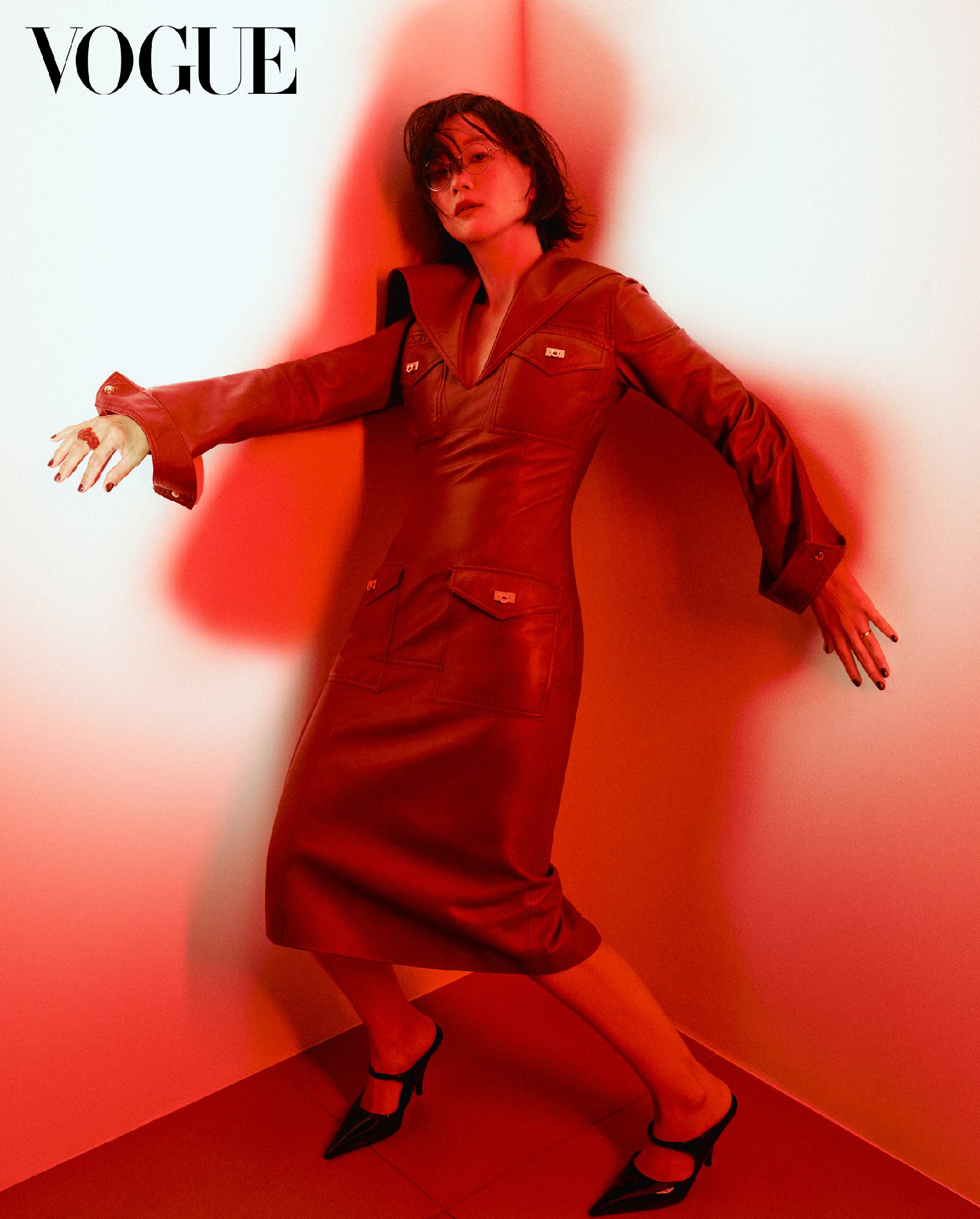
During the shoot, you wanted to be photographed wearing glasses. Are glasses a special item for you? I also heard that you declined to pose with your eyes closed during a photoshoot.
I wear eyeglasses every day, so I wanted the audience to know they're very much part of my everyday identity. My cousin was present at the photoshoot and said I was able to convey so many different faces, which is why I wanted to make sure the audience would still see me with eyeglasses. A pose with eyes closed feels like shutting the world out of my life. I don’t want to be perceived without being able to perceive back. If my eyes are closed, it's like I become a show for others without my consent. Ultimately I wanted to be comfortable with every pose I make. Early in my career, I did a lot of photoshoots and was directed into some poses I wasn't entirely comfortable with. Now I feel more empowered to control my image and how I come across.
Before the interview, I received a document outlining words and modifiers to be careful with when describing you and your work, as well as links to helpful reference sites. For someone who has spent a lifetime exchanging information indirectly through interpreters, writing, and other media, and who has experienced errors and confusion in that process, such a measure feels entirely understandable. Could you tell us more about why you set up this kind of “safeguard”?
I had a studio visit with a curator from a huge art museum, and I found myself spending 45 minutes explaining deafness and sign language, then finally the last 15 minutes on my work. This has frankly happened way too often. I got so fed up that my agent helped me write this rider, and it has saved me so many steps, so much labor, and so much time! I often do interviews with writers who have probably never met a deaf person before. Imagine the way a white writer would write about a Korean person if they had never met one before. It’s for my protection, but it’s also for the writer, or journalist, or curator. People make mistakes and use offensive language not because they mean to, but because they don’t know the background or the hurtful tropes they are accidentally falling into. The rider helps with that and enables our conversation to more fully focus on my work as an artist.
You understand sound not simply as an auditory phenomenon, but as a social system closely tied to power, institutions, and norms. This feels natural, given that you have had to bear tension, errors, and unfairness in a society where hearing people are the majority. You once said that, in the early years of your practice, your work was based on anger toward society, and that it took time before you could work in a more playful mode. Did that change come from having your two lovely daughters? Or did the continued act of making art change you?
I think there are two reasons for this. One: my platform got bigger and bigger, so I finally felt safe enough to start playing, rather than channeling my anger or fighting or working through activism. Two: since becoming a mother, I have never experienced such a huge mental and physical shift in such a short time! It's all about being a team player, negotiating, setting boundaries, setting examples, embracing new changes, and always being in wing-it mode. I have become hyper-aware and sensitive about how my decisions with my partner can easily affect our kids, so it’s super stressful! Hence, I try to take it easy on myself.
After the MMCA press conference in Korea, you are now on vacation with your family. Where are you spending time, and what have you been doing? And what vacation look are you wearing right now?
I was in Spain with my family before my opening at MMCA and then went to Paris to rejoin them. To be honest, traveling with young kids can be hard and not very relaxing, but creating core memories for them is exactly what I want them to remember when they get older. It's always about keeping them busy by visiting the zoo, swimming, hitting ice cream parlors, letting loose at playgrounds, and watching Netflix at night. I always wear basics during family trips. I am not yet at the point where I can wear nice clothes around my little kids. Ask me again when they're older!
You are often asked why you frequently use black and white. You answered that it comes from the fear you feel in a society where hearing people are the majority. Because you have had to account for tension and errors, you have tried to make your message as clear as possible, and that led to your use of black and white. You have also said, “I want my work to be conveyed as clearly as possible. I don’t have the luxury of being misunderstood.” But I heard that you have recently begun using a wider range of colors. Why is that? What kinds of colors are you mainly using, and how do you approach choosing them?
This is similar to the reason why I'm feeling more playful and experimental with my work. I feel more and more privileged to have an audience that will follow me into new territory. I’m interested in being less didactic, maybe using less written language and relying more on abstraction. Yes, they may misunderstand me at first, and I would be okay with that. I have started painting dark, rich colors that could pass as black if you quickly glance at them. The longer you look at them, the more you’ll see deep blues and greens. If you see any secondary color coming out of my dark paintings, it's like seeing traces of my presence, just like I do with charcoal smudges. I used to paint before I started working with sound, but I didn't enjoy the process of painting. It took me years of working with sound for me to enjoy painting again.
Musical notation, written language, infographics, American Sign Language (ASL), and the use of the body appear repeatedly in your work, and you also place humor in a strategic way. I am especially curious why you bring humor into your practice.
Oh, humor is such a good tool! When I moved to New York City, I realized that the fastest way to connect with hearing people at bars and such is to bring in humor. I don’t want to spend too much time filtering people and figuring them out—if they're being a dick, then bye bye. If they're being cool, fast friends. I am aware that people often find the topics I'm interested in a bit too serious, so I find it incredibly helpful to use humor while dealing with serious topics. That way they stay in the room with me while I am pissed.
Until last year, the name Christine Sun Kim was more familiar to me. As you prepare exhibitions in Korea, you have been working under the Korean name Kim Christine Sun (김 크리스틴 선). I am curious why you made this change.
I guess I am adapting. I gotta Korean up!
I have heard that you have made efforts to connect with Korean culture. You are also an active member of GYOPO, a Los Angeles–based collective of diasporic Korean artists. Your grandparents left Korea and settled in the United States, beginning a new life for your family. You were born and raised in the United States, later moved to Germany, built a family there, and now present exhibitions in Korea, including the 2016 Seoul Mediacity Biennale and the 2023 Gwangju Biennale. I also heard that July 30, the day of the MMCA exhibition opening, marked the second anniversary of your grandmother’s passing. In that sense, I imagine exhibiting in Korea must feel even more special. How do you feel about it?
Exhibiting at a national museum and a gallery in Seoul is such a full circle moment for me. It's like continuing the line of heritage around the world and paying my respects to my grandparents. Being here also sets an example for my kids, and hopefully they will want to come to Korea on their own terms. By doing this interview, I want everyone in Korea to know how awesome my parents are; they had me right after emigrating to the US and they learned English and American Sign Language at the same time. It was a lot to take on while make a new life in a new country. I wouldn't be an artist if it wasn't for the fact that they learned to sign and have an actual relationship with me and my sister.
The title of your MMCA exhibition is Have Many Dumb Fights Against Rock. “Rock” seems to suggest fixed orders, norms, or rigid ways of thinking. The title implies engaging in reckless fights against this solid rock, and you seem to encourage us not to turn away from “a world full of fights, including groups, massacres, and colonization.” Do you hope that your work and art will have an effect on others beyond yourself?
I was never a huge believer in affecting people directly, but rather indirectly affecting people with power to do something that actually gets through. With what's happening in the world right now, I can't help but question the impact art has on people, and there's no way to accurately measure that.
In 2007, during a residency in Berlin, you began working with sound as a medium. You later returned to New York, but then went back to Berlin, met your now-husband, and have been living there since. You once said, “Making this kind of decision for love is not my type.” (laughs) The music for the new animation presented in this MMCA exhibition, shown on an 8.1-meter-tall vertical display, was also created by your husband, the German artist Thomas Mader. What kind of relationship do you have as artistic companions?
Fact correction: the animation was made by Jan Joost Verhoef and sound by Mladjan Matavulj. My husband is not involved in this installation, but we often collaborate. I think our collaboration has gotten better and better over the years, especially with his improved American Sign Language skills. At first I thought it might be too much to not only have a family with him but also collaborate artistically. Turns out we still barely have time together!
In this video work, the audience can experience sound, image, and touch together through vibration and rhythm. The exhibition is also structured so that visitors can move freely in and around the work installed in Seoul Box. Is this kind of “comprehensive experience,” beyond visual viewing, important to you?
As I started working with large scale murals and billboards, I really responded to the idea and the experience of scale. I loved that my drawings could become space and force a different kind of attention, maybe even confrontation. I basically want my work to be as immersive as possible, enough to swallow you up. With the piece at MMCA, I want the viewer to feel small and the imagery to loom over you.
I have heard that you experience sound and music through vibration. I also heard that while vibration used to be extremely important to you, it is no longer as central as it once was. Why is that?
When I first started working with sound, low frequency, bass, and vibration were clearly prominent, but now I realize it's much more than that. My work moved into more of a focus on sound as a political or conceptual entity rather than a sensory one. Also, as my work has progressed, it has become more focused on language itself. I’m often striving to find a balance between spoken and signed languages. In the end I want a place for our deaf histories to sit and exist without being erased.
The exhibition at Gallery Hyundai, on view from August 26 to October 18, will present a previously unseen series titled Mind. While the artist has primarily worked in drawing, this exhibition introduces painted canvases for the first time. In particular, the works featuring white text on a black ground represent a format rarely seen in the artist’s practice. The series also takes the form of diptychs, with the distance between the two paintings in each pair varying according to the context in which they are displayed.
I am so excited and nervous about this new direction in my practice. You'll see a series of canvas diptychs at Gallery Hyundai. Each work has a top portion and a bottom portion and they hang one above the other. The paintings are part of a larger series I am making about the mind. I love the concept of my mind becoming three dimensional and sculptural. When you put up the top and bottom canvases, you can put as much or little space in between, depending on your mood and the exhibition space, the architecture. I’m often thinking about context and I like to give the work some flexibility and dynamism. I think I spent so many months with my curatorial team planning and archiving my 13-year survey show at the Whitney Museum in New York and Walker Art Center in Minneapolis, so it feels momentous to finally move on from such a huge period of my work and onto something new.
While your work has often focused on social injustices, the Mind series seems to suggest an attempt to look inward.
Very true. My mind is always on something, and something is always on my mind. The mind is fragile, and we need to take good care of it. I am at the point where I can see if my peers are doing mentally well or the opposite. I am very fixed on how one's mind can adapt, but can also be heavily damaged or dented by something. I want to take this on in my work and convey the mind as a solid object that has weight and surface and volume. By looking at the mind in this way it almost becomes like another person inside you, with its own history and desires.
The small phrase “Strong Mind” written in one of the works stayed with me. Meeting you in person, I found you kind and quick to smile, but I also felt a strong inner steadiness. How can one have a strong mind?
Haha! Wish I had good advice. I think navigating and negotiating constantly is a good way to keep your mind strong, as long as you know how and when to take a break. I used to have meltdowns all the time, but I have to thank therapy for helping me stay objective with certain things and be less reactive toward my traumas. Or wine helps.
Editor Narang Kim
Contributing Fashion Editor Borah Song
PHOTOGRAPHER Kipyung Chang
HAIR Youngeun Kwon
MAKEUP Jihyun Kim