
Magnificence and Creativity: Variations in Korean Folk Painting
Jan 14 – Feb 28, 2026
Hyundai Hwarang
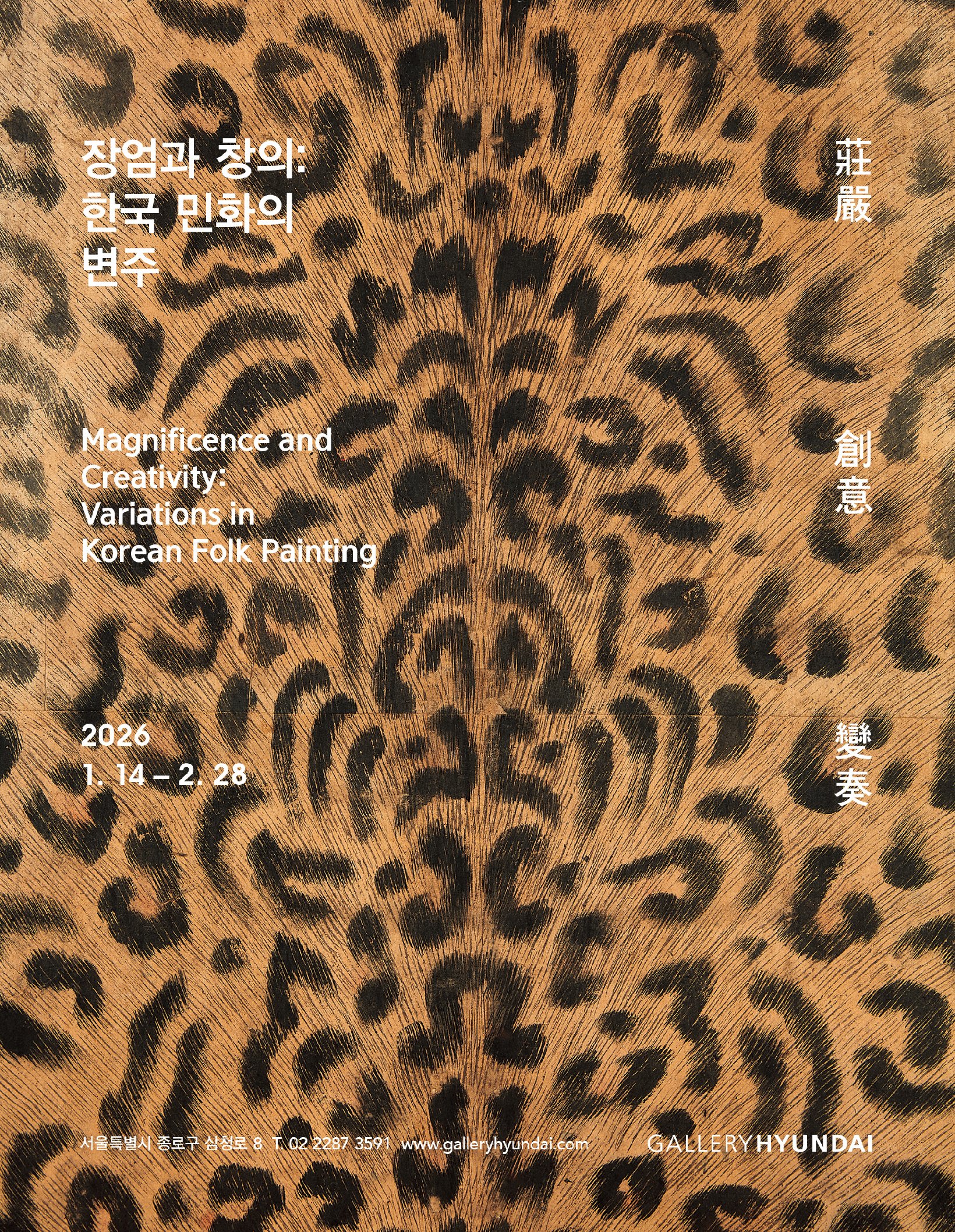
Magnificence and Creativity: Variations in Korean Folk Painting, presented at Gallery Hyundai, examines the value and beauty of Joseon dynasty folk painting and court painting through approximately twenty seven carefully selected w orks of museum caliber. The exhibition further foregrounds how these two pictorial traditions, historically distinguished by social status and class, have continually influenced one another as visual languages, undergoing variation and expansion over time. Minhwa, which encompasses the lives and stories of the people, their wishes and humor, as well as symbolic and emotional registers within its own idiom, expresses the spirit of everyday life in the Joseon period through bold imagination and vital expressi ve force. For this reason, with its approachable yet engaging imagery, minhwa is often described as the most distinctly Korean form of painting. Court painting, by contrast, articulated royal authority and the legitimacy of governance through rigorously st ructured formats and hierarchical compositions, conveying auspicious symbolism, ritual function, and protective intent. Its refined aesthetic completion embodies the dignity, refinement, and cultural ethos of the Joseon dynasty.
At a glance, the fields of minhwa and court paintings appear disparate, even opposite. Yet, their mutual influence is evident in the fact that painters often worked between the palace and a studio outside palace walls called Gyeonpyeon bang, located in Jung gu and Jongno gu neighbor hoods in current day Seoul ——, or that one of the participating works in the exhibition, Bonghwang Gongjak do (Painting of Phoenix and Peacock) (late Joseon Dynasty), are of a scale and level of finish that suggest they were likely executed by court painters of the highest caliber. Taken together, these factors point to a reciprocal exchange of influence between minhwa and court painting. As the late Joseon period progressed and the value and significance of capital increased, minhwa began to emerge that riva led court painting in both scale and refinement. Courtly iconography and formal conventions thus permeated minhwa, where they were newly articulated through the sensibilities and imagination of everyday life. In turn, the dynamic compositions and vital energy characteristic of minhwa offered fresh sensory stimulus to thepictorial language of court painting. Beyond examining the beauty of minhwa and court painting as forms of traditional Korean painting, this exhibition foregrounds the dialogue between the two. Furthermore, in connection with the exhibition The Way of Painting presented at Gallery Hyundai (14 Samcheong ro), it seeks to view the visual foundations of Korean painting not as something
confined to the category of “tradition,” but as a field that continues to unfold within the context of contemporary art.
갤러리현대 본관에서 소개하는 《장엄과 창의: 한국 민화의 변주》는 한국 전통 회화 중 조선의 민화와 궁중화의 가치와 아름다움을 박물관급으로 엄선된 27여 점의 작품을 통해 살핀다. 나아가 사회의 신분과 계층으로 구분되어 내용과 형식 면에서 다르게 분류되어 온 두 회화가 시각 언어로서 영향을 주고받으며 변주되고 확장되어 왔다는 사실에 주목한다. 민중의 삶과 이야기, 바람과 해학, 상징과 정서를 자기 언어로 포괄하고 과감하게 변주하는 대담한 상상력과 생명력을 보여주는 민화는 생활의 언어로서 조선 당대 민중의 마음을 표현했다. 때문에 친근하면서도 흥미로운 화면을 보여주는 민화를 ‘가장 한국적인 그림’이라 일컫기도 한다. 왕실의 권위와 통치의 정당성, 길상과 상징, 의례와 벽사(僻邪), 규범이 엄격한 형식과 위계를 통해 담긴 궁중화는 정제된 미적 완성도를 선보이며 조선의 격조와 기풍을 보여준다.
언뜻 보기에는 민화와 궁중화는 철저하게 구분되어 제작되고 이어져온 듯 보이지만, 당시 궁 바깥의 중부 견평방(현재 중구 견지동과 종로구 공평동 일대)에 위치한 도화서와 궁궐을 오가며 근무했다는 사실과 더불어 이번 전시에 민화로 소개되는 〈봉황공작도(鳳凰孔雀圖)〉(조선 말기)와 같은 작업이 화면의 크기와 완성도 면에서 당대 최고의 기량을 가진 궁중 화원이 그렸을 가능성이 높다는 사실을 통해 유추해본다면 민화와 궁중화는 서로 영향을 주고 받았음을 확인할 수 있다. 또한, 조선 후기로 접어들수록 자본의 가치와 의미가 커짐에 따라 궁중화의 스케일과 완성도를 갖춘 민화가 등장하기도 했다. 이렇듯, 궁중의 도상과 형식이 민화로 스며들어 생활의 정서와 상상력 속에서 새롭게 발현되었고, 민화의 상상력에서 오는 활발한 구성과 힘이 다시 궁중화의 화면에 감각적으로 자극을 주었던 것이다. 이번 전시는 한국 전통 회화인 민화와 궁중 회화의 아름다움을 살피는 것 너머에 두 회화의 ‘소통’을 조명한다. 나아가 신관 전시 《화이도(畫以道)》와 연결되며 우리의 미적 DNA를 ‘전통’이라는 카테고리에 한정하는 것이 아닌, 현대미술의 장으로 바라보고자 한다.
Installation Views
{{ lbCurrent.title }}
{{ lbCurrent.text }}