
Body of Work
Sep 4 – Oct 18, 2025
New York Project Space
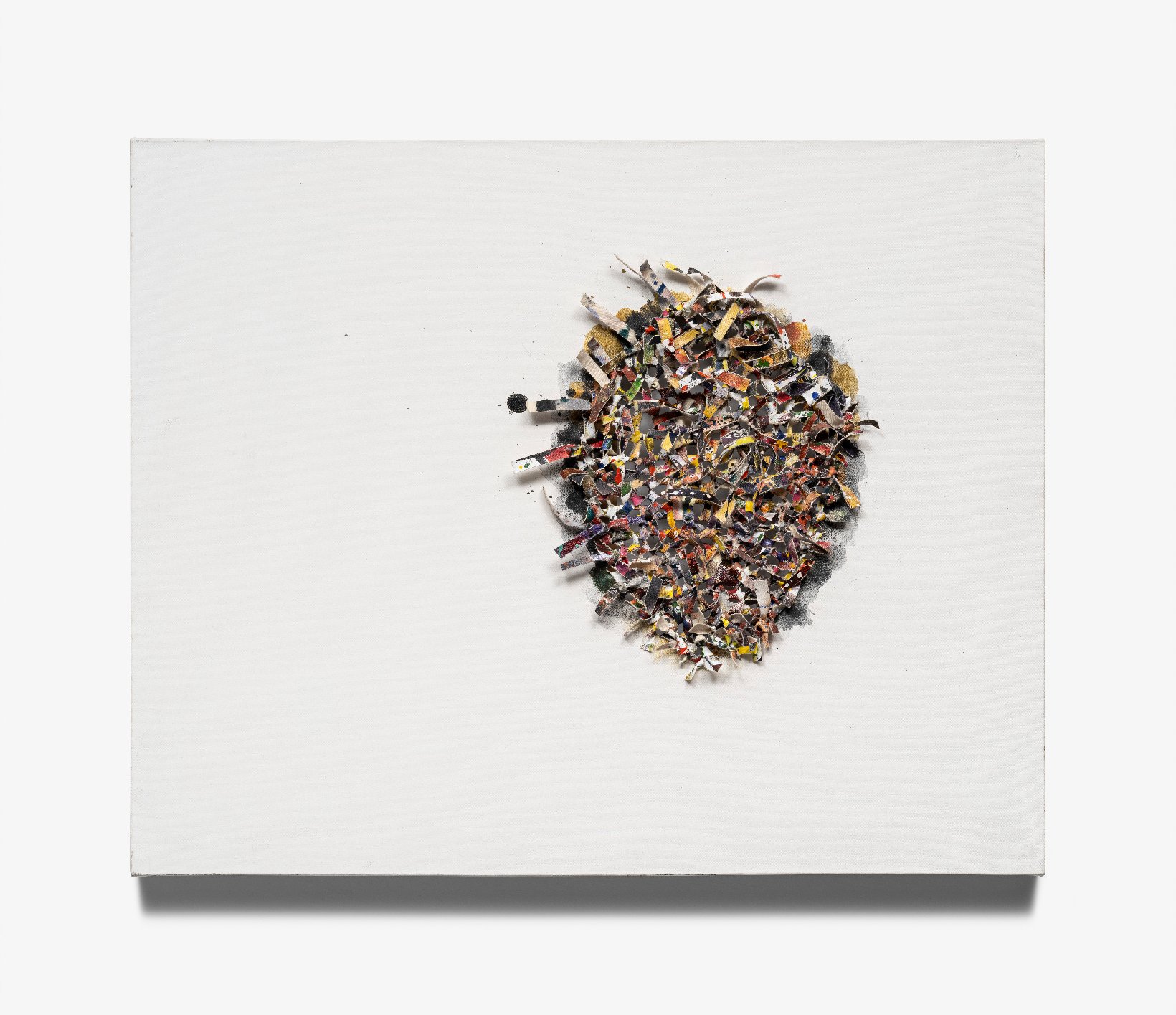
Gallery Hyundai is pleased to present Body of Work, a solo exhibition of Shin Sung Hy (1948–2009), at its New York Project Space. Throughout his career, Shin enlivened various material qualities of the essential ingredients of painting—canvas, support, and paint—in pursuit of ontological questions regarding illusion and representation, two- and three-dimensionality, and the artist’s own body. Furthermore, as an émigré who relocated to Paris in the 1980s, he signals the historical Korean diaspora alongside the Korean avant-garde and emerging talents as one of the three branches of Korean art that have defined the gallery’s historic trajectory, which this global outpost promises to amplify.
Shin Sung Hy’s practice can be categorized into four distinct periods: the “monochrome hyper-realistic painting” series, jute paintings (1974–1982), “collaged paperwork” series, collage (1983–1992), “sewn-canvas” series, couturage (1993–1997), and “knotted-canvas” series, nouage (1997–2009). This exhibition focuses on his couturage and nouage from the 1990s and 2000s where Shin conjured sculptural qualities by cutting colored canvas into pieces and knotting or sewing them back onto its support, creating porous structures that interweave the two- and three-dimensional, positive and negative space. In 2014, Blum & Poe organized From All Sides: Tansaekhwa on Abstraction followed by an exhibition entering Dansaekhwa and American Minimalist works into dialogue, and a duo exhibition Chung Sang-hwa & Shin Sung-hy in 2018, catalyzing the entry of Shin’s iconic nouage series into art historical discourse. Through this exhibition, Gallery Hyundai seeks to further conversations on his avant-garde endeavors across a half-century from 1970 until his passing—an emblem of the global history of painting itself—and the continuing influence of his timeless works.
The exhibition embarks with Painting (Reality and Illusion) (1979), one of Shin’s jute paintings which layers hyperrealistic depictions of jute on actual jute surfaces, juxtaposing the real with the imaginary. Paintings from this era, although muted in comparison to later works, foreshadow a metacritical interest in the dynamics of representation and illusion—the paradoxical relationship between what painting references and what it materially “is”—which he continued to investigate throughout his lifetime. Spaces of Structure (1992) in the back gallery represents the artist’s next era, the collage series, which arrived after his relocation to Paris. Departing from hyperrealism, they foreground the spontaneous, autobiographical process of arranging pieces of cardboard into loose grid structures: in Shin’s words, to “leave painting to be the range of processes between erasing, burying, and repeating my own thoughts.”
Solution de Continuite from 1994 and 1995 marked the maturation of Shin’s couturage, utilizing the texture of canvas that frays and unravels against straight edges. Vertical and horizontal stripes appear as both a direct continuation and emboldening of the collaged grids, which are now deconstructed and burst from the seams of their neutral backgrounds. Subsequently, the domain of painting would radically expand with the nouage series: backwards to bare skeletal sketcher bars (Palette, 2009) and outwards into infinitely repeatable warps and wefts that grow in unconventional silhouettes (Interlace, 2003). These are achieved by the repetitive, labor-intensive process linking one knot to another—the resulting works are inherently durational, resisting being grasped over a single glance and encouraging viewers to experience new senses of time by synchronizing with traces left behind by the artist.
The organic surfaces that emerge serve as porous membranes between the artist’s individual intentions and surrounding material environments. The dense netted structures that ripple across Shin Sung Hy’s nouages resemble fossils of marine animals or forest undergrowth. Moreover, Palette (2009) and Self-Portrait (Autoportrait) (1997) are punctuated by found objects, leaving a metacritical and subtly humorous commentary on the role of an artist as a mediator of his medium. Paint brushes are suspended within the weaves of canvas, bent inward as if to paint itself—not merely a self-portrait of the artist, but a painting painted by the painting. Indeed, from early works exploring pictorial illusion to knotted paintings, Shin remained committed to bringing out an agency inherent in the material of canvas itself. Perhaps donning the “language” of his medium is an artist’s lifelong task—as he proclaimed in his artist note: “Let's wear the clothes of the painting and stand in front of the light!”
At a moment when Korean modern and contemporary art begins to enter mainstream discourse, collective movements such as Dansaekhwa and Experimental art have served as focal points in narrating its history. Yet, Gallery Hyundai remains committed to highlighting the complex relationships of identification between individual artists and movements, inseparable from global exchange and migration. Shin Sung Hy witnessed firsthand the rise of Dansaekhwa led by the likes of Kim Tschang-Yeul, Chung Sang-Hwa, and Yoo Youngkuk, who were his mentors during student years. Amidst its dominance, Shin’s early jute paintings, which also appear as monochrome abstraction at first glance, in fact suggest a persistent search for his own original method which designates the support of painting, jute, as the subject of hyperrealistic representation. Shin also took part in art festivals such as the Seoul Biennale with contemporary Experimental artists, and his paintings reveal a shared experimental approach, expanding the boundaries of painting as well as that of art at large. However, his jute paintings were ultimately largely excluded from Dansaekhwa discourse, and his sudden death in 2009 prevented the nouage and couturage series from entering dialogue with Korean Experimental art. Similarly understated in French discourse, he complicated the Supports/Surfaces approach of expanding flat surfaces into surrounding spaces, popular during his time in France, by absorbing influences from avant-garde movements while channeling them towards excavating the space contained within surfaces themselves. Following Shin’s successful solo exhibition Couturage, Nouage (2025) at Gallery Hyundai Seoul, Body of Work promises a reappreciation of these fluctuating relationships between then the artist and horizons of the art “world,” and between the artist and his canvas as equally corporeal beings.
갤러리현대는 뉴욕 프로젝트 스페이스에서 9월 4일부터 10월 18일까지 신성희(1948–2009) 작가의 개인전, 《Body of Work》를 개최한다. 신성희는 2009년 작고하기 직전까지 일생 내내 회화의 기초적 재료인 캔버스와 지지대에 천착해 왔으며 그 생동하는 물성을 환영과 재현, 이차원과 삼차원의 관계, 작가 자신의 신체의 역할 등 회화의 위상에 대한 존재론적 질문과 연결지어 왔다. 또, 1980년대에 파리로 이주한 이민 작가로서의 신성희는 갤러리현대가 한국 근현대 미술의 역사와 함께 걸으며 주목해온 세 가지 주요 영역인 한국 아방가르드, 한국 디아스포라, 신진 작가 중 역사적인 한국 디아스포라를 대표하며 글로벌한 도시 뉴욕에서 이어갈 활약에 신호탄을 울린다.
신성희의 회화 세계는 크게 네 시기 ‘마대 회화(극사실 물성 회화)’ 시리즈(1974–1982), ‘콜라주(구조 공간)’ 시리즈(1983–1992), ‘꾸띠아주(박음 회화)’ 시리즈(1993–1997), ‘누아주(엮음 회화)’ 시리즈(1997–2009)로 분류된다. 이번 전시는 특히 1990년대와 2000년대를 가로지르는 ‘꾸띠아주’와 ‘누아주’ 작업에 집중한다. 캔버스를 채색하고 자른 뒤 지지대 위에 엮거나 매듭지음으로써 2차원과 3차원, 양과 음의 공간이 혼합된 다공성의 구조가 돋보이는 신성희의 대표적인 두 시리즈이다. 블럼앤포 갤러리는 2014년 《From All Sides: Tansaekhwa on Abstraction》 단색화 기획전에 이어, 단색화 작품들과 미국 미니멀리스트 작품들 간의 대화형 전시를 기획하고, 2018년에는 《정상화, 신성희》 2인전을 기획하여 신성희의 대표 연작인 누아주 시리즈의 미술사적 담론에 불을 지핀 바 있다. 이번 전시를 통해, 1970년대부터 생을 마감하기까지 반세기동안 지속된 글로벌 회화사를 관통하는 신성희의 전위성과 시대를 넘나드는 그의 작업의 위상에 관한 담론을 이어가고자 한다.
전시는 초기 마대 회화 중 하나인 〈회화(실상과 허상)(Painting (Reality and Illusion))〉(1979)에서 시작된다. 실제 마대 위에 마대 조직을 극사실적으로 표현함으로써 실재와 허상을 중첩시킨 작품이다. 이 시기의 작업은 비교적으로 미니멀하고 색감도 차분하지만, 후기작까지 꾸준히 이어질 재현과 환영 사이의 관계, 즉 회화가 지시하는 것과 회화의 물적 존재의 관계에 대한 메타적 연구가 엿보인다. 파리 이주 이후에 시작된 콜라주 시리즈는 뒷쪽 갤러리의 〈구조공간(Spaces of Structure)〉(1992) 두 작품으로 대표된다. 극사실주의를 떠나 판지를 자르고 느슨한 그리드 형태로 배열하는 즉흥적, 자전적 과정으로 나아가며, 작가의 말을 빌리면 “회화는 오히려 나의 생각들을 지우고, 묻어버리고, 또다시 반복하는 행위 안팎의 과정으로 남아버린다.”
1994년과 1995년의 〈연속성의 마무리(Solution de Continuite)〉는 전통 회화의 정결한 사각형 프레임에 반발하듯 비균일적으로 올이 풀리거나 뜯긴 모서리가 특징으로, 완숙된 꾸띠아주 기법을 보여준다. 갈색 배경으로부터 분출하는 듯한 세로와 가로 띠들은 이전 시기의 콜라주 그리드의 연장선상이자 해체를 알린다. 이후, 신성희 회화의 공간성은 과감하게 확장되어 누아주 작업에 다다른다. 작가는 골격을 연상시키는 캔버스 뒷면 지지대를 가시화하거나 (〈팔렛트(Palette)〉, 2009), 날실과 씨실의 반복적 움직임으로 캔버스 바깥쪽으로 무한히 자라날 것만 같은 비정형적 형태를 만들어 낸다(〈결합(Interlace)〉, 2003). 누아주 작업은 매듭을 하나씩 엮어가는 반복적이고 노동집약적인 과정으로 완성된다. 따라서 완성된 작업도 계속적(durational)이고 한눈에 인지되기를 거부하며, 관객들로 하여금 작업이 제시하는 새로운 시간성을 잠시나마 직접 취해봄으로써 비관습적인 시간의 흐름을 경험하게끔 한다.
이번 전시에서 소개되는 작업은 유기적인 표면이 두드러지는데, 완성된 발언이 아닌 다공성의 막처럼 작용함으로써 작가의 의도와, 재료를 포함하여 그들을 둘러싼 물리적 환경 사이를 매개한다. 누아주 작업에서는 빽빽한 캔버스 조직 사이로 여러 겹의 구멍이 펼쳐지며 해양생물의 화석이나 숲풀 바닥을 연상시킨다. 〈팔렛트〉나 〈자화상(Self-Portrait (Autoportrait))〉(1997)에서는 오브제가 추가되어 재료를 대하는 작가의 매개적 역할에 대한 메타적인, 유머러스한 비판이 돋보인다. 마치 성긴 조직 속에 갇혀버린 듯 붓 자루가 걸려 있는데, 마치 작가 자신의 ‘자화상’일뿐 아니라 그림이 스스로를 그려 버리는 ‘자화상’이기라도 한 듯 안쪽으로 굽어 있는 형상이다. 회화의 환영 효과를 탐구한 초기작에서부터 엮음, 박음 회화까지, 캔버스라는 재료에 내재한 생동하는 주체성을 밖으로 끌어내는 일에 주력해온 것이다. 어쩌면 자신이 선택한 재료의 ‘언어’를 체화하는 것이 바로 작가의 숙명인지 모른다. 그가 2005년 작가노트에서 선언했듯 말이다: “허상의 그림이 아닌 공간의 영역을 소유한 실상으로서 회화의 옷을 입고 빛 앞에 서자!”
한국 근현대미술이 주류 미술사로 편입되고 있는 현재, 단색화나 실험미술과 같은 예술 사조는 세계 미술사의 재편성에 구심점 역할을 해왔다. 그러나 갤러리현대는 작가들 개인과 집단 운동 사이의 복합적인 관계 또한 조명하고자 노력해 왔으며, 이는 초국가적인 교류, 이주의 역사와 뗄 수 없는 관계에 있다고 믿는다. 신성희가 그 대표적인 예시로, 그는 학창시절 스승이었던 김창열, 정상화, 유영국을 통해 한국 추상이 추구한 미학적 담론에 기반하여 단색화가 지배하던 시기에 자신의 언어를 찾기 위한 고군분투 속에서 마대 천에 마대색의 유화를 사용하여 언뜻 보기에 모노크롬 추상회화 같지만, 지지체인 마대의 표면을 극사실적으로 묘사하며 쌓아 올린 방법으로 화단에서 독보적인 존재감을 각인시켰다. 아울러 실험미술 세대의 작가들과 함께 서울비엔날레 등 실험미술 작가들이 주도한 미술제에 동참하며 실험성이 돋보이는 회화 작업을 발표했으나, 그의 초기 모노크롬 회화는 단색화의 논의에서 거의 배제되었고 2009년 갑작스러운 작고로 누아주와 꾸띠아주 연작처럼 한국 회화사의 혁신을 주도한 작품 세계는 실험미술의 역사에서도 크게 거론되지 못했다. 동시에 신성희는 파리 화단에서 활발했던 쉬포르-쉬르파스(Support/Surface) 운동이 추구한 평면의 확장과도 거리를 두었는데, 아방가르드 정신에서 기인한 동시대 작가들의 경향을 충분히 흡수하며 한 걸음 더 나아가 회화의 평면 자체에 내재한 공간성을 발굴하는 데 주력했기 때문에 파리 미술 신에서도 적극적으로 조명되지 못한 아쉬움이 있었다. 따라서 서울 갤러리현대에서의 성공적인 개인전 《꾸띠아주, 누아주》(2025)에 이어 뉴욕에서의 이번 전시는 작가와 공동체적 ‘신(scene)’의 지평 사이, 그리고 물질적 존재로서의 작가와 캔버스 사이의 유동하는 관계를 재조명하고자 한다.
Selected Works
Installation Views
{{ lbCurrent.title }}
{{ lbCurrent.text }}