
One after the Other
Aug 27 – Oct 19, 2025
Gallery Hyundai
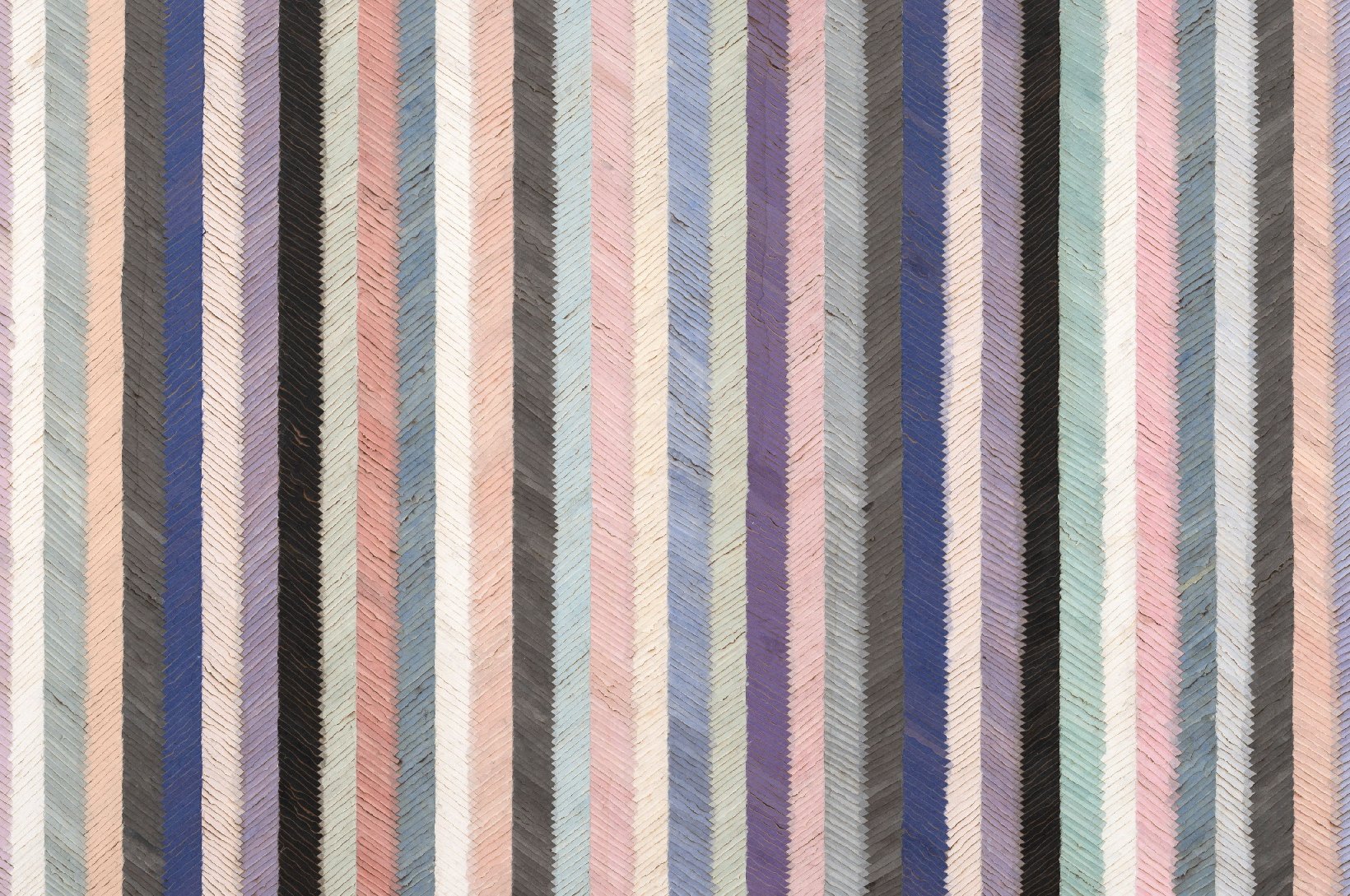
"Zip represents two separate elements that, when joined, become one. The dualism becomes a unification through the zigzag form, which intrigues me. By gluing two pieces of burnt paper together, one after the other, it creates a sense of healing and joined harmony.” — Minjung Kim.
Gallery Hyundai presents Minjung Kim’s solo exhibition One after the Other from August 27 through October 19, 2025. For over thirty years, Kim has explored the traditions of East Asian calligraphy and ink painting alongside Eastern philosophy, expanding the formal vocabulary of contemporary abstraction. This exhibition is her third solo presentation with Gallery Hyundai, following Paper, Ink and Fire: After the Process (2017) and Timeless (2021). It also marks her first solo show in Korea since the successful presentation of Mountain in 2024 at Fondation Maeght in St. Paul de Vence, one of Europe’s most prestigious institutions for contemporary art. Notably, this exhibition debuts six works from the Zip series which features burnt hanji (Korean mulberry paper) layered in zig zag shapes that merge and harmonize two heterogenous elements, alongside the large-scale Traces that received worldwide acclaim at the Unlimited sector of Art Basel in Basel 2024. In addition, twenty-odd works from Kim’s other major series yield a concise overview of the artist’s philosophical musings on materiality, repetition, and spontaneity articulated through her meditative process of burning and repeated layering, which foregrounds the material qualities of paper.
Minjung Kim utilizes elemental materials such as hanji paper, ink, and fire in a meditative process characterized by repetition and restraint. Ink and fire accumulated on hanji are her core medium which open up almost infinite artistic possibilities, tracing uniquely poetic lines born through collaboration with nature. Pursuing encounters with materials rather than unilaterally using them, Kim honors the coexistence between intense discipline and spontaneous processes, a ritual of healing and meditation shared with audiences through her resulting work.
Minjung Kim witnessed the rivalry between Dansaekhwa and Minjoong Art (Korean People’s Art) in the 1980s amidst a general dominance of male artists in Korea. Leaving Korea in 1991, she began her life abroad at the Accademia di Belle Arti di Brera. Building upon her background in East Asian painting, she studied the various styles of modernist artists such as Malevich, Klee, Rothko, and Brancusi, bridging their influences with her own interests. Curator Alvin Li writes in the introduction for Kim’s exhibition Mountain at Fondation Maeght that she extends the tradition of experimentation among East Asian artists who have sought to modernize ink by looking out towards Western modernism, and that the “inkness” of Kim’s style transcends ink to create a truly hybrid pictorial space. According to Li, if traditional shanshui painting typically depicts bodies of water lying intimately next to towering mountains that push against the top and bottom of the composition, Kim fuses the two into one to reflect on their fundamental unity.
The title One after the Other underlines the artist’s philosophical contemplation on the connectivity and oneness generated across repetitive acts, and the duality and meditative rhythm inherent therein. Much like life itself that unfolds one moment after another in a slow and silent yet constant accumulation, the exhibition ultimately highlights the dynamics of connection where severance and continuity, destruction and creation, individual and whole coexist.
The gallery’s first floor presents Kim’s new series Zip for the first time in Korea. It signifies a process of two disparate elements fusing as one, expanding Kim’s exploration of duality, unity, and transformation through the material qualities of paper modified through burning and repeated layering. In the series, she cuts hanji dyed in pastel tones into long pieces, sears the edges with fire, and overlaps them into an interweaved zig zag pattern. These patterns generate a continuous rhythm—a seam that is at once a rupture and suture. Each piece exists individually, yet the totalized meaning is grasped only in their interconnection. The visual dynamic references not only physical connections but also the formation of temporal movements relationships, and their repeated accumulation.
Zip simultaneously contains separation and connection. The process of burning implies destruction, while the orderly superimposition of paper fragments signifies healing. The act of bridging two sides literally sutures a physical rift in between them while also gesturing towards a more symbolic restoration. The bright, lucid color of paper forms contrast to darker, seared corners, creating visual tension. Meanwhile, the patterns repeated by the artist’s own hand mutate into a soothing poetic language. To Kim, hanji is both her pigment and the subject of painting, as well as a stage for meditation and training. The repeated process of burning and layering hanji, punctuated by lines born from fire, conjure a ritual of healing and meditation for the viewers.
The basement floor features Kim’s conic Mountain series. Ironically, the artist originally intended to convey the sound of ocean waves in this series, in the layers of ink reminiscent of the forceful crashing of wave after wave against a cliff. In the process, she recalled the mountains in her hometown of Gwangju, and eventually encountered the image of a mountain within her own mind. In other words, the mountains in question are not merely representations of nature but approach the essence of mountains within the artist’s mind’s eye, translated into an expansive landscape which could be called a visual poem. Moreover, considering that both ocean and mountain designate the shared origin of all beings, the transformation of oceans into mountains demonstrate the artist’s longstanding interest in meditation, circularity, and unity, encouraging a state of deep self-reflection for those viewing her work. Kim’s largest work so far, Traces will be on view for the first time since Art Basel Unlimited in 2024. The 8 meters-long Mountain at the center is flanked by two Timeless pieces, created by cutting Mountain into thin strips, burning the edges, and meticulously arranging them into compositions. Timeless, true to its title, gives form to the sound of ocean waves as timeless beings. The material, formal connections between the two series, both completed through repetitive processes, form a single current that is the renewed horizon of abstraction that Kim aspires to. It contemplates the concept of circularity that abolishes distinctions between beginning and end, rooting from the artist’s observation on the endless melody of crashing waves.
The second floor offers a closer look at themes of connection and coexistence in Kim’s practice. Encounter features translucent layers of hanji pieces that exist both as individual elements and a mutually connected whole, while Predestination captures a moment in the life of a small and vulnerable being through fine ink lines that link with each other and reach outwards. Additionally, Firework resembles a brilliant explosion upon the night sky in the pushing and pulling between ink and watercolor, in ponderance of transient meaning within the vastness of space and time and interconnection between beings.
“‘Zip’은 서로 다른 두 요소가 맞닿아 하나로 이어지는 순간이다. 지그재그 형태 속에서 이중성은 마침내 하나로 수렴하며, 그 과정 자체가 깊은 울림을 남긴다. 불에 그을린 종이를 한 장 한 장 이어 붙이면, 상처를 감싸는 치유와 조화의 숨결이 피어난다.” — 김민정
갤러리현대는 김민정 작가의 개인전 《One after the Other》를 8월 27일부터 10월 19일까지 개최한다. 김민정은 동아시아의 서예와 수묵화 전통 그리고 동양 철학을 탐구하며 현대 추상화의 구성 어휘를 확장하는 작업을 30여 년 동안 지속해 오고 있다. 이번 전시는 2017년 《종이, 먹, 그을음: 그 후》, 2021년 《Timeless(타임리스)》 이후 갤러리현대와 작가가 함께 준비한 세 번째 개인전이다. 또한 2024년 프랑스 남부 생폴 드 방스에 위치한 유럽에서 가장 권위 있는 현대미술 재단 중 한 곳인 매그재단에서 개인전 《Mountain》을 성공적으로 마친 후 국내에서 선보이는 첫 개인전이기도 하다. 특히 이번 전시에서는 불에 태워진 한지를 지그재그로 쌓아 올리며 두 개별적인 요소의 결합과 조화를 선보이는 〈Zip〉 연작 6점과 ‘아트바젤 바젤 2024’의 언리미티드 섹터에서 세계적인 호평을 받은 대형 작업 〈Traces〉가 국내 최초 공개된다. 이외에도 작가의 주요 연작까지 총 20여 점의 작품을 선보이며 태우기, 반복이라는 명상적 행위와 종이라는 재료적 특성을 통해 그동안 작가가 탐구해 온 물질성, 반복성, 그리고 우연성에 대한 철학적 사유를 밀도 있게 보여줄 예정이다.
김민정의 작품은 한국의 전통 종이인 한지, 먹, 그리고 불 같은 가장 기본 재료를 통해 완성되며, 모든 작업이 반복과 절제를 통해 명상적으로 이루어진다. 한지 위에 겹겹이 쌓이는 먹과 불꽃의 흔적은 작가에게 무한한 예술적 가능성을 열어주는 중요한 재료이며, 자연과의 협업으로 탄생한 독창적이고 시적인 선이다. 재료를 일방적으로 사용하기보다 재료를 마주하며 극도의 통제와 우연적 과정의 공존에 귀 기울이는 과정은 관람자에게 정서적 치유와 명상의 의식을 환기한다.
김민정은 한국 화단이 단색화와 민중미술이 대립하고 남성 작가들이 주를 이루었던 1980년대를 거쳐, 1991년 한국을 떠나 브레라국립미술원(Accademia di Belle Arti di Brera)에서 유학 생활을 시작한다. 동양화 전공을 배경으로 말레비치, 클레, 로스코, 브랑쿠시 등 모더니스트 예술가들에게 매료되어 다양한 양식을 탐구하고 본인의 관심사와 접목한다. 매그재단 개인전 《Mountain》의 전시 서문을 쓴 큐레이터 앨빈 리(Alvin Li)는 김민정이 서구 모더니즘을 연구하며 1950년대 이후 동아시아권 실험미술의 계보를 계승하고 확장해 왔다고 평가하고, 김민정의 작품이 수묵 그 자체보다 더 수묵적인 혼성적 장면을 만들어낸다고 설명한다. 전통 산수화의 화면이 높은 산과 곁에 물을 배치한다면, 김민정의 〈Mountain〉은 산과 물의 융합을 통해 양쪽의 본질적 통일성을 담아낸다.
전시 제목 《One after the Other》는 반복되는 행위 속에서 생성되는 연결성과 통일성, 그리고 그 안에 내재된 이중성과 명상적 흐름에 대한 작가의 철학적 성찰을 내포한다. 고요하고 느리지만 점진적으로 축적되며, 삶이 마치 ‘하나’ 다음에 또 ‘하나’의 순간들로 구성된 것처럼, 결국 ‘연결’이라는 주제를 중심으로 단절과 연속, 파괴와 생성, 개별과 전체라는 상반된 개념이 공존하는 지점을 탐구한다.
갤러리현대 1층 전시장에는 국내에 처음 소개되는 신작 〈Zip〉 시리즈를 선보인다. 두 개의 서로 다른 요소가 결합하여 하나가 되는 과정을 의미하는 〈Zip〉 시리즈는 불태우기, 반복되는 중첩, 그리고 종이라는 재료적 특성을 통해 이중성과 통일성, 그리고 변형에 대한 그녀의 탐구를 계속 이어 나간다. 은은한 색감으로 염색한 한지를 길게 잘라 가장자리를 불로 태우고, 그 조각들을 층층이 겹쳐 지그재그 패턴으로 엮는다. 이러한 지그재그 패턴은 일종의 리듬감 있는 연속성을 만들어내는 동시에 이음새이자 꿰매어진 균열을 떠올리게 한다. 각각의 조각은 고유한 존재이지만, 서로 연결될 때 비로소 전체적인 의미를 완성한다. 이는 단순한 물리적 연결을 넘어 시간의 흐름과 관계의 형성, 그리고 이것이 겹겹이 쌓이는 과정을 시각적으로 드러낸다.
〈Zip〉은 분리와 연결을 동시에 환기하는 제목이다. 불태우는 행위는 파괴를 암시하지만, 조각들을 겹치고 정렬하는 과정은 치유를 의미한다. 두 조각을 하나로 모으는 이러한 행위는 ‘균열’을 물리적으로 연결하는 동시에 ‘회복’을 위한 상징적 제스처가 된다. 밝고 선명한 색의 종이는 그을린 어두운 가장자리와 대비되어 시각적 긴장감을 자아내고 작가의 손길 안에서 반복된 패턴은 치유의 시적 언어로 변화한다. 작가에게 한지는 색색의 물감이자 회화의 대상 그 자체이며, 명상과 수행을 위한 무대가 되기도 한다. 한지를 태우고 겹겹이 쌓는 과정을 반복하며, 불꽃이 만들어낸 선으로 완성되는 그의 작품은 관람자에게 정서적 치유와 명상의 의식을 환기한다.
Selected Works
Installation Views
{{ lbCurrent.title }}
{{ lbCurrent.text }}