
Reflection
Oct 25 – Dec 3, 2023
Gallery Hyundai
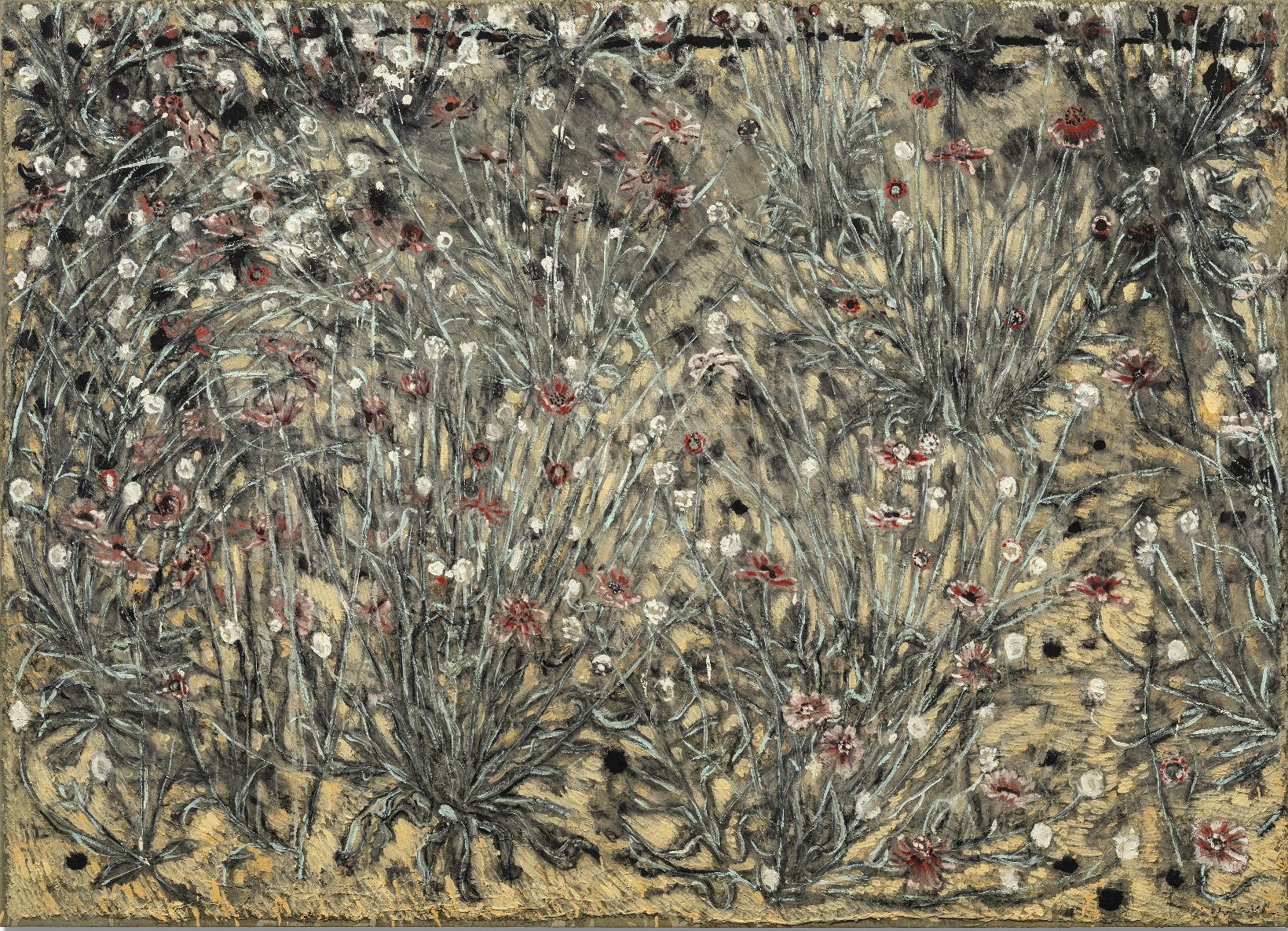
“How astonishing is this world… and how vibrant…”
– Yoo Geun-Taek
Gallery Hyundai presents Yoo Geun-Taek’s solo exhibition Reflection from October 25 through December 3. Reflection is Yoo’s first exhibition in six years at Gallery Hyundai since Promenade in 2017. The exhibition features approximately forty major works from the artist’s iconic series including Fountain, Window, Spring - Beginning of the World, Moving Life, Speaking Garden, and Reflection. The title of the exhibition, “Reflection,” refers to Yoo’s series of paintings of the same title, and provides a key word that condenses his practice at large. Parallel to the dictionary meaning of the word that denotes both “the return of light from a surface” and “the influence or appearance of one phenomenon on another,” Yoo portrays the phenomena and essence of nature and human, of life and object, with a uniquely poetic yet keen perspective.
For the last three decades, Yoo Geun-Taek (b. 1965) has built a singular practice that translates traditional concepts and methodologies of East Asian art into contemporary language. Having studied in Oriental Painting in college, he turned his attention early on in his career to the idea of ‘everydayness’ that forms contrast to the conceptual temporality and space underscored in East Asian aesthetics. For Yoo, the ‘everyday’ does not consist of identical landscapes repeating themselves, but rather an alternate world that reconstitutes the self that encounters it and reawakens senses unrecalled. As well this idea prevails throughout the exhibition, where the audience encounters familiar nightscapes seen outside a window, fountains gushing from the ground, interiors packed with everyday items, lakeside scenes that change with each season, and gardens lush with greenery sprouting up from the earth, altogether transformed into unfamiliar sceneries through the artist’s unique perspective.
Yoo’s approach to and attitude towards ‘everydayness’ have also expanded to his realm of creative methodology. Since the mid-2010s, he has continued experimentation to escape the physical limits of hanji (traditional Korean paper), a material inevitably tied to the genre of East Asian painting. For the artist, hanji is not merely a vessel for portraying a subject, but rather a platform for the interplay of his body and the work, as well as an autonomous entity that can generate its own painterly language. Yoo overlays multiple layers of thick hanji and draws or paints on the surface, after which he soaks the face of the painting with water, toughens it with an iron brush, and paints over again. Throughout the production, the artist merges his physicality with that of the surface plane, tracing his own body, breath, and force. The labor-intensive process of grazing the smooth hanji with a jagged iron brush—from hundreds to thousands of times—demands an explosive level of energy. The artist actively and directly intervenes on the materiality and surface of his work, not only deconstructing its surface, but ironically also conjuring a space hidden beyond the surface to construct a new spatiality. As explained by the artist, when the elusive scenery beneath the wet surface emerges like an “apparition” with the abrasion implemented with an iron brush, the delineation between the real and pictorial space is demolished, while the landscape we gaze upon intersects with our very existence.
The Window, Mirror, and Moving Life series on the ground floor bear witness to Yoo’s conscientious observation of everyday life, followed by repeated and varied depictions of reality through which subtle shifts and movements within landscapes are captured. The plain guise of the outside world, as seen from indoors, is reborn as an uncanny scene as it merges with the artist’s own internality, vibration of senses, and personal narrative. The Window series depicts the dimly illuminated nights and dawns of Seoul’s Seongbuk-dong as overlooked from the windows of the artist’s home. The window is a subject that Yoo began to explore in the late-1990s. For him, windows present a channel that transpose the idealistic worldview of East Asian aesthetics onto the geography of human experience. As he depicts the changes of the four seasons as seen through his window, Yoo awakens his internal sensibility for color and tunes the relationship between the form of his chosen subject and the space surrounding it by using the rectangular window frame as a viewfinder. Likewise, the mirrors in the namesake series function similarly as a device to combine and rearrange discrete objects and landscape elements within a single pictorial plane. Scenes outside the window, as reflected on the mirror, appear fragmented and warped like a Cubist painting. In the Moving Life series, the artist captures the range of demeanor and movement of objects that organically emerge in the process of moving (from one home to another) that reconstructs life.
On the second floor, the artist turns his gaze from indoors to outdoors. In the Spring - Beginning of the World, Reflection, and Speaking Garden series, the earth abounds with the energy of flourishing plants. One spring day, while driving on the highway, the artist sensed the chaos of earth that seemed to shake the entire world—the sight of spring sprouts making their way out through dry soil, transforming the shape of the earth and becoming manifest in ways that resemble painterly expressions—an experience which proved pivotal for the artist’s most recent series. Accordingly, the Spring - Beginning of the World series stages a surreal moment where common subjects in the artist’s practice such as bathtubs, tables, mirrors, and side tables erupt from the ground, creating a colossal tornado and forming cosmic imagery. In Speaking Garden, plants shoot up from the ground into different corners of the canvas, as if to dominate it, coming into an animated dialogue with the people and animals coexisting within. The Reflection series portrays the four seasons of a lakeside in a bipartite structure, dividing the canvas between the forest and the reflection of landscape on water. The top half of the work contains a lucid and vivid forest that almost appears to be scattering with the wind, while the bottom half contains an abstract landscape of trees reaching downwards as if to take root. At the boundary between these two worlds stands a human figure, which echoes the leisurely contemplation of landscapes in East Asian ink wash paintings and at the same time as visualizing the existential archetype of human existence as walking a tightrope between coexisting realms of life and death, humanity and nature, everyday and history.
Devoted to fifteen works from the Fountain series, the basement floor is reborn as a space that offers a corporeal experience of the water sprouts of fountains where creation and extinction coexist. Yoo has employed the fountain as a motif in his works since the mid-1990s, in which the fragments of water cutting through and deconstructing the landscape has become a mechanism for contemplating the sculptural elements of painting. For the body of recent Fountain paintings in this exhibition, the artist expands on the significance of the fountain motif from a painterly device for creating fissures within the seemingly steadfast everyday into a subject onto which existential questions are projected. During his sojourn in Normandy, France, in 2020 for an artist residency program, the artist witnessed firsthand a moment when the Covid-19 pandemic dealt a heavy blow on the European continent and imploded everyday lives. He also experienced the death of his father in 2022 who was in a care hospital. It is based on these personal experiences that the artist began to broach existential messages of the convergence between life and death in his Fountain series. Built from water drop to water drop, streams of water rise in a fountain only to scatter back into droplets after reaching the zenith, repeating the cycle back from the ground. The artist interprets this circular motion in relation to his belief in rebirth and existential thoughts, examining the beauty in birth and extinguishment by transferring onto canvas the countless streams of fountains that remain upright despite their fate of deconstruction and extinction, in forms that are both abstract and figurative.
As such, Yoo Geun-Taek’s solo exhibition Reflection reflects modes of the self looking at, encountering, and sensing the world. Capturing vibrant moments where the unwavering will to live within everyday life intersects with life and death, Yoo Geun-Taek’s works will allow us to face familiar worlds in a re-estranged, renewed guise.
“이 세계는 얼마나 놀라운가… 얼마나 찬란한가…”
-유근택
갤러리현대는 유근택 작가의 개인전 《반영》을 10월 25일부터 12월 3일까지 개최한다. 《반영》 전은 2017년 《어떤 산책》 이후 갤러리현대에서 6년 만에 열리는 개인전으로, 〈분수〉, 〈창문〉, 〈봄-세상의 시작〉, 〈이사〉, 〈말하는 정원〉, 〈반영〉 등 작가를 대표하는 주요 연작 40여 점을 선보인다. 전시 타이틀 ‘반영’은 동명의 연작 제목이자 그의 작품 세계를 집약하는 키워드라 할 수 있다. 반영이라는 단어의 ‘빛이 반사하여 비침’과 ‘다른 것에 영향을 받아 어떤 현상이 나타남, 또는 어떤 현상을 나타냄’이라는 사전적 의미처럼, 유근택은 자연과 인간, 삶과 사물의 현상과 본질을 서정적이며 날카로운 시선으로 작품에 나타낸다.
유근택은 지난 30여 년간 동양화의 전통적 개념과 방법론을 동시대의 언어로 전환하는 독자적인 작품 세계를 구축해 왔다. 대학에서 동양화를 전공한 작가는 동양 미학에서 강조되는 관념적인 시공간과 대조되는 ‘일상성’에 일찍이 주목하며 한국 화단의 신선한 움직임을 이끌었다. 작가에게 ‘일상’이란, 매일매일 반복되는 동일한 풍경이 아니라, 이 세계를 마주한 ‘나’를 새롭게 각인시키고 잊힌 감각을 여는 또 다른 세계를 의미한다. 《반영》 전에도 우리가 흔히 만나게 되는 창밖으로 보는 밤 풍경, 지상에서 솟구쳐 오르는 분수의 풍경, 생활 도구가 잠식한 실내 풍경, 계절에 따라 달라지는 호숫가의 풍경, 대지를 뚫고 자라나는 식물로 가득한 정원 풍경이 유근택만의 해석을 통해 낯선 풍경으로 변모하며 시선을 사로잡는다.
유근택의 일상성에 관한 접근과 태도는 작품을 제작하는 방법론으로도 확장되어 왔다. 작가는 2010년대 중반부터 한지라는 동양화의 숙명적 재료가 지닌 물리적 한계를 벗어나려는 실험을 지속해 왔다. 그에게 한지는 대상을 담기 위한 수단이 아니라, 작가의 신체와 그림이 만나는 무대이자 스스로 회화적 언어를 만들어 낼 수 있는 존재와 같다. 작가는 두꺼운 한지를 여러 겹 배접하여 그 위에 드로잉과 채색을 한 후, 전면을 물에 흠뻑 적셔 철솔로 한지의 표면을 거칠게 올리며 다시 채색하는데, 이 모든 과정에 그의 신체적인 흔적과 숨결, 물리적인 힘이 가해진다. 특히, 매끄러운 한지를 날카로운 철솔로 수백 번, 수천 번을 문지르는 노동 집약적인 작업은 많은 에너지가 필요하다. 이를 통해 작가는 작품의 표면과 물성에 직접적이고 적극적으로 개입하여 표면을 해체하고, 그와 동시에 표면 아래에 숨겨진 공간을 끌어올려 새로운 공간을 생성하는 역설적인 작업을 완성한다. 물에 젖은 상태의 표면 아래에 숨겨진 풍경이 철솔질을 통해 서서히 ‘유령’처럼 모습을 드러낼 때, 현실의 공간과 회화 속 공간의 경계는 허물어지고, 내가 바라보는 풍경과 나의 존재가 교차한다고 작가는 설명한다.
1층 전시장에 설치된 〈창문〉, 〈거울〉, 〈이사〉 연작에서 관람객은 일상을 섬세하게 관찰하고 이를 반복하고 변주해 그림으로써 풍경의 미묘한 변화와 움직임을 드러내는 유근택 작품 세계의 면모를 확인할 수 있다. 실내에서 바라본 바깥세상의 평범한 모습은 그것을 마주하는 작가의 내면과 감각의 떨림, 개인적 서사와 결합됨으로써 기이한 장면으로 재탄생한다. 〈창문〉 연작에서 작가는 자택 창문 너머로 보이는 성북동의 희미한 불빛으로 가득 찬 밤과 새벽의 풍경을 그린다. 창문은 그가 1990년대 후반부터 줄곧 탐구했던 대상이다. 그에게 창문은 동양 미학의 이상향적 세계관을 인간의 체험적 위치로 옮겨놓는 문제의식을 구현하는 소재였다. 작가는 창문 밖의 사계절을 그리며 내면의 색채 감각을 깨우고, 사각 틀을 뷰파인더로 삼아 대상의 형태와 공간 사이의 관계를 조율해 간다. 〈거울〉(2022) 연작의 거울도 창문처럼 이질적인 대상과 풍경의 요소를 한 화면에 결합하고 재배치하는 장치이다. 거울에 비친 창문 밖의 모습은 입체파의 그림처럼 파편화되고 뒤틀려 있다. 〈이사〉(2018) 연작에서 작가는 삶이 재편되는 행위인 이사 과정에서 비로소 드러나는 생명체와도 같은 사물의 다채로운 표정과 움직임을 포착해 낸다.
이제 작가의 시선은 실내 공간에서 바깥 풍경으로 장소를 옮겨 간다. 2층 전시장에 소개되는 〈봄-세상의 시작〉, 〈반영〉, 〈말하는 정원〉 연작에서 작품 속 대지의 세계는 식물의 증식하는 에너지로 가득하다. 어느 봄날, 작가는 고속도로를 달리며 온 세계가 진동하는 듯한 대지의 난장을 ‘몸’으로 경험한다. 봄날 새순들이 메마른 대지를 비집고 올라와 땅의 형태를 변질시키고 스스로 회화적 형태를 만드는 광경은 작가가 새로운 연작을 창작하는 중요한 동기가 되었다. 〈봄-세상의 시작〉(2023) 연작은 욕조, 테이블, 거울, 화장대 등 일상의 오브제와 작가의 연작 속에 등장하는 주요 모티프가 대지를 뚫고 새싹처럼 돋아나 식물들과 함께 거대한 회오리를 이루며 우주적 이미지를 형성하는 초현실적 장면이 담겨 있다. 〈말하는 정원〉 연작에서 식물들은 땅에서 올라와 화면을 잠식하듯 자유롭게 뻗어 나가고, 그 속에 공존하는 인간과 동물과 수다스럽게 대화를 나누며 하나가 된다. 호숫가의 사계절 풍광을 담은 〈반영〉 연작은 숲과 물가에 반사된 풍경이 화면을 이등분하는 구조로 완성된다. 화면 상단에는 바람에 흩날리는 듯한 생생하고 선명한 숲의 풍경이, 하단에는 나무가 뿌리를 내리듯 아래쪽으로 뻗어 나가는 추상화된 풍경이 그려져 서로 다른 두 세계가 공존한다. 두 풍경의 경계에 서 있는 인간은 장대한 풍광을 유람하며 유유자적 거니는 전통적 산수화를 연상시키는 동시에 삶과 죽음, 인간과 자연, 일상과 역사라는 양립한 세계 사이를 위태롭게 줄타기 하며 사색에 빠진 인간의 존재론적 원형을 형상화한다.
〈분수〉 연작 15점을 집중적으로 선보이는 지하 전시장은 탄생과 소멸이 공존하는 분수의 물줄기를 몸으로 경험하는 공간으로 거듭난다. 작가는 1990년대 중반부터 분수를 작품의 소재로 그려 왔다. 물의 파편이 풍경을 자르고 해체하는 모습은 회화의 조형성을 사유하는 원천이었다. 작가는 이번 전시를 준비하며 분수라는 소재의 의미를 견고한 일상에 틈을 만들어 내는 회화적 장치에서 나아가 존재론적 질문이 투영된 대상으로 확장해 간다. 2020년 레지던시를 위해 프랑스 노르망디에서 머물던 작가는 팬데믹이 유럽 전역을 강타하며 일상이 붕괴되는 순간을 목도했으며, 2022년에는 요양병원에 계셨던 부친의 죽음을 겪었다. 이런 경험을 토대로 작가는 삶과 죽음이 교차하는 실존적 이야기를 〈분수〉 연작에 담기 시작한 것이다. 물방울이 물방울을 밀고 서 있는 분수는 한줄기의 물이 위로 쌓이다가 정점에 다다르면 다시 해체되어 물방울로 떨어지고, 다시 바닥으로부터 물줄기가 끝없이 반복된다. 작가는 이러한 순환운동이 생명의 윤회사상이나 존재론과 맞닿아 있다고 해석하고, 해체되거나 소멸하더라도 올곧게 서 있는 분수의 수많은 물줄기를 추상적이면서도 구상적인 형태로 화면에 옮김으로써 탄생과 소멸의 아름다움을 성찰한다.
유근택의 개인전 《반영》은 ‘나’라는 주체가 이 세상을 어떻게 바라보고, 어떻게 만나며, 어떻게 감각할 수 있는지를 투영한다. 일상에 내재된 강인한 생명력과 삶과 죽음이 중첩된 찬란한 순간을 포착해낸 유근택의 작품을 통해 우리의 익숙한 세계는 다시 낯설어지며 새롭게 다가올 것이다.
Installation Views
{{ lbCurrent.title }}
{{ lbCurrent.text }}