
The Moon is Rising
Nov 4 – Dec 11, 2022
Gallery Hyundai
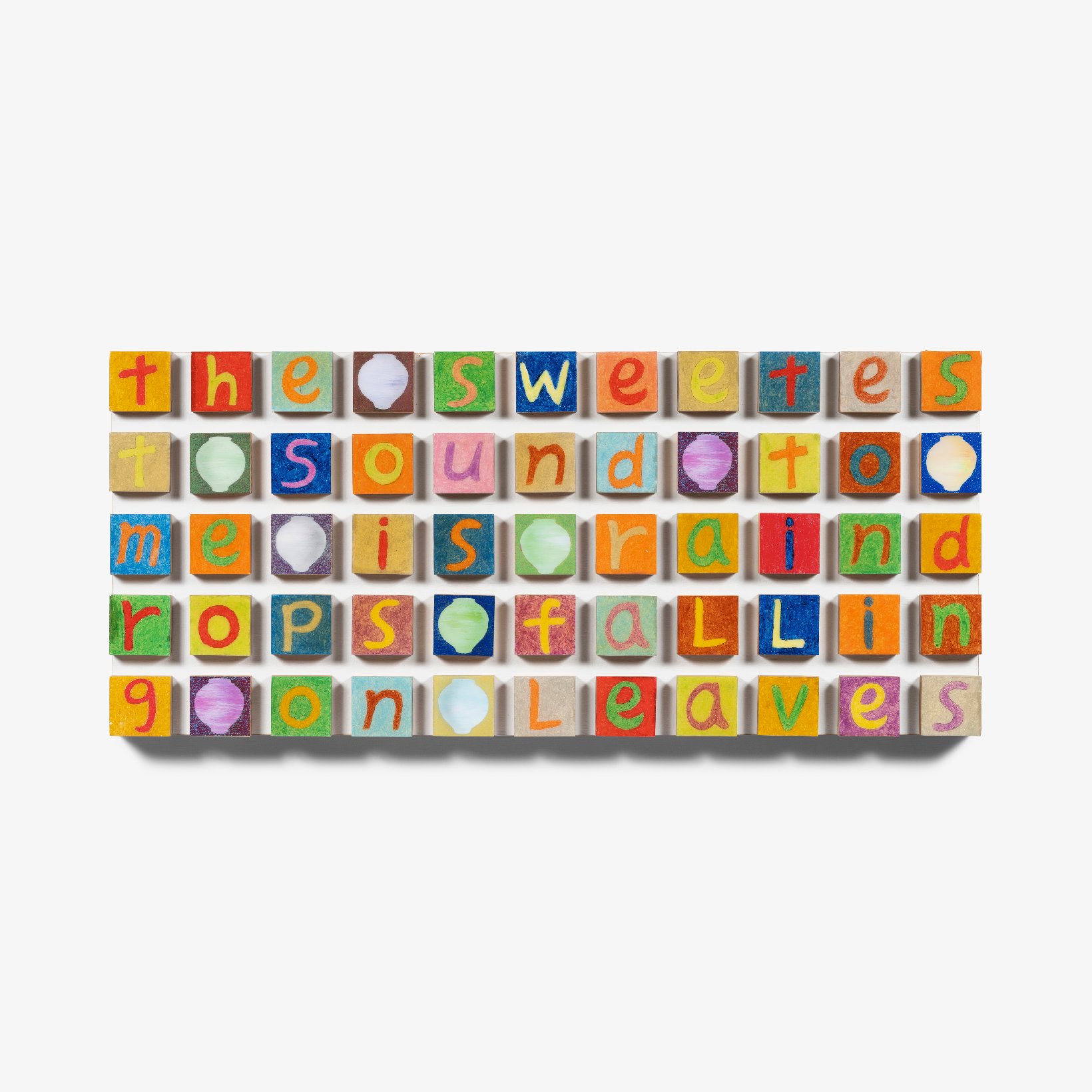
The Moon is Rising, a solo exhibition featuring the work of artist Ik-Joong Kang, is taking place from November 4 to December 11 at Gallery Hyundai and Gallery Hyundai Dugahun. Ik-Joong Kang unites and connects different cultures, languages, and environments in his work to express a message of hope for the near future. Just as Korea’s Hangul writing system combines consonants and vowels to form syllables, Kang’s artistic work forms small universes through the combination of all things that exist in opposition in our world. It reveals the beauty of coexistence through the complementary relationships of paintings and objects that capture hybrid languages and a world of purity. As the New York-based, globally active artist’s first gallery solo exhibition in Seoul since 12 years ago, The Moon is Rising includes approximately 200 works from Kang’s major series, together with his poems, sketches and archival materials from the large-scale public projects he has taken part in around the world during those 12 years.
The themes of the work in the first floor’s gallery and the Dugahun Gallery are “moon” and “moon jar.” For Ik-Joong Kang, the moon and moon jar embody the most Korean qualities in terms of culture, sentiments, and aesthetic values. In 2004, a part of a large circular structure he was creating in Ilsan’s Lake Park was damaged during installation, which resulted it to form a naturally tilting shape. At the sight, he recalled the Korean moon jars that had fascinated him in his youth. Created by combining top and bottom portions by hand to be joined in the kiln, the moon jar exemplifies the idea of “connection”—a theme that Kang has dedicated his life to—in both its form and the way in which it is produced. Since his discovery, Kang has used the moon jar as a symbolic subject to express messages of harmony, fusion, and abundance—between North and South Korea, between East and West, and between humanity and nature. The work in his Moon Jar series resembles the moon shining serenely over the world from the night sky, with its subtle milky colors betraying the marks of nature and time, the alluring curves of its imperfect proportions, and the tactile qualities of its coarse yet sleek surface. To create his new series The Moon is Rising, he recalled the waning of the moon over time and the multicolored moonbows that form around the moon due to sunlight reflected off its surface.
The second floor’s gallery presents work on the themes of “mountains” and nature,” which offer a glimpse at Ik-Joong Kang’s ideas emphasizing harmony between human beings and nature. A series of around 30 drawings hanging side-by-side in the gallery, The Moon is Rising shows new work that reinterprets the traditional landscape painting through the artist’s perspective. Kang applies the basic principles of Eastern painting, which involve a six-to-four ratio of space and brushstrokes on the plane. Using ink to combine images of mountains and fields, moons and waterfalls, moon jars, people and houses, or birds and puppies, he presents backgrounds that use oil pastels in different colors. This drawing series, with its emphasis on harmonious blends of light colors and free-flowing brushstrokes, is a reflection of Kang’s artistic attitude and the joy with which he approaches his work. As its individual 48x48cm works are presented in groups at a height of around 4.5 meters, Kang’s Mountain series creates majestic scenes that call to mind the image of an ink-and-wash landscape painting. The artist has said that mountains, like the moon, possess life within our hearts. The method used to produce his Mountain series is one in which the artist applies the lines of the mountains in acrylic paints on small wood cubes in different heights and places them on a wooden panel, after which he burns or blackens the surface to visualize a landscape bearing marks of the passage of time. The colors applied to the panels’ sides give visual expression to the passing of the four seasons on the mountain. Placed with the Mountain series is Kang’s installation work We Eat Together, for which 500 overturned old rice bowls are stacked to form a mountain in one part of the gallery; through them, bird sounds recorded around the DMZ are played back, echoing through the gallery. Kang uses the word “family” to describe us sharing joy and sadness in our lives as though partaking in a shared meal—evoking concepts associated with “North” and “South,” “kinship,” and “nationhood.”
The gallery on the basement level offers a look at language and life wisdom. The series Things I Know is a representative example of the artist’s work writing short sentences in Korean and English to convey the wisdom he has acquired in his life—phrases that elicit lighthearted laughter while also sending a resonant message. This is one of Ik-Joong Kang’s key series, bringing together diverse cultures to form a collective voice transcending space and time. Filling the walls of the gallery, his works resemble an enormous sculpture comprised of many pixels, while the three-inch wood panels show images of English letters and moon jars in different colors. The letters come together to form words and meaningful sentences, such as “The best smell comes from the stationary store in front of school,” “There are not many things we must have,” “Care and embrace will make us grow,” “Good ideas come to mind while walking,” “Rainbows have circular shapes. In this way, the work alludes to the “connectedness” that represents a key element in the artist’s body of work, where individuals come together to form societies and “we” come together in unity. Kang has also expanded this series into multiple public projects in which children around the world have been invited to take part. On the tables that extend across the gallery, visitors can see sketches from the artist’s exhibitions and public projects since the 1990s, along with previously unseen archival materials. As an artist, Kang strives to join all things and bring them together as one. Like the poems presented on the gallery’s walls, he refuses to allow his work to be reduced to any one meaning; instead, he aspires to connect different entities and seeks to achieve cycles based on harmony.
강익중 작가의 개인전 《달이 뜬다》를 11월 4일부터 12월 11일까지 갤러리현대 신관과 갤러리현대 두가헌에서 동시 개최한다. 강익중은 서로 다른 문화, 언어, 환경 등을 하나로 모아 연결하면서 가까운 미래를 위한 희망의 메시지를 작품으로 담아왔다. 한글의 자음과 모음이 모여 하나의 음절을 이루듯, 강익중의 작품 세계에서는 세계의 대립 관계에 놓인 모든 것이 모여 작은 우주를 형성한다. 강익중의 작품은 이종의 언어, 순수의 세계가 포착된 그림과 사물이 상호보완적인 관계에 놓이며 ‘공존’의 아름다움을 드러낸다. 《달이 뜬다》는 뉴욕을 기반으로 세계적인 활동을 펼쳐온 작가의 12년 만에 열리는 국내 갤러리 개인전으로, 이번 전시에서 처음 선보이는 신작을 비롯하여 주요 연작 200여 점과 12년간 세계 곳곳에서 공개한 대형 공공 프로젝트의 스케치 및 아카이브, 작가의 시가 함께 소개된다.
1층 전시장과 두가헌 갤러리의 테마는 ‘달’과 ‘달항아리’다. 강익중에게 ‘달’과 ‘달항아리’는 가장 한국적인 문화와 정서, 미적 가치를 품은 대상이다. 2004년 일산 호수공원에 거대한 원형 구조물을 완성하는 과정에서 작품의 일부가 손상되면서 자연스럽게 만들어진 기울어진 형상을 보고 작가는 어린 시절 매혹된 달항아리를 떠올렸다고 한다. 상부와 하부를 합쳐 그 사이를 손으로 잇고 가마에서 하나의 몸채로 완성되는 달항아리는, 제작 방식과 형상에서 그가 평생에 걸쳐 몰두한 ‘연결’의 사상을 내포하고 있던 것이다. 이후 작가는 달항아리를 통해 ‘남과 북’, ‘동양과 서양’, ‘인간과 자연’ 등의 조화와 융합, 풍요의 메시지를 전하고 있다. 자연과 시간의 흔적을 머금은 유백색의 은은한 색감과 불완전한 비례의 풍만한 곡선, 거칠고 매끄러운 표면의 촉각적 질감을 동시에 지닌 <달항아리> 연작은 고즈넉하게 세상을 비추는 밤하늘의 달을 닮았다. 새로운 연작 <달이 뜬다>는 시간의 흐름에 따라 이지러지는 달과 달에서 반사된 태양 빛에 의해 달 주변부에 나타나는 형형색색의 달 무지개를 떠올리며 완성한 작업이다.
2층 전시장은 ‘산’과 ‘자연’이 테마인 작품을 통해 인간과 자연의 화합을 중요시하는 강익중 작가의 생각을 확인한다. 전시장에 수평으로 나란히 걸린 30여 점의 드로잉 연작 <달이 뜬다>는 전통 산수화를 강익중의 시선에서 재해석한 신작이다. 화면의 여백과 획의 비중을 6 대 4로 채우는 동양화의 기본 원리를 바탕에 두고, 먹을 사용해 산과 들, 달과 폭포, 달항아리, 사람과 집, 새와 강아지 등을 함께 그려 넣고 그 바탕을 다채로운 색의 오일 파스텔로 칠했다. 경쾌한 색의 조화와 자유로운 획의 흐름이 강조된 드로잉 연작에는 즐거운 태도로 작업에 임하는 강익중의 예술가적 태도와 정서가 담겼다. 48 x 48 cm의 개별 작품이 군집을 이뤄 약 4.5m 높이로 설치된 <산> 연작은 수묵산수화를 보는 듯 장엄한 풍경을 연출한다. 작가에 따르면, 산은 달처럼 우리 마음속에도 살아 있다. <산> 연작은 높이가 다른 작은 나무 조각에 아크릴 물감으로 산의 곡선을 그리고 48 x 48 cm 화면에 높이를 다르게 모아 붙인 뒤 표면을 불로 태우거나 그을려 세월의 흔적을 간직한 듯한 산세를 형상화하는 방식으로 완성된다. 패널의 사이드에 칠해진 색들은 산에서 맞는 사계절의 흐름을 시각화한다. <산> 연작과 한 공간에 놓인 <우리는 한 식구>는 전시장 구석에 낡은 밥그릇 500개를 뒤집어 산처럼 쌓고, 그 사이로 DMZ 지역에서 녹취한 새 소리가 흘러나와 전시장에 울려 퍼지는 설치 작품이다. 작가는 마치 밥을 함께 먹듯이 일상에서 기쁨과 슬픔을 나누는 ‘우리’를 ‘식구’라고 칭하며, 남과 북, 가족과 민족의 의미를 환기한다.
지하 전시장은 강익중만의 언어 감각과 삶의 지혜를 엿볼 수 있다. <내가 아는 것> 연작은 작가가 일상 속에서 체득한 지혜가 담긴 짧은 문장을 한글과 영어로 적는 대표작으로, 유쾌한 웃음과 잔잔한 울림을 전한다. 서로 다른 문화를 한데 모아 집약하여 시공간을 초월하는 집단적 목소리를 만들어내는 강익중 작가의 핵심적인 연작 중 하나다. 전시장 벽면을 가득 매운 작업은 여러 개의 픽셀로 채워진 거대한 조각처럼 보이지만, 3인치의 나무패널에는 색색의 알파벳과 달항아리가 그려져 있다. “가장 좋은 냄새는 학교 앞 문방구에서 나온다”, “좋은 말을 하면 입이 예뻐진다”, “정말 필요한 것은 별로 없다”, “보살핌과 포옹은 우리를 성장시킨다”, “좋은 아이디어는 걸으면서 나온다”, “무지개는 원래 동그랗다” 등의 의미를 지닌 문장이 사각 패널에 모여 군집을 이룬다. 알파벳 하나하나가 모여 단어를 만들고 뜻을 이루는 문장이 되는 이 작업은 개인이 모여 사회를 이루고 우리가 모여 세계를 이루는 작가의 작품 세계에 있어 핵심 요소인 ‘연결성’을 함축한다. 작가는 이 연작을 확장하여 전 세계 어린이를 참여시키는 다수의 공공 프로젝트를 선보인 바 있다. 전시장을 가로지르는 테이블 위에는 1990년대부터 최근까지 작가가 선보였던 전시나 공공 프로젝트의 스케치와 미공개 아카이브를 확인할 수 있다. 강익중은 만물을 하나로 연결하고 응집하고자 한다. 그가 전시장 벽면에 남긴 시처럼, 그의 작품들은 하나의 의미로 수렴되는 것을 거부하고 각기 다른 존재를 연결하고 이들의 조화를 통해 순환을 지향한다. 강익중은 1980년대부터 지금까지 멈추지 않고 세계를 연결 짓는 중이다.
Selected Works
Installation Views
{{ lbCurrent.title }}
{{ lbCurrent.text }}