
Ku Sol
Sep 21 – Oct 23, 2022
Gallery Hyundai
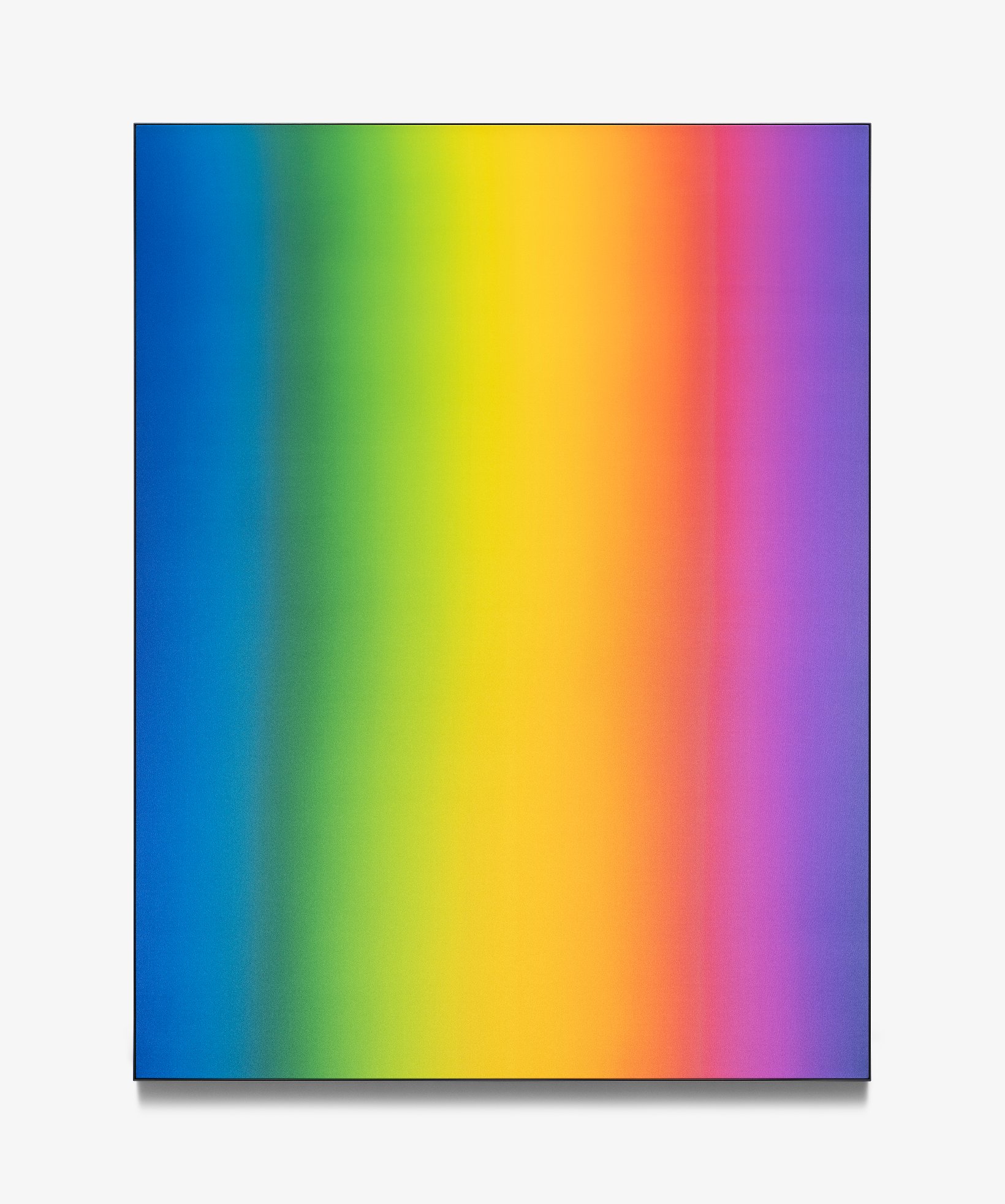
Gallery Hyundai presents Ku Sol, the first solo exhibition in Asia by German artist Matti Braun, from September 21 to October 23. The exhibition features a wide selection of around 50 key works by Braun, including his beautiful abstract painting series produced by applying different colors of dye to silk; his glassworksproduced in collaboration with Bavarian glass artisans using traditional techniques; and his set of six photographs of an experimental play inspired by Indian film director Satyajit Ray’s unrealized script titled The Alien.
Working in a broad range of areas including not only art but also culture, history and science, Matti Braun weaves together vast webs of meaning as he enthusiastically discovers and explores lesser-known narratives. His work is based on research into cultural migration, exchange and transformation across Eastern and Western times and spaces, as long with particular figures and themes ranging from physicist Vikram Sarabhai and Mahatma Gandhi to Le Corbusier, India’s space exploration program, the unfilmed script for The Alien by Satyajit Ray, and Steven Spielberg’s E.T. In the process, it provides an opportunity to viewers to break with standardized frameworks of interpretation and form readings based on their own individual narratives. The exhibition title Ku Sol is a poetic evocation of Braun’s artistic vision, which involves forging cultural and linguistic connections. Combining the Finnish word “kuu” meaning “moon” with the Latin word “sol” meaning “sun,” it is a title with both natural and cosmic associations, echoing the artist’s approach of incorporating intersubjectivity and ambiguity without representing a particular object.
Radiating a refined and magical aura that gives the sense of having been untouched by human hands, the artwork in the Ku Sol exhibition is set against the backdrop of a highly complex narrative structure and fascinating meeting of individual narratives. Matti Braun spent a particularly long time exploring Satyajit Ray’s The Alien and the impact of his script on the world. Considered the director who put Indian cinema on the global map, Ray wrote a script in 1967 for a science fiction film set in West Bengal. It tells the story of the friendship that forms between a boy named Haba and an alien that crash-lands in a lotus pond in a small rural village. The alien is described as having a large head, sunken cheeks, and deep-set eyes. While plans for the film’s production by a Hollywood studio never came to pass, the script is seen as having influenced many sci-fi films that would be released later on. In Matti Braun’s artwork, the image of the alien described in the script for The Alien and the story of a meeting between a person and an alien being are newly interpreted and cemented in ways that blend Eastern and Western temporal and spatial contexts, while also being delicately infused with less clearly visible cultural currents and phenomena that imbue other artistic genres.
For his 2006 play The Alien at The Showroom in London, Braun visualized the story of Ray’s The Alien on a stage boasting the artist’s characteristic minimalist aesthetic. Through a word—“alien”—that has associations with both “extraterrestrial life” and “outsiders,” this work poses questions about the commonalities between the unfamiliar and the everyday, or between “other-ness” and self-centeredness. Braun’s 2018 exhibition A Lost Future at the Rubin Museum of Art included installation artwork that reimagined the lotus pond in which the alien’s spaceship lands in Ray’s script. Importing native mulberry trees from Norway into the museum in New York to use as material for his work, the artist explores the themes of heterogeneous elements coming together and the movements of things and people. For the 2016 exhibition Matti Braun: Sol Bo at the gallery OMR in Mexico City, transformed the venue into a setting where various spaces and times together as he brought in sand from the Silk Road that connected East and West in ancient times and from Veracruz, a Mexican city with various historical and politician associations that relate to the movements of peoples and diasporas.
For the colorful glassworksplaced on round tables, Braun collaborated with glass artisans using the traditional craft techniques of Bavaria. This glass sculpture work is produced with a traditional craft technique that involves inserting tubes into molten glass and blowing, yet the resulting mysterious combinations of colors seem untouched by human hands. The rounded shapes in the work recall distant planets, the eggs of an alien lifeform, or the strange eyes of aliens (outsiders) as they are endlessly presented to us in the media. Braun’s glass sculptures can be interpreted not simply as reflections of his personal interest in science fiction or alien beings, but as different “eyes” representing his perspective on an unknown world. Also, by alternating between the genres of crafts and art, the artist shows his own orientation toward experimenting with media in a broader sphere, blurring genre boundaries as he challenges the ways in which “glass” is defined as a medium in artistic discourse.
Braun’s Untitled series of abstract silk paintings also shares resonance with the properties of “alien” beings in terms of the absence of representational elements and transcendence of form. Suffused with magical glimmering that seems to reflect light beams in space or alternating light and darkness, this work gives the impression of opening up a new dimension in space and time. Matti Braun began producing silk-based work in 2008 and created batik designs early on with geometric patterns and line/ray motifs. In 2014, he began experimenting with abstract silk paintings blending different colors together. This would eventually transform into his current style of abstract work that creates highly delicate spectrums of color through the application of paint over sleek and meticulous woven panels of silk. These entrancing silk painting works boast qualities that are religious, meditative and even mesmerizing. They are based on the artist’s painstaking in-depth research into the history of silk and traditional textile techniques. By applying color in such intense and restrained ways to a fabric that has been used since ancient times for religious and ritualistic purposes, Braun separates silk from its context as a traditional material—a very important theme in his body of work. The cultural heritage that he explores and the stories and themes of interrelatedness that he shares are meant less as explanatory elements for his work and more as a way of guiding viewers into a new visual experience and journey in search of meaning.
갤러리현대는 독일 작가 마티 브라운(Matti Braun)의 아시아 첫 개인전 《Ku Sol》를 9월 21일부터 10월 23일까지 개최한다. 전시는 다채로운 염료를 실크에 고루 입혀 완성한 아름다운 추상화 연작과 전통 유리공예 기법으로 장인과 협업하여 탄생한 유리 조각, 인도 영화 감독 사트야지트 레이(Satyajit Ray)의 미실현된 각본 〈The Alien〉에 영감을 받고 제작한 실험적 공연의 사진 작품 등 대표작 50여 점을 대거 선보인다.
마티 브라운은 미술뿐 아니라 문화, 역사, 과학 등 다양한 분야에서 상대적으로 덜 알려진 개별 서사를 열정적으로 발굴하고 탐구하면서 거대한 의미망을 직조해간다. 비크람 사라바이(Vikran Sarabhai), 마하마타 간디(Mahatma Gandhi), 르 코르뷔지에(Le Corbusier), 인도의 우주개발 프로그램, 사트야지트 레이의 미실현 각본 <외계인(The Alien)>부터 스티븐 스필버그의 <E.T>까지 특정 인물, 동서양의 시공간을 가로지르는 문화의 이동과 교류, 변화 작용을 연구하며 제작된 그의 작품은 관람객이 정형화된 해석의 틀에서 벗어나 본인만의 서사를 창조하며 작품을 해석하는 기회를 제공한다. 전시 제목 ‘Ku Sol’은 문화적 언어적 연결고리를 만들어내는 작가의 작품세계를 시적으로 반영하고 있다. 달을 뜻하는 핀란드어 ‘kuu’와 태양을 뜻하는 라틴어 ‘sol’을 조합하여 만든 자연적이며 우주적인 제목은 어떠한 대상을 재현하지 않으며 상호주관성과 다의성을 내포한 그의 작품과 일맥상통한다.
인간의 손길을 거치지 않은 듯 절제되고 신비로운 오라를 발산하는 《Ku Sol》전의 출품작은 개별 서사의 흥미로운 만남과 매우 복합적인 서사 구조를 배경으로 한다. 마티 브라운은 오랫동안 인도 영화 감독 사트야지트 레이의 〈외계인〉과 그 각본이 세계에 미친 영향에 관해 특별히 연구해왔다. 인도 영화를 세계 무대에 알린 사트야지트 레이는 1967년 뱅골 서부를 배경으로 한 SF 영화 시나리오 한 편을 완성한다. 커다란 머리와 움푹 패인 볼, 쑥 들어간 눈을 가진 것으로 묘사된 외계인이 어느 날 마을의 연꽃 호수에 불시착하고 마을 소년 하바와 만나 우정을 쌓는 이야기를 담고 있다. 비록 할리우드 영화사의 제작 계획은 무산됐지만, 이후 발표된 수많은 SF 영화에 영향을 준 것으로 평가받는다. 작가는 〈외계인〉에 기술된 외계인의 이미지나 낯선 존재와 인간과의 만남이라는 서사가 동서양의 시공간을 넘나들며 새롭게 해석되고 고착화되거나 타 예술 장르로 스며드는 선명하게 드러나지 않는 문화적 흐름과 현상을 자신의 작품에 섬세하게 녹여 낸다.
2006년 런던 더 쇼룸(The Showroom)에서 선보인 공연 《The Alien》에서 작가는 레이 감독의 〈외계인〉의 줄거리를 가져와 특유의 미니멀한 미감이 돋보이는 무대로 시각화한다. 외계인 또는 이방인이란 의미를 가진 ‘Alien’이란 단어를 통해 낯섦과 일상, 타자성과 자아중심주의가 지닌 공통분모에 질문을 던진 작품이다. 또한, 2018년 루빈 미술관(Rubin Museum of Art)의 전시 《A Lost Future》에서는 시나리오에서 외계인의 우주선이 불시착한 연꽃 호수를 재구성한 설치 작품을 공개한다. 노르웨이의 토착종 뽕나무를 뉴욕의 미술관으로 옮겨와 재료로 활용하면서 사물이나 사람의 이동과 이질성의 만남이라는 주제를 심화하였다. 2016년 멕시코 시티에 위치한 OMR 갤러리 전시 《Matti Braun: Sol Bo》에서는 고대 동서양을 이어줬던 실크로드이자 민족의 이동, 디아스포라 등 다양한 역사적이고 정치적인 상징이 담긴 멕시코 베라크루즈의 모래를 전시장으로 가져옴으로써 전시장을 다채로운 시공간이 만나는 장소로 전환하였다.
둥근 테이블 위에 놓인 색색의 유리 조각은 마티 브라운이 바이에른주(州)의 전통 유리공예 기법으로 유리공예 장인과 협업하여 완성했다. 액체 유리에 관을 꽂고 입으로 불어 제작되는 유리 조각 작품은 전통적이고 수공예적인 가공 방식임에도 사람의 손길이 닿지 않은 듯 오묘한 색의 조합으로 신비로운 모습을 드러낸다. 작품의 둥그스름한 형상은 머나먼 우주의 행성이나 미디어를 통해 끊임없이 재생산된 외계인(이방인)의 낯선 안구나 외계 생명체의 알을 연상시킨다. 마티 브라운의 유리 조각은 SF나 외계인에 대한 작가의 개인적 관심뿐 아니라 미지의 세계를 향한 작가의 시선을 은유하는 또 다른 ‘눈’으로도 해석할 수 있다. 동시에 공예와 예술이라는 두 장르를 넘나들며 예술 담론 내에서 유리라는 매체가 규정되는 방식에 도전하고 장르 간의 구분을 흐리면서 보다 광범위한 영역에서 매체를 실험을 하는 마티 브라운의 작품 경향을 잘 드러낸다.
실크 추상화 〈무제〉 연작도 재현의 부재나 형태의 초월이라는 측면에서 '외계인(이방인)'이라는 존재의 특성과 상응하는 의미를 지닌다. 마치 우주의 광선이나 빛과 어둠을 넘나드는 듯 신비로운 광채를 머금은 표면은 새로운 시공간의 차원을 여는 인상을 선사한다. 마티 브라운은 2008년부터 실크 작업을 시작했으며, 초기에는 기하학적 패턴, 선, 광선 모티브로 바틱(Batik)을 제작했다. 2014년부터 색상이 혼합된 실크 추상화를 시도했으며, 매끄럽고 정교하게 짜인 비단 판 위에 염료를 뿌려 매우 섬세한 색의 스펙트럼을 창조하는 실크 추상화로 점차 변모하였다. 그의 매혹적인 실크 추상화는 종교적이고 명상적이며 동시에 최면적 분위기를 지닌다. 실크 추상화는 실크의 역사와 직물 생산의 전통적 기술에 관한 마티 브라운의 치밀하고 심도 깊은 연구가 바탕이 되었다. 작가는 고대부터 종교적 혹은 제의적인 목적으로 사용된 비단이라는 소재에 강렬하거나 아주 절제된 색을 입힘으로써, 실크를 전통적 소재의 맥락에서 분리시키는데, 이는 마티 브라운의 작품세계에서 중요하다. 작가가 탐구하는 문화적 유산과 상호관련성 등의 관련 이야기와 주제는 작품에 관한 설명적인 요소로 작용하기보다, 관람객을 새로운 시각적 경험과 의미를 찾는 여정으로 안내하기 때문이다.
Selected Works
Installation Views
{{ lbCurrent.title }}
{{ lbCurrent.text }}