
Art Collaboration Kyoto
Nov 6 – Oct 9, 2026
Booth GC21
November 6–9, 2026
ICC Kyoto
부스 GC21
2026년 11월 6일 – 9일
ICC Kyoto
Featuring Artists
Seung-taek Lee 이승택
Kishio Suga 키시오 스가
Susumu Koshimizu 스스무 고시미즈
Gallery Hyundai is pleased to participate in Art Collaboration Kyoto (ACK) from November 6 to 9, 2026, through a joint presentation with Tokyo + BTAP in the Gallery Collaborations section. At Booth GC21, Gallery Hyundai presents works by Seung-taek Lee alongside works by Kishio Suga and Susumu Koshimizu from Tokyo Gallery + BTAP. Seung-taek Lee’s concept of “non-sculpture” challenged conventional definitions of sculpture, extending its boundaries beyond physical objects to encompass immaterial phenomena and actions. Kishio Suga, a central figure in Japan’s Mono-ha movement, explored the relationships between objects, space, and human perception, revealing the conditions that emerge through their encounters. Susumu Koshimizu, another key figure in Mono-ha, investigated the inherent qualities of materials and how sculptural interventions bring these properties to light. Working within distinct artistic and historical contexts, the three artists challenged established notions of sculpture and reconsidered the relationships between objects, materials, and their surrounding environments. Bringing Korean “non-sculpture” into dialogue with Japanese Mono-ha, this joint presentation highlights both the shared concerns and distinct artistic approaches that shaped experimental art in East Asia during the 1960s and 1970s.
Seung-taek Lee is widely regarded as a pioneer of the Korean avant-garde for his practice of “non-sculpture.” Introduced at a time when Arte Povera, Conceptual Art, and Land Art were emerging as major artistic movements in the West, Lee’s “non-sculpture” series distinguished him as a singular voice among Korean artists born in the 1930s, demonstrating a remarkable sense of international contemporaneity. His works from the 1960s and 1970s were prominently featured and garnered global appreciation through the exhibition Only the Young: Experimental Art in Korea, 1960s–1970s (2023–2024) that traveled from the National Museum of Modern and Contemporary Art, Korea in Seoul to the Solomon R. Guggenheim Museum in New York and the Hammer Museum in Los Angeles. Born in 1932 in Gowon, Hamgyeongnam-do, Lee studied sculpture at Hongik University. For more than seven decades since the 1950s, he has ceaselessly experimented beyond the bounds of traditional sculpture, exploring materials, forms, and modes of perception. Guided by his belief that “the most local is the most universal,” he transferred disappearing folk objects such as godret stones (loom weights), jangseung (totem poles), oji (earthenware), hanji (mulberry paper), and white porcelain into the language of contemporary sculpture. Furthermore, he has also endowed everyday objects with unfamiliar qualities and explored immaterial phenomena, working across , land art, and installation to performance, land art, photo-painting, and collage.
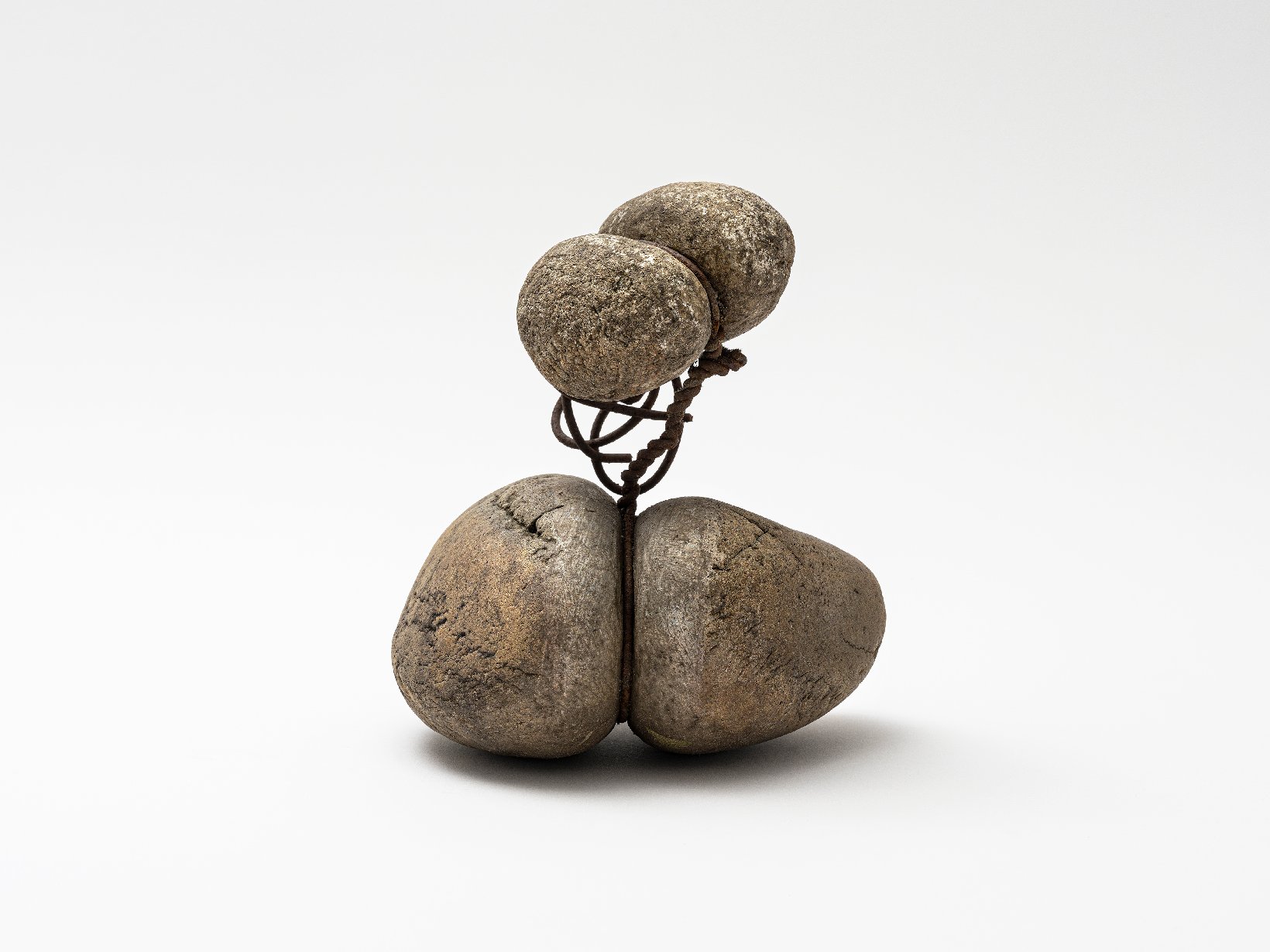
Lee’s “non-sculpture” revolves around two main axes. The first encompasses his “non-material” works, which momentarily “sculpt” natural phenomena such as wind, smoke, and fire into perceptible visual experiences through installation and performance. The second consists of his “bound” works, in which everyday objects are bound together or transformed through the visible traces of binding, departing from conventional methods of molding or sculpting. The concept of “binding,” is central to his artistic methodology that inverts the form and temperament of objects, thereby overturning familiar qualities of everydayness. At ACK, Gallery Hyundai presents a selection of works from Lee’s “bound” series, introducing Japanese audiences to this defining aspect of his practice. From Tied Stone, in which the artist makes indentations on stones and binds with wire or twine to resemble godret stones, to major works in which old books and canvas are wrapped with cord to create entirely new forms, the presentation demonstrates how Lee’s practice challenges the boundaries and conventions of sculpture.
갤러리현대는 2026년 11월 6일부터 9일까지 일본 교토에서 열리는 Art Collaboration Kyoto의 갤러리 콜라보레이션 섹션에, 도쿄화랑(Tokyo Gallery + BTAP)과 공동 부스를 선보인다. 부스 GC21 에서 갤러리현대는 이승택, 도쿄화랑은 키시오 스가(Kishio Suga)와 스스무 고시미즈(Susumu Koshimizu)의 작품을 소개한다. 이승택은 ‘비조각(Non-Sculpture)’을 통해 조각의 영역을 비물질적 현상과 행위로 확장했으며, 일본 모노하(物派)의 주요 작가인 키시오 스가는 사물과 공간 사이에서 형성되는 관계와 상황을, 스스무 고시미즈는 물질의 고유한 성질과 이를 드러내는 조형적 개입을 탐구했다. 서로 다른 미술사적 맥락에서 출발하여 조각의 전통적 개념에 도전하고, 물질과 공간, 사물 간의 관계에 대한 새로운 인식을 제시했다. 이번 공동 부스는 한국의 비조각과 일본 모노하가 공유하는 문제의식과 각기 다른 조형적 실천을 교차 조명하며, 1960~70년대 동아시아 실험미술의 미술사적 접점을 살펴본다.
이승택은 ‘비조각’ 개념에 기반한 방법론으로 한국 아방가르드 미술의 선구자로 평가된다. 그의 ‘비조각’ 시리즈는 아르테 포베라, 개념미술, 대지예술이 서구 미술의 주요 흐름으로 자리 잡던 시기에 발표되어, 1930년대생 한국 작가 가운데 국제적 동시성을 보여준 독보적인 작가로 주목받는다. 2023~2024년 서울 국립현대미술관, 뉴욕 구겐하임미술관, 로스앤젤레스 해머미술관을 순회한 《한국 실험미술 1960-70년대》 전의 주요 작가로서 1960~1970년대 대표작들이 소개되며 세계적인 호평을 받았다. 1932년 함경남도 고원생으로 홍익대학교에서 조각을 전공한 그는 1950년대부터 70여 년간 전통 조각의 한계를 넘어 재료와 형식, 관람자의 수용 방식 등을 끊임없이 실험해 왔다. “민족적인 것이 가장 세계적인 것이다”라는 생각을 바탕으로 고드랫돌, 장승, 오지, 한지, 백자 등 재래적 사물을 현대미술 작품으로 전환하며 사라져 가는 민속 문화를 현대 조각의 언어로 승화시켰다. 또한 일상 사물에 새로운 성격을 부여하거나 탈물질적 요소를 실험하며 조각, 평면, 설치, 퍼포먼스, 대지미술, 포토페인팅, 콜라주 등 다양한 장르를 넘나들었다.
그의 ‘비조각’은 크게 두 범주로 나뉘는데, 바람, 연기, 불처럼 물질적 양감이 없는 자연 현상을 시각적으로 체험할 수 있게 순간적으로 ‘조각’한 설치·퍼포먼스 형식의 ‘비물질’ 시리즈와, 소조나 조각을 벗어나 일상 사물을 묶거나 매어진 흔적을 남긴 오브제로 완성하는 ‘묶기’ 시리즈다. 특히 ‘묶기’는 사물의 형태와 본성을 뒤집고 익숙한 일상을 전복시키는 핵심 미학적 방법론으로, 당대 다른 작가들과 그를 구별 짓는 지점이다. 이번 ACK아트페어에서는 ‘묶기’ 시리즈의 다양한 작품을 통해 일본 관객들을 만난다. 돌에 홈을 파고 철사나 노끈을 묶어 고드랫돌처럼 보이게 한 <매어진 돌>부터 고서, 캔버스 등을 노끈으로 감아 새로운 형상을 만들어내는 대표 작업까지, ‘묶기’를 통해 조각의 경계와 관념을 넘어서는 작품들을 선보인다.
Selected Works
{{ lbCurrent.title }}
{{ lbCurrent.text }}