
Frieze LA 2026
Feb 26 – Mar 1, 2026
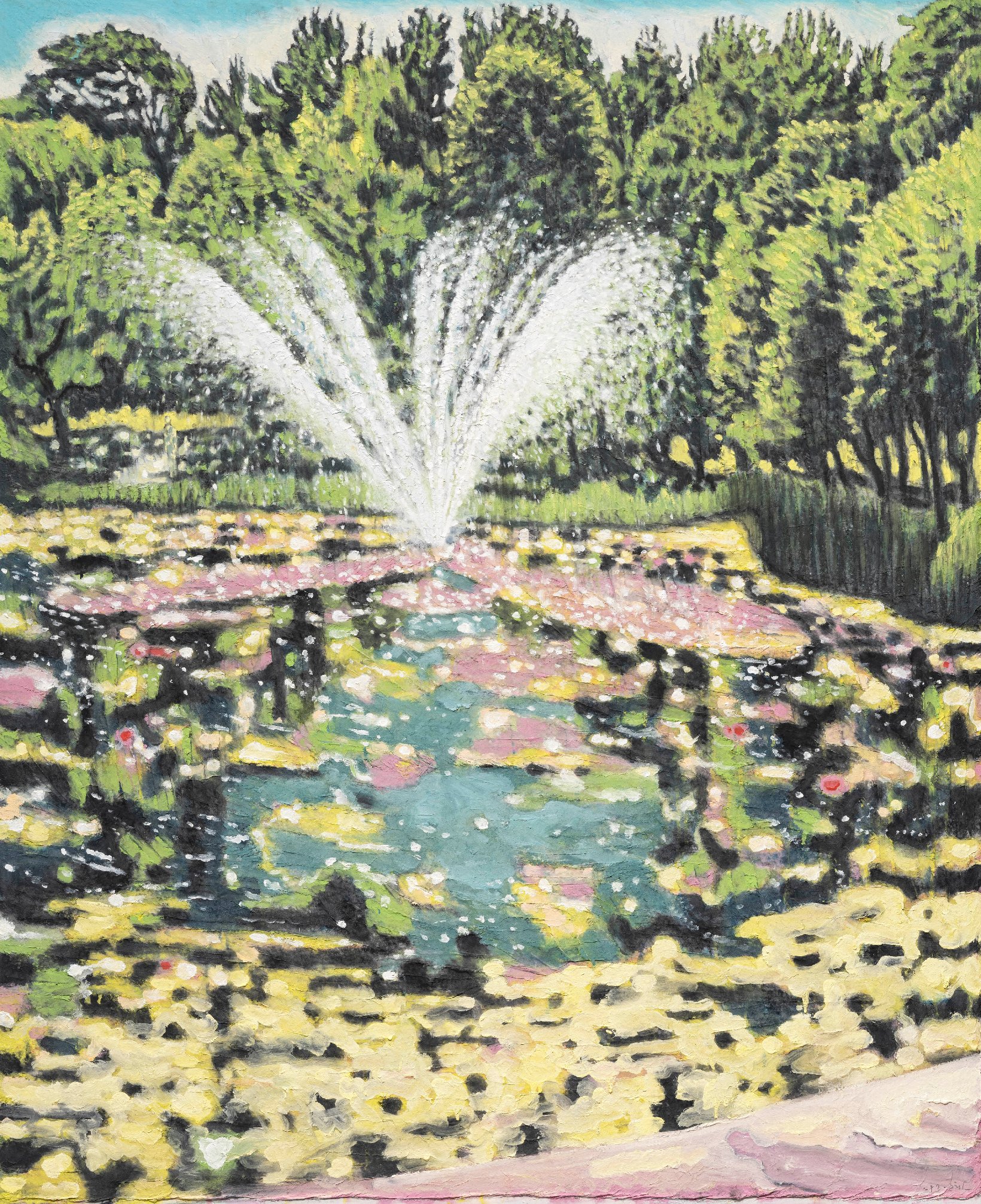
“Through new works from the Fountain, Swimming Pool, and Two Conversations series, I pose questions about modes of existence and layers of time. Drawing on the contemplative framework of East Asian painting, I seek to test the reach of a shared human sensibility and to find points of connection that move beyond boundaries, meeting ultimately on a human-to-human level. I believe what has resonated most strongly is the balance between material specificity and emotional universality. The distinctive pictorial structures shaped by traditional materials such as hanji and shell white, combined with a language of feeling that extends across cultural contexts, have been central to that response.”—Yoo Geun-Taek, 2025
Gallery Hyundai is pleased to present a solo booth of Yoo Geun-Taek at Booth B13, Frieze Los Angeles 2026. This presentation marks the artist’s first solo presentation in three years, following his solo exhibition at Gallery Hyundai in 2023 and his solo booth at Frieze New York the same year. At Frieze LA, the booth features approximately twenty works, including Yoo’s seminal Fountain series, alongside new bodies of work such as Swimming Pool, which captures the restless energy of summer, and Two Conversations, which juxtaposes interior and exterior viewpoints of a café to explore contrasting ways of seeing and reflecting.
For more than three decades, Yoo has developed a distinctive painterly language rooted in the traditions of East Asian painting while engaging with contemporary everyday life and personal narratives. His work begins with familiar landscapes, objects, and everyday scenes that we often pass by without notice. In his paintings, the “everyday” is not a simple record or representation, but a means of questioning a reality that is gradually fading within the flux of contemporary life. By illuminating what lies beneath the seemingly solid surface of the ordinary world, he invites viewers to recover sensations that have been forgotten.
By combining traditional East Asian materials such as hanji, ink, and shell white with tempera and gouache, and by using a steel brush to work the surface of hanji, Yoo embeds his ideas directly into the material of the painting. He layers thick sheets of hanji and paints on the surface, then saturates the entire work with water before vigorously working it with a steel brush and repainting it. Throughout this process, the artist merges his physicality with that of the surface plane, tracing his own body, breath, and force into the work. The labor-intensive act of rubbing the smooth hanji with a sharp steel brush hundreds to thousands of times demands immense physical energy. Through this direct intervention into the surface and materiality of his work, he deconstructs the picture plane while simultaneously conjuring a space hidden beneath it, constructing a new spatiality. As the elusive scenery beneath the wet surface gradually emerges like an apparition through the abrasion of the steel brush, the delineation between real and pictorial space dissolves, and the landscape we gaze upon intersects with our own existence. Therefore, scenes such as fountains, swimming pools, cafés, and still lifes do not depict singular events. Instead, they function as spaces where sensation, memory, and traces of existence accumulate. What appears ordinary is subtly estranged through fissures between material and space, allowing viewers to experience shifting layers of time, reality, and perception from multiple vantage points.
One of Yoo’s most iconic series, Fountain, captures the moment when water surges upward only to inevitably fall back to the ground. This hints at the inevitability of being, the transience of human existence, and the finiteness of time. Yet even as it moves toward dissolution, the upward thrust of water suggests not submission or defeat, but a steadfast presence that stands upright to the very end. In the recent Fountain series, Yoo focuses on the moment of disappearance, emphasizing droplets dispersing into the atmosphere. The surreal structure, where the fountain appears to seep from an unreal realm into reality, creates a subtle fissure between the real and the imaginary. Water remains a central motif in Swimming Pool and Fireworks as well. The new Swimming Pool series draws from memories of midsummer pools. Bodies diving into water, splashing droplets, and gestures of drying off overlap, evoking a sensory field where laughter and the sound of water seem to intermingle. Fireworks, set against a beach landscape, captures a fleeting moment. If Fountain projects existential questions, Fireworks suggests creation and extinction more dramatically. Fireworks flare at the moment of eruption, then disappear almost instantly. Yet that brief moment offers a surreal experience, as if time momentarily shifts into another dimension. Such reflections on existence continue in the Still Life series. Rather than adhering to traditional compositional conventions, Yoo reconstructs scale and order, reducing a dining table to the size of a candle or placing a fountain bursting from atop a table. Realistic objects are repositioned within unfamiliar spatial structures, and the everyday is rendered uncanny once more. Two Conversations simultaneously suggests dialogue between individuals and a structural dialogue between interior and exterior space. The window operates both as a device dividing inside and outside and as a compositional frame that heightens the contrast of light and shadow. In doing so, Yoo transposes the idealized worldview of East Asian painting into the geography of lived human experience, inviting viewers to reconsider the world from the position they themselves inhabit.
Across his practice, Yoo Geun-Taek captures moments in which life and extinction, sensation and memory intersect within the most ordinary scenes of the world we live in. His painting does not merely reproduce the everyday. Instead, it introduces subtle fissures into familiar reality, prompting us to see anew the world in which we stand. The works presented at Frieze LA bring together the traditions of East Asian painting and a contemporary vision, offering a renewed perspective on the reality we live in today.
“‘분수’와 수영장, ‘안과 밖’ 연작 등의 신작을 통해 존재의 방식과 시간의 층위에 질문을 던진다. 동양화적 사유로 보편적 감성을 시험하며, 경계를 넘어 ‘인간 대 인간’으로 맞닿는 지점을 탐색하고자 한다. 한지와 호분 등 동양적 재료의 차별화로 독특한 화면 구조를 만든 매질의 독자성과 정서의 보편성을 낸 것이 그들의 마음을 움직인 결정적 지점이라 생각한다.” —유근택, 2025
갤러리현대는 '프리즈 엘에이 2026'의 부스 B13에서 유근택 작가의 솔로 부스를 선보인다. 2023년 갤러리현대 개인전과 같은 해 프리즈 뉴욕 솔로 부스에 이어, 3년 만에 선보이는 작가의 솔로 프리젠테이션이다. 부스 B13에서는 유근택의 대표적인 연작 〈분수〉를 비롯하여, 한여름 수영장의 소란한 풍경과 에너지를 담은 〈수영장〉과 카페 안과 밖의 시선을 교차하여 대비되는 감각과 사유를 보여주는 〈두 대화〉 등 새로운 연작을 공개하며, 총 20여 점의 작품을 선보인다.
유근택은 지난 30여 년간 한국 동양화의 전통을 기반으로 동시대의 일상과 개인적 서사를 탐구하며 자신만의 회화 세계를 구축해 왔다. 그의 작업은 익숙한 풍경과 사물, 우리가 무심히 지나치는 일상의 장면에서 출발한다. 작가의 화면 속 ‘일상’은 단순한 기록이나 재현이 아닌 끊임없이 변화하는 현대 사회 속에서 점차 희미해져 가는 현실에 대한 질문을 던지고, 견고해 보이는 일상 너머 세계의 이면을 비추며 관람자에게 잊힌 감각을 제공한다.
한지에 먹과 호분, 템페라와 과슈 등 동서양의 재료를 혼합하고, 철솔로 한지의 표면을 긁어내는 작가만의 고유한 작업 과정은 이러한 관점을 회화의 물성 안으로 끌어들인다. 그는 두꺼운 한지를 여러 겹 배접하여 그 위에 드로잉과 채색을 한 후, 전면을 물에 흠뻑 적셔 철솔로 한지의 표면을 거칠게 올리며 다시 채색하는데, 이 모든 과정에 그의 신체적인 흔적과 숨결, 물리적인 힘이 가해진다. 특히, 매끄러운 한지를 날카로운 철솔로 수백 번, 수천 번을 문지르는 노동 집약적인 작업은 많은 에너지가 필요하다. 이를 통해 작가는 작품의 표면과 물성에 직접적이고 적극적으로 개입하여 표면을 해체하고, 그와 동시에 표면 아래에 숨겨진 공간을 끌어올려 새로운 공간을 생성하는 역설적인 작업을 완성한다. 물에 젖은 상태의 표면 아래에 숨겨진 풍경이 철솔질을 통해 서서히 ‘유령’처럼 모습을 드러낼 때, 현실의 공간과 회화 속 공간의 경계는 허물어지고, 내가 바라보는 풍경과 나의 존재가 교차한다고 작가는 설명한다. 따라서 작가가 구축한 분수, 수영장, 카페, 정물과 같은 장면들은 특정한 사건을 묘사하기보다, 우리가 살아가는 세계의 감각과 기억, 그리고 존재의 흔적을 축적하는 공간으로 기능한다. 평범해 보이는 풍경은 물성과 공간의 미묘한 간극 속에서 낯설게 변주되며, 시간의 흐름과 현실, 감각의 층위를 다채로운 시선으로 경험하게 한다.
작가의 대표적인 연작 중 하나인 〈분수〉는 물이 위로 솟구치는 동시에 다시 떨어질 수밖에 없는 순간을 포착하며, 존재의 불가피함과 덧없음, 그리고 시간의 한계를 내포한다. 결국 소멸을 향하면서도 힘차게 솟아오르는 물줄기는 무조건적인 순응이나 굴복이 아닌, 끝까지 당당히 서 있는 존재의 형상을 암시한다. 이번에 선보이는 신작 〈분수〉에서는 사라지는 순간에 더욱 집중하며, 대기 중으로 흩어지는 물방울의 움직임을 강조한다. 비현실의 분수가 현실로 스며 나오는 듯한 화면은 초현실적인 분위기를 형성하며 현실과 비현실 사이에 미묘한 틈을 만들어낸다. 〈수영장〉과 〈폭죽〉에서도 작가는 지속적으로 물을 중요한 모티프로 삼는다. 새로운 연작 〈수영장〉은 한여름 수영장의 기억에서 출발한다. 물속으로 뛰어드는 몸짓, 튀겨지는 물방울, 물을 닦아내는 동작들이 겹쳐지며, 웃음소리와 물소리가 뒤섞인 듯한 감각을 불러일으킨다. 〈폭죽〉 역시 해변을 배경으로 한 찰나의 장면을 보여준다. 분수가 존재론에 대해 사유하게 한다면, 폭죽은 보다 극적인 방식으로 생성과 소멸의 순간을 암시한다. 폭죽은 터지는 순간 눈부시게 빛나지만 곧 사라진다. 그러나 그 찰나는 일상의 시간과는 다른 차원으로 이동하는 듯한 초현실적 경험을 선사한다. 이러한 존재에 대한 성찰은 〈정물〉 시리즈에서도 이어진다. 작가는 전통적 정물의 구도를 따르기보다 식탁을 촛불만 한 크기로 축소하거나 테이블 위에 분수가 치솟는 장면을 배치하는 등 스케일과 질서를 재구성한다. 현실적인 사물은 비현실적인 공간 속에서 재구성되며, 익숙한 일상은 다시 낯설게 환기된다. 〈두 대화〉는 사람 사이의 대화를 암시함과 동시에, 실내와 실외를 가르는 구조적 관계를 보여준다. 창문은 안과 밖을 분리하는 장치이자, 빛과 그림자의 대비를 강조하는 화면의 틀로 작동한다. 이를 통해 작가는 이상적 공간을 지향하던 동양 회화의 세계관을 인간의 체험적 위치로 옮겨오며, 우리가 서 있는 자리에서 세계를 다시 바라보게 한다.
이처럼 유근택은 우리가 살아가는 세계의 가장 평범한 장면들 속에서 삶과 소멸, 감각과 기억이 교차하는 순간을 포착한다. 그의 회화는 일상을 재현하는 데 머무르지 않고, 익숙한 현실에 미세한 균열을 내며 우리가 서 있는 세계를 다시 바라보게 한다. 프리즈 엘에이 2026에서 선보이는 신작은 동양화의 전통과 동시대의 시각을 결합한 작가의 작업 세계를 통해 우리가 살아가는 현실을 새로운 시각으로 바라보게 한다.
{{ lbCurrent.title }}
{{ lbCurrent.text }}