
Frieze New York
May 1 – May 6, 2024
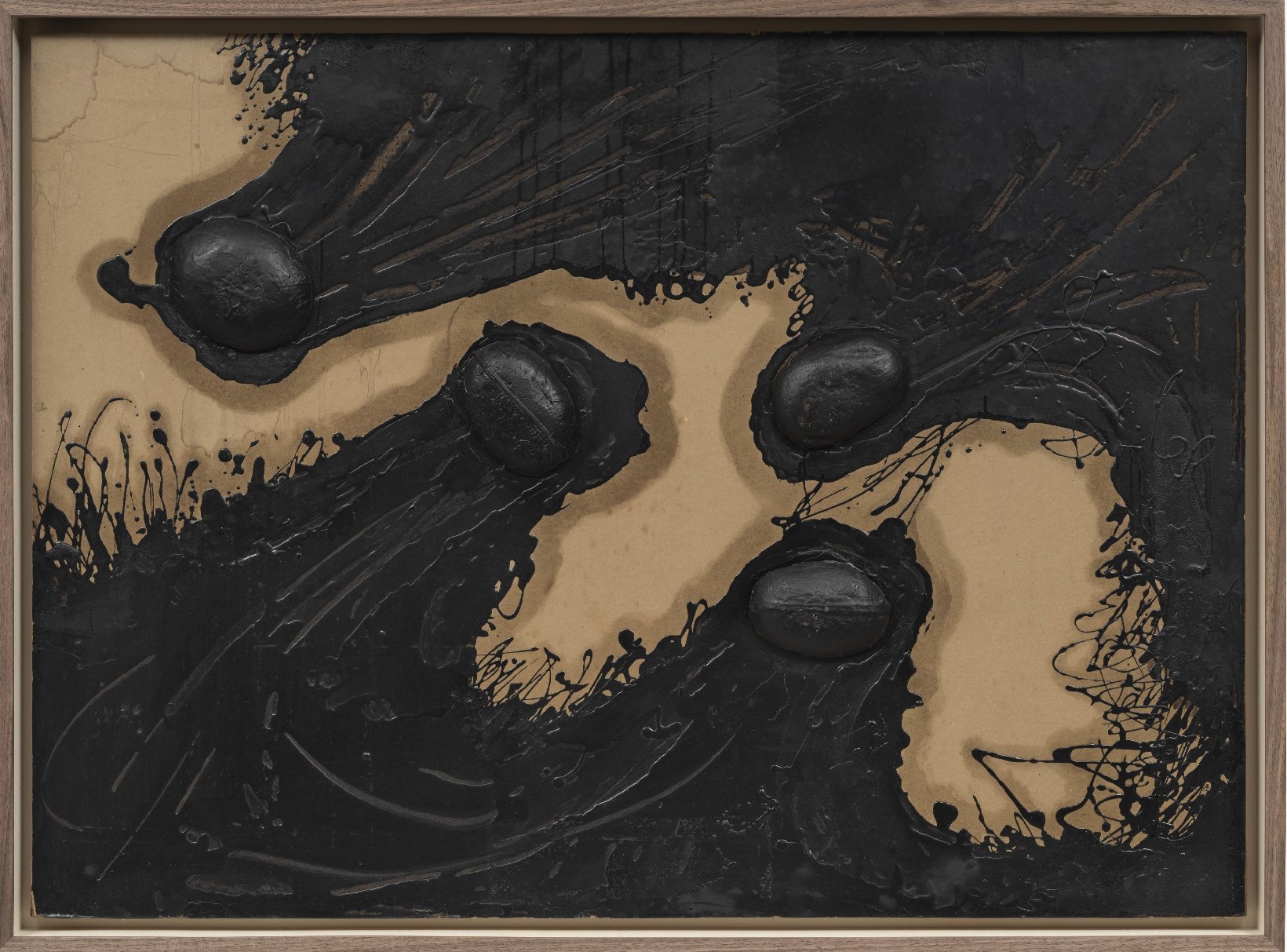
Gallery Hyundai (booth B07) is pleased to introduce for Frieze New York 2024 a solo presentation of Seung-taek Lee (b. 1932), a visionary artist whose guiding methodology of “non-sculpture” has garnered him global recognition as a pioneer of the Korean avantgarde. A collection of Lee’s iconic works was featured at the Solomon R. Guggenheim Museum as part of the groundbreaking exhibition Only the Young: Experimental Art in Korea, 1960s–1970s, which has traveled to the Hammer Museum, Los Angeles, and will remain on view through May 12, 2024. Additionally, Lee is featured in a two-person exhibition titled Invisible Questions That Fill the Air: James Lee Byars and Seung-taek Lee curated by Allegra Pesenti, which has been widely recognized. The exhibition runs through August 25, 2024 at Palazzo Loredan, a historic venue in Venice. Over the span of seven decades, Seung-taek Lee has continuously expanded the peripheries of the traditional medium of sculpture by upending conventions of material and form. Lee, who remains active today, has maintained a multifaceted art practice spanning sculpture, painting, drawing, installation, performance, photo painting, collage, and land art that inverts the form and function of utilitarian objects and experiments with “non-material” elements such as the wind. Gallery Hyundai presents at booth B07 more than forty striking works that showcase Lee’s singular artistic vocabulary while incorporating an ever-present wit and humor that acutely manifests the artist’s embrace of the inversive act. As such, these works serve as an introduction to the diverse breadth of the artist’s practice over decades of observing and responding to the turbulent zeitgeist of modern Korean society.
At the outset of Lee’s artistic career during the 1950s, Korea was undergoing a range of policy-driven endeavors aimed at reviving and preserving traditions that had been destroyed or lost as a consequence of the Japanese occupation and the aftermath of the Korean War. These initiatives included a concerted effort to identify and designate the valuable cultural heritage of Korea’s past in the form of national treasures or cultural symbols to represent the nation’s aesthetic sensibility through art. Within this cultural and artistic milieu, however, Lee took an unconventional path outside the realm of traditional art, focusing instead on everyday items and folk objects such as Godret stones (stones used as weights in traditional looms). At the time, the prevailing view among mainstream artists in Korea was that creating modern artwork and achieving contemporaneity was dependent on emulating what was considered the “progressive” development of Western art. In contrast, reflecting his profound interest in folk culture, Lee utilized the traditional Korean totem pole (jangseung) as a visual motif, underscoring his gravitation towards Korean elements over Western influences. Guided by his belief that “What is most regional is the most universal,” Lee integrated Godret stones, totem poles, ceramic roof tiles (oji), and traditional Korean paper (hanji) into his works, seeking to explore the intersection between folk culture and art.
The foundation of Lee's practice, the concept of “non-sculpture,” largely comprises two bodies of work that remain key to the artist’s practice to date: his “non-material” and “bound” series. In his “non-material” series, intangible natural phenomena such as the wind, smoke, and fire are “sculpted” into installations and performances. In contrast, Lee’s “bound” series veers from traditional methods of shaping or sculpting in favor of presenting mundane objects that are either physically bound by rope or wire, or display visible marks of binding. In his pursuit of “non-sculpture,” the “bound” series in particular sets Lee apart from other artists of his time in its undermining of everyday familiarity by inverting the visual and physical properties of common objects. Gallery Hyundai’s presentation features key representative pieces from the artist’s “bound” series including Tied Porcelain, Tied Stone, and Tied Canvas, which employ rope to visually allude to the paradox embodied in Lee’s exploration of “non-sculpture.” Additionally, presented for the first time are works from Lee’s “non-material” series, including works from the Wind series and coal tar paintings formulated with recycled waste materials as a form of environmental commentary.
Lee’s artistic journey reached a decisive stage with his Tied Stone series, where he carved grooves into stones and bound them with wire or rope to resemble Godret stones. He subsequently applied this binding technique to a range of discrete objects such as ceramics, female torsos, books, and canvases, creating the visual effect of “a revitalizing perspective" and transcending the boundaries of sculpture and of conventional concepts of objects through their form. Furthermore, through his iconic “non-material” series such as Wind, Lee encapsulates the dynamic energy of the unseen natural phenomena he experienced alongside the participants of his performances, instantly capturing the invisible natural force on the surface plane. The artist has maintained a keen sensitivity to environmental issues since the 1980s, and he has responded to this concern in part by utilizing in his work objects that would otherwise become waste. The artist employed these “useless” objects as vessels that project the sensations he experienced during his inherently ephemeral performances, affixing them onto the canvas and thereby permanently preserving both the objects and his sensory energy, and thus discovering a new means of infusing vitality into his work. For example, Lee utilized tar that had been discarded after asphalt road construction work as pigment and soaked hanji to create a moldable mush or paste; these materials became tools for spontaneous mark-making on the pictorial plane, suffused with the dynamic energy of the wind in his painterly movement. In a similar context, in the 1980s Lee had purchased bags of human hair, a commodity that, before the supplier market shifted to Southeast Asia, had long been a key Korean export that fed the global wig industry. Reflecting on the thick, black hair as a metaphor for the realities faced by the Korean people, Lee was quick to employ hair as yet another tool for gestural mark-making in a body of work that includes Hair Calligraphy, Dance, and Hairy Canvas.
Earlier this March, the acclaimed art book publisher Rizzoli announced the monograph Seung-taek Lee: (Un) Bound (Vol I); Non-Material (Vol. 2), focusing on two iconic series from the artist's vast spectrum of work.
갤러리현대는 ‘프리즈 뉴욕 2024’에서 이승택 작가의 솔로 전시를 선보인다. 이승택은 '비조각' 개념에 기반한 방법론으로 한국 아방가르드 미술의 선구자로 평가된다. 뉴욕 구겐하임미술관에 이어 로스앤젤레스의 해머미술관으로 순회중인 《Only the Young: Experimental Art in Korea, 1960s–1970s》 전시에서 그의 주요 작품들이 대거 소개되고 있다. 또한, 큐레이터 알레그라 페젠티(Allegra Pesenti)가 기획하여 베니스의 유서 깊은 궁인 팔라조 로레단에서 2024년 8월 25일까지 열리고 있는 이승택, 제임스 리 바이어스의 2인전 《Invisible Questions That Fill the Air: James Lee Byars and Seung-taek Lee》가 세계적으로 호평을 받고 있다. 이승택은 1950년대부터 70여 년 동안 전통적 조각의 한계를 확장하고 뛰어넘고자 재료와 형식, 감상자의 수용 방식 등에 대해 끊임없이 실험해왔다. 작가는 작업 초기부터 일상적 사물에 새로운 성격을 부여하거나 탈물질적 요소를 실험하면서 조각, 평면, 설치, 퍼포먼스, 대지미술, 포토페인팅, 꼴라주 등 다양한 장르를 넘나들며 왕성한 작품 활동을 지속해왔다. 갤러리현대 ‘부스 B07’에서는 이승택 특유의 관람자의 사고를 전환하는 거침없음과 유머가 묻어나는 작품 50여 점을 대거 소개한다. 이를 통해, 시대를 늘 예민하게 관찰하고 미술로서 반응하기를 게을리하지 않으며, ‘비조각’의 개념에서 출발해 “세계 속의 나의 한국”을 실현하여 어디에서도 볼 수 없는 예술 작품을 창작하고자 하였던 이승택의 작업 연대기를 확인할 수 있다.
이승택이 작업 활동을 시작한 1950년대 한국은 한국전쟁 직후 식민 통치와 전쟁으로 잊히고 파괴된 전통을 되살리기 위한 여러 시도가 정책적으로 진행되고 있었고, 그 일환으로 과거의 문화유산 중 가치 있는 것을 선별해 민족의 미의식을 대표하는 예술의 지위인 국보급 전통예술품으로 지정하는 작업이 활발히 이뤄지는 시기였다. 이와 같은 문화예술계의 전반적 분위기 속에서도 이승택은 전통예술의 범주에 포함되지 못한 민속품이자 일상용품인 고드랫돌에 눈을 돌렸다. 당시 한국의 주류미술인들은 현대적인 미술의 창조와 동시대성의 확보가 선진적인 해외 미술의 모방을 통해 가능하다고 주장했다. 이승택은 신진 작가로서 그 당시 참여한 전시들에서 민속 문화에의 관심을 드러내며 한국 고유의 민속 신앙물인 장승을 모티프로 삼는 등 그의 시선은 분명 서구적인 것보다 한국적인 것을 향하였다. 그는 “민족적인 것이 가장 세계적인 것이다”라는 생각을 가지고 고드랫돌, 장승, 오지, 한지 등의 재래적 사물들을 통해 민속과 예술의 만남을 시도하였다.
이승택 작업의 근간이 되는 ‘비조각’의 세계는 크게 두 범주로 구분된다. 하나는 바람, 연기, 불과 같은 물질적인 양감이 없는 자연 현상을 우리가 시각적으로 체험할 수 있도록 순간적으로 ‘조각’한 설치 및 퍼포먼스 형식의 ‘비물질’ 시리즈다. 다른 하나는 소조하거나 조각하는 방식에서 벗어나 일상의 사물을 묶거나 혹은 오브제에 매어진 흔적을 의도적으로 남겨두는 ‘묶기’ 시리즈이다. 특히 ‘묶기’ 시리즈는 사물의 형태와 본성을 뒤집고 낯익은 일상을 전복시키는 ‘비조각’을 향한 작가의 주요한 미적 방법론이었으며, 이는 당대 다른 작가들과 차별되는 지점이다. 특히 ‘부스 B07’에서는 작가의 묶음 연작의 핵심 재료로써 ‘역설의 시각화’를 담당하는 노끈을 활용한 〈매어진 백자〉, 〈매어진 돌〉, 〈노끈 캔버스〉 등 시리즈의 대표작들뿐만 아니라, 작가의 대표적인 ‘비물질’ 시리즈인 〈바람〉 퍼포먼스를 바탕으로 제작한 회화 작품들과 환경 문제에 대한 반응으로 폐기될 재료를 재활용하고자 제작했던 콜타르 회화도 최초로 선보인다.
이승택은 돌에 홈을 파서 철사나 노끈을 묶어 고드랫돌처럼 보이게 하는 〈매어진 돌〉 시리즈에서부터 더 나아가 도자기, 여성 토르소, 책, 캔버스 등 어떤 사물도 노끈으로 묶으면 “그 형상이 새롭게 보이는” 시각적 효과를 동반하는 ‘묶기’ 방법론을 통해 조각의 경계를 실험하고 관념을 넘어서고자 했다. 또한, 작가의 대표적인 ‘비물질’ 시리즈인 〈바람〉 작업을 통해 퍼포먼스 현장에서 퍼포먼스 참여자들과 함께 경험했던 보이지 않는 자연 현상의 역동적인 에너지를 순간적으로 시각화하는 페인팅 시리즈를 최초로 선보인다. 한편, 작가는 1980년대부터 환경 문제에 민감하게 반응하면서 용도를 다하고 폐기될 재료를 볼 때 마다 어떻게 버리지 않고 자신의 작업에 재활용할 수 있을지 고민했다. 그는 퍼포먼스 과정에서 온 몸으로 경험한 감각적 에너지를 순식간에 평면에 고정시켜 시각화하는 페인팅을 (우연히 그의 수중에 들어 온 재료를 소진할 때까지) 한정적으로 제작해 왔다. 그는 아스팔트 도로 포장에 사용되고 남은 콜타르나 물에 젖은 한지를 굳기 전에 손으로 빠르게 반죽하여 자신이 오감으로 체험했던 유연하지만 강렬한 바람의 에너지를 평면에 순식간에 담아냈다. 그 결과 이 평면 회화 작품들은 촉각적이고, 청각적인 동시에 시적 상상력으로 돋보인다. 〈머리카락 그림(Hairy Canvas)〉 시리즈의 제작 배경도 흥미롭다. 한때 가발 제작을 위한 한국의 수출품 1위로 귀하게 대접받던 머리칼이 1980년대 들어서 가발 산업의 주요지가 동남아로 넘어가며 수출품으로써 가치가 하락하고 더는 판매가 되지 않는 애물단지가 되었다. 작가는 안쓰러운 마음에 머리카락을 한 보따리 가득 사게 되었고, 한국인의 검고 굵은 머리카락을 한국의 시대적 상황이 반영된 재료라 여기며 <모서예(Hair Calligraphy)>, <춤(Dance)>, <머리카락 그림(Hairy Canvas)> 등의 캔버스 작업을 완성했다.
한편, 한 작가의 작품이라고 믿을 수 없을 만큼 방대한 작업을 이어온 이승택의 작업 세계에서 “(UN)BOUND”와 “NON–MATERIAL”을 주제로 선별한 대표작과 에세이를 담은 모노그래프가 출간되어 리졸리 뉴욕에서 구매 가능하다.
{{ lbCurrent.title }}
{{ lbCurrent.text }}