
Seundja Rhee Estate
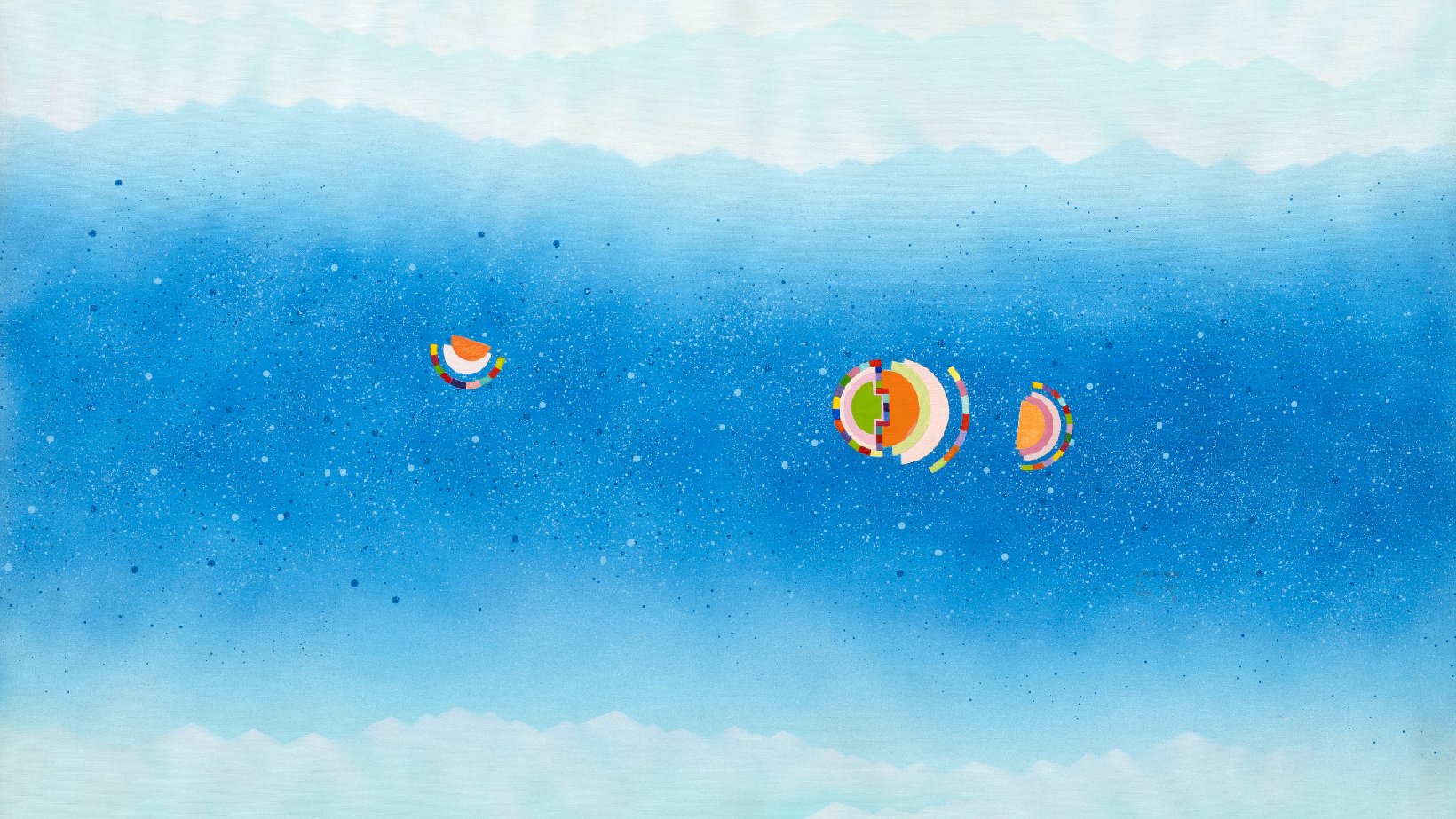
Seundja Rhee (1918–2009) left Korea for Paris in 1951 and began her studies of formative arts and continued to be active in Western painting and woodblock printing all the way into her nineties. Works attempted a marriage of the formative arts and literature, while the oeuvre of work she leaves behind transcends time and demonstrates her creative powers that exceed painting as it encompasses works in an array of artistic realms including work in pottery, tapestry, mosaic and collections of poetry. Her practice is diverse with explorations primarily in abstraction utilizing geometric patterns and incorporation of Korean symbols and text.
Rhee regarded the Eastern philosophical concept of yin and yang as the most important basis of her work and this is evident in her lifetime oeuvre. While spending the majority of her art making years in France and influenced by the French schools, her themes and subject matter reflect her personal sentimentalities and experience as a Korean. At a time when many Korean artists dreamed of moving to France, she made her first trip to France in 1950 and enrolled in Académie de la Grande Chaumière in 1953 to study painting for the first time in her life under the guidance of the renowned modernist artist Henri Goetz.
Born in Gwangyang in 1918, Seundja Rhee graduated from Ilshin Girl’s High school in 1935 and proceeded to study domestic science at Jissen Women’s University in Tokyo, which was a rare path for a woman of the time. Her debut at the solo exhibition at Galerie Lara Vincy in Paris in 1958 was followed by many others at world-renown institutions including Galerie Charpentier in Paris, National Museum of Modern Art in Paris, Museum of Modern Art Ljubljana, Pompidou Center, National Museum of Modern Art in Tokyo, Gyeongnam Art Museum, and the Seoul Museum of Art. She was introduced to Korean audiences through her first solo exhibition at the Faculty Hall of Seoul National University in 1965. Rhee held consecutive solo exhibitions at the National Museum of Modern and Contemporary Art, Korea in 1970, 1978, and 1988, and her fourth solo exhibition in March of 2018 celebrated the major occasion of the first 100th anniversary as a female artist. Rhee’s works are on display at major art institutions within and outside Korea such as the National Museum of Modern and Contemporary Art, Korea, Leeum, Museum of Modern Art at Saint-Etienne, Nantes Art Museum, National Museum of Modern Art in Paris, and Musee d’Art modern de la ville de Paris.
이성자(1918–2009)는 동양사상에 기반한 음과 양의 모티브를 중요하게 여겨 평생의 작업에 작용했다. 회화는 물론, 판화, 도자기, 태피스트리, 모자이크, 시화집에 이르기까지 다양한 영역에서 14,000점에 이르는 작품을 창작했다. 85회 이상의 개인전, 300회가 넘는 단체전에 참여하는 등, 2009년 남프랑스에서 타계할 때까지 프랑스를 기반으로 전 세계에서 활발한 전시 및 작품 활동을 했다. 당시 도불한 작가 중, 유일하게 미술전공을 하지 않고 프랑스에 건너간 이성자는 기법과 표현에서는 철저하게 프랑스 화단의 영향 아래 있었으나, 소재와 주제는 더욱 한국적이며 개인적인 감성과 경험을 반영하였다. 한국의 많은 작가들이 도불을 꿈꾸었던 1950년대 가장 먼저 프랑스로 건너가 1953년 파리 아카데미 그랑드 쇼미에르에 입학, 처음으로 회화를 공부하고 대표적인 모더니스트 작가인 앙리 고에츠에게 사사하였다.
1918년 전라남도 광양에서 태어난 이성자는 1935년 일신여자고등보통학교를 졸업한 후 일본으로 건너가 1938년 도쿄의 짓센여자대학교에서 가정학을 수학하였다. 1958년 라라뱅시 화랑에서의 첫 개인전을 시작으로 샤르팡티에 화랑, 파리시립근대미술관, 류블랴나 현대미술관, 파리 퐁피두센터, 도쿄 국립근대미술관, 경남도립미술관, 서울시립미술관 등 유수의 기관에서 전시를 개최하였으며, 1965년 서울대학교 교수회관에서 개최되었던 개인전을 통해 국내에 이름을 알리기 시작하였다. 국립현대미술관에서 1970년, 1978년, 1988년에 각각 개인전을 가졌으며, 2018년 3월 국립현대미술관에서의 4번째 개인전이자 여성 작가로는 처음으로 탄생 100주년을 기념하는 대규모 회고전이 개최되었다. 이성자의 작품은 국립현대미술관, 삼성미술관 리움, 생테티엔느 현대미술관, 낭트미술관, 파리국립현대미술관, 파리시립근대미술관 등 국내외의 주요 미술 기관에 소장되어 있다.
Video
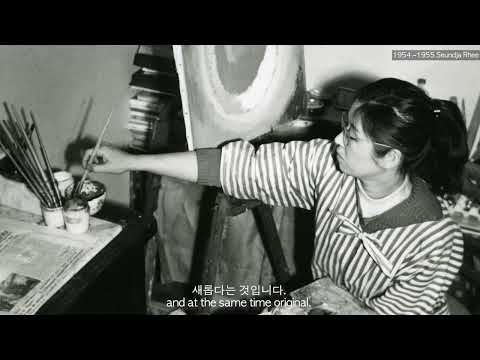
Seundja Rhee 이성자
Towards the Antipodes
Selected Works
{{ lbCurrent.title }}
{{ lbCurrent.text }}