
Michael Craig-Martin
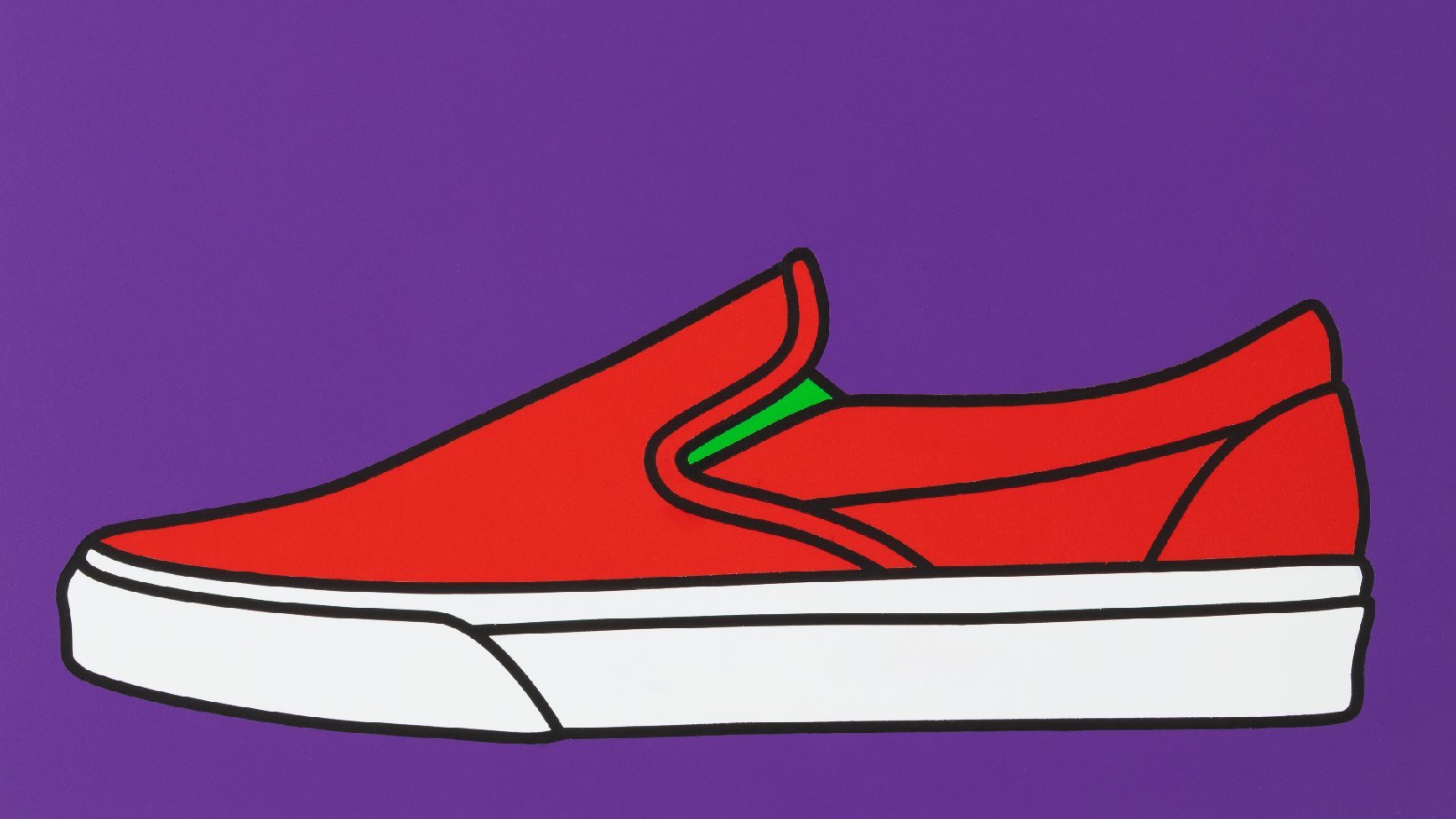
Michael Craig-Martin (b. 1941, Dublin) began his career by exploring the transition of daily objects as his central theme. During the late 1960s and early 1970s, his works were made with objects that people can easily encounter in their everyday life as he questioned the boundary between mundane objects and art. In the late 1970s, Craig-Martin began to make line drawings of ordinary everyday objects with black tape characterized by their boldly outlined motifs. While he started with a conceptual approach to this question, his explorations touched on different realms of artistic language such as drawing, painting, and sculpture. Entering the 1990s, Craig-Martin’s focus shifted decisively to painting, rendering unexpected combinations in both works on canvas and complex wall paintings. Craig-Martin’s unique picture, juxtaposing simplified form with unfamiliar combination of common objects, decomposed the traditional language of painting and suggested the possibility of looking at art from a new angle. With the use of simplified images, his works allow viewers to ponder the meaning of art in a less serious manner allowing room for creativity and interaction.
Michael Craig-Martin studied Fine Art in Yale University, he directly experienced mainstream genres of the time, including Conceptual Art, Minimalism, Pop Art, before starting his own work. Returning to England in 1966, while teaching at Goldsmiths College, the artist greatly contributed to the education of the so-called Young British Artists (yBa), including Damien Hirst, Julian Opie, Sarah Lucas, Gary Hume, and Tracey Emin. Craig-Martin had solo exhibitions in prominent institutions such as Rowan Gallery (1969); Whitechapel Gallery (1989); Irish Museum of Modern Art (2006); Serpentine Gallery (2015); Shanghai Himalayas Museum (2015) and participated in various biennales including Sydney Biennale (1990), Istanbul Biennale (2009), and Sao Paulo Biennale (1998, 2010). The artist’s works are part of prestigious collections including Museum of Modern Art in New York, Tate in London, Centre Pompidou in Paris, and more. The artist was knighted in the 2016 Birthday Honours as an acknowledgement of his great accomplishments in developing Modern art and establishing himself as a father of Modern art.
일상과 예술의 경계선에 대한 탐구는 마이클 크레이그-마틴(1941, 더블린 출생)의 작품 속 주요 소재이다. 예술은 주변의 오브제를 변화시킴으로써 삶을 새롭게 보게 하는 것 이라는 예술관을 바탕으로 작업을 시작한 작가는 1960년대 말부터 1970년대 초까지 쉽게 발견할 수 있는 친숙한 사물들을 사용하여 작품을 제작하였다. 1973년 제작된 작품 〈참나무 (An Oak Tree)〉 (1973)는 무엇이든 예술이 될 수 있다는 작가의 개념을 반영한 설치작품으로 이는 현재까지 영국 개념미술의 기념 비적인 작품으로 평가받고 있다. 평범한 선반과 그 위에 놓여진 유리잔은 보여지는 사물이 사실은 참 나무라는 작가의 설명글을 통해 예술 작품으로 재탄생 되었다 . 이는 개인으로 하여금 우리가 보는 것과 우리가 본다고 생각 하는 것 , 우리가 아는 것과 우리가 안다고 생각하는 것에 대하여 근본적인 질문을 던진다.
1970년대 말은 크레이그-마틴을 상징하는 작품세계가 서서히 자리 잡기 시작하는 시기로 실제 사물들은 사라지 고 작품은 간결한 선과 이미지로 단순화된다. 1980년대에 들어서며 작가의 작품 속 이미지들은 색면과 결합됨과 동시에 알아보기 어려워질 정도로 많아지며 압축되어 나타난다. 작가는 사물의 크기를 의도적으로 다르게 만들거 나 사물들의 단순화된 이미지를 낯설게 배치한다. 페인팅이 본격적으로 등장하는 1990 년대 작가의 색면에 대한 관심은 극대화되며 작품 속 색채는 더욱 밝고 강렬해진다. 더불어 작가는 일상적 사물을 가져오기보다는 존재하 는 공간 안으로 직접 침투해 일상을 전혀 다른 것으로 변모시키는 작업에 몰두하며 이와 같은 작업은 이후의 대형 벽화 작업으로 이어진다. 크레이그-마틴 작품 특유의 간결한 형태와 흔한 사물들의 낯선 재배치는 전통적인 회화의 언어를 해체함과 동시 에 작품을 보는 이의 내재된 경험들을 불러일으키며 새로운 의미가 떠오르도록 가능성을 열어둔다. 작가는 관람 객들이 스스로 창의력을 발휘할 수 있는 공간을 제공하면서 그들이 그 틈 속에서 자유롭게 상상하도록 유도한다.
마이클 크레이그-마틴은 미국 예일대학교에서 순수미술을 전공하며 당시 화단을 주도하였던 개념미술, 미니멀리즘, 팝아트 등 현대미술의 전성기를 직접 경험하며 작업을 시작하였다. 1966년 영국으로 이주한 작가는 1970년대부터 80년대까지 런던 골드스미스대학에서 교수로 재직하며 데미안 허스트, 줄리안 오피, 트레이시 에민 등 ‘영국의 젊은 예술가(yBa)’들을 양성하는데 크게 기여하였다. 작가는 런던 화이트채플갤러리(1989), 아일랜드현대미술관 (2006), 상해히말라야미술관(2015), 서펜타인갤러리(2015) 등 유수의 미술기관에서 개인전을 열었으며, 작품의 주요 소장처로는 뉴욕 현대미술관, 런던 테이트, 파리 퐁피두센터 등이 있다. 작가는 영국 및 세계 현대미술 발전에 큰 공을 세운 업적을 인정받아 2001년 대영제국훈장(CBE: Commander of British Empire)을, 이어 2016년 영국 왕실로부터 기사 작위를 수여 받으며 영국 현대미술의 아버지로 자리매김했다.
Selected Works
{{ lbCurrent.title }}
{{ lbCurrent.text }}